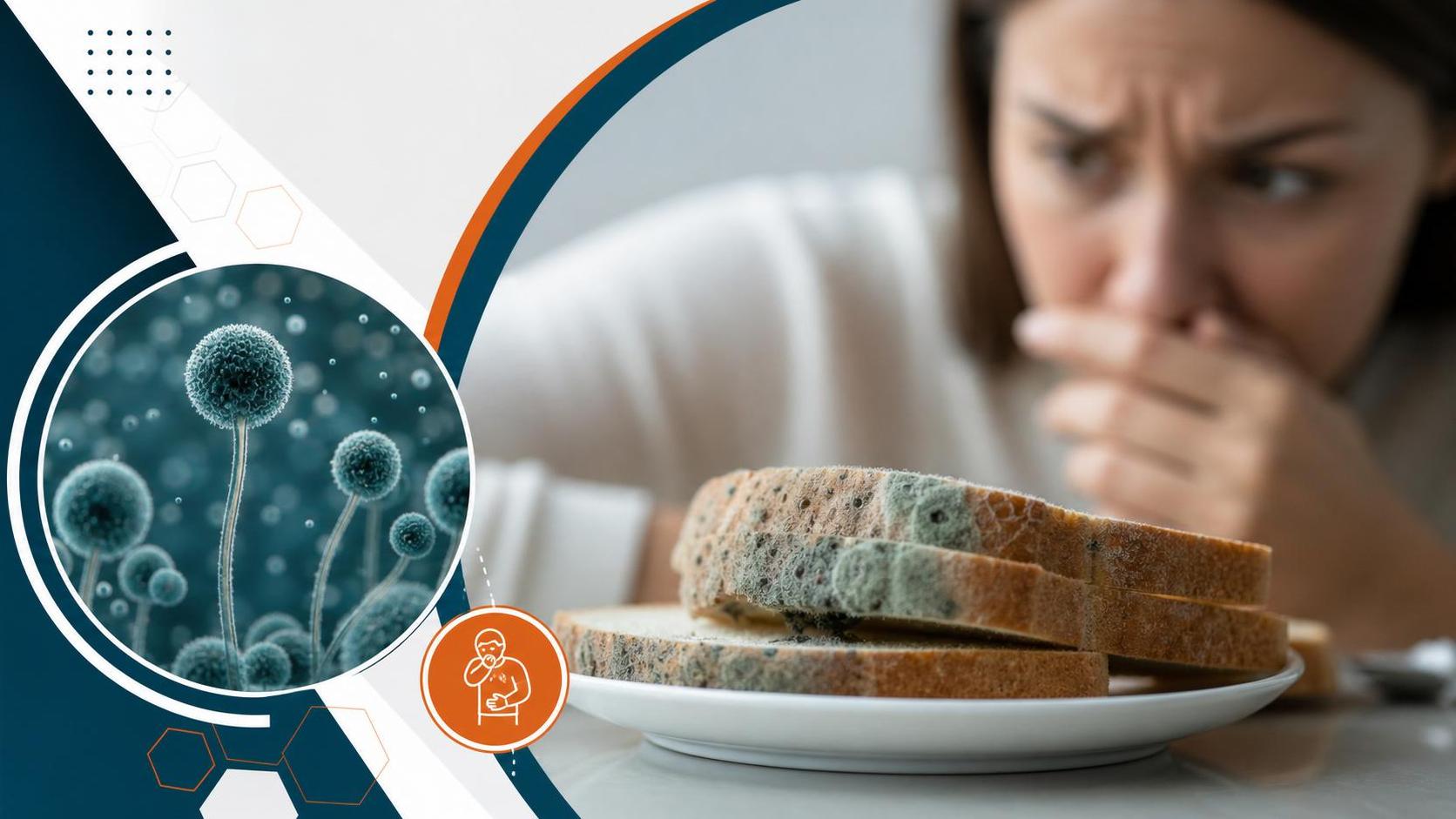
What Happens If You Eat Mold?
If you opened the fridge, spotted fuzzy leftovers, and wondered what happens if you eat mold, you are not alone. Most people will accidentally eat mold at some point, especially from bread, berries, cheese, or sauce that looked fine yesterday. The good news: eating a small bite of moldy food usually does not make you sick. The important catch is that some mold can produce mycotoxins, trigger allergic reactions, or signal that bacteria may also be present.
This guide explains what happens if you eat mold, which foods are risky, when it is safe to cut around a mold spot, and when to call a clinician. It also covers practical ways to prevent mold, store food, and minimize mold growth at home.
What Is Mold, Exactly?
Mold is a group of microscopic fungi that live throughout the environment. There are tens of thousands of species of mold, and many spread through tiny spores that float through the air like dandelion seeds. Those spores land on food, soil, counters, and packaging, then grow when moisture, nutrients, and warmer temperatures are present.
Molds can grow on a wide variety of foods, from fresh produce and bread to jam, meat, nuts, and cheese. Common foodborne molds include Penicillium and Aspergillus. Some are useful in food science, such as molds used to make blue cheese, while certain kinds can produce harmful substances.
So, What Happens If You Eat Mold?
For most healthy adults, a small accidental bite is usually not a medical emergency. Your stomach acid and digestive system may break down many spores, and you may feel completely fine. However, eating moldy food may cause nausea, vomiting, diarrhea, abdominal cramps, or a bad taste that lingers.
The bigger concern is not always the visible mold on the surface. Mold growth can spread thread-like roots into food, especially foods with high moisture content. Mold can also travel with bacteria, and the presence of visible mold means the food is no longer fresh in the way you expect.
If you accidentally eat moldy food, stop eating it, rinse your mouth, drink water, and monitor symptoms. Do not panic, but do not keep eating the item just because the first bite seemed fine.
Can Mold Make You Sick?
Yes, mold can make you sick, but the risk depends on the type of mold, the food, the amount eaten, and your health. Some people only experience mild stomach upset. Others may have allergic reactions, including sneezing, itchy eyes, a runny nose, wheezing, or a rash.
People with asthma, mold allergies, immune suppression, pregnancy-related concerns, liver disease, or serious respiratory problems should be more cautious. Immunocompromised individuals may have a higher risk of fungal infections from mold ingestion, though this is not common in healthy people.
Seek medical advice if you develop repeated vomiting, severe diarrhea, dehydration, fever, blood in stool, chest tightness, respiratory trouble, confusion, or worsening symptoms after you eat mold.
Mycotoxins: The Hidden Risk
Mycotoxins are poisonous substances produced by certain molds. Aflatoxins are a type of mycotoxin produced by certain molds, especially some Aspergillus species. These toxins can contaminate crops such as corn, peanuts, tree nuts, and grains, and long-term exposure may cause liver damage and cancer.
Mycotoxins can be heat stable and not destroyed by cooking. That means scraping a mold spot off a contaminated sauce or reheating a moldy casserole does not reliably make it safe to eat. Mycotoxins can cause nausea, vomiting, and abdominal cramps, and in chronic exposure, serious health issues.
United nations estimates from the Food and agriculture organization suggest that 25% of the world’s food crops are affected by mycotoxins. This is one reason food safety experts take mold seriously, even when a small household exposure is often not a disaster.
Why Some Foods Are Riskier Than Others
The safety question depends heavily on moisture content and texture. Porous foods allow mold grow patterns to spread beyond what the naked eye can see. Mold roots may penetrate deep into soft foods, even if only one fuzzy patch is visible.
Soft fruits, cooked vegetables, sauces, yogurt, lunch meat, casseroles, and bread have high moisture content and should usually be discarded when moldy. Moldy bread is especially risky because mold can spread through the loaf before visible mold appears on every slice.
Hard, dense foods are different. Hard cheeses, firm fruits, and firm vegetables may sometimes be salvaged because mold does not penetrate as easily. Examples include Parmesan, aged cheddar, carrots, cabbage, and bell peppers. Still, if the item smells bad, feels slimy, or has multiple spots, throw it out.
When Is It Safe to Cut Off Mold?
Cutting around moldy food may not remove all mold, so be selective. Hard cheeses can usually be saved by cutting at least one inch around and below the mold spot. Keep the knife out of the mold itself so you do not drag spores into the clean cheese.
For hard cheeses, wrap the remaining cheese in new packaging after trimming. Do not re cover it with the old material. If you use plastic wrap, replace it with a clean sheet and keep the cheese cold.
For firm vegetables and firm fruits, use the same one-inch rule if there is just one small mold spot and the texture is otherwise normal. For porous foods, soft cheese, soft fruits, bread, leftovers, or any food with developed internally spreading discoloration, the safest choice is to discard it.
Foods You Should Usually Throw Away
Moldy bread, tortillas, muffins, pastries, and other porous baked goods
Soft cheese, shredded cheese, cream cheese, and yogurt
Cooked pasta, casseroles, soups, and leftovers with visible mold
Soft fruits such as berries, peaches, and grapes
Jams, jellies, grape juice, and sauces showing mold growth
Meat, poultry, seafood, and deli products that look moldy
These certain foods are not worth gambling on because mold can penetrate deep, and bacteria may be multiplying too. If you are asking whether a questionable item is safe to eat, the answer is often no when the food is soft, wet, or porous.
Foods That May Be Salvageable
Certain foods can be trimmed safely if the mold is limited and the item is firm. Hard cheese, carrots, cabbage, and some other produce can often be kept after careful cutting. Remove at least one inch around the spot, keep the knife clean, and check the rest of the surface.
Even then, use common sense. If mold growth covers a large area, if the food smells musty, or if spores appear in several places, toss it. Food safety experts generally say that when in doubt, throw it out.
How Much Mold Is Dangerous?
How much mold it takes to cause symptoms varies. A single bite may do nothing, while a larger amount of moldy food can make you sick with stomach upset. The risk rises if the mold is toxin-producing, if the food has been stored for a long time, or if you are medically vulnerable.
Because the naked eye cannot identify toxic mold species, you should not taste test. It is impossible to know how much mold or how many mold spores are in the portion you ate just by looking at the surface.
What to Do Right After You Eat Mold
Stop eating the food immediately.
Spit out what you can and rinse your mouth.
Drink water and avoid alcohol for the moment.
Save the package or take a photo if symptoms develop.
Watch for nausea, vomiting, diarrhea, allergic reactions, or breathing symptoms.
Call a healthcare professional, poison control, or urgent care if symptoms are severe or you are high risk.
Do not force vomiting unless a medical professional tells you to. Vomiting on purpose can irritate your throat, cause aspiration, and create a new problem.
How to Prevent Mold in Your Kitchen
To prevent exposure, keep your kitchen dry, clean, and cool. Mold spores are everywhere in the air, so the goal is controlling moisture and time. Clean the fridge regularly, wipe spills quickly, and discard spoiled food before spores spread to nearby items.
To keep food fresh, store food in clean sealed containers, refrigerate perishable foods promptly, and cover foods before placing them in the fridge. Wash produce shortly before eating rather than before storage, because extra water encourages growing mold. A cleaning paste made with baking soda dissolved in water can help remove odors and residue from refrigerator surfaces.
Check foods before buying them, especially berries, bread, nuts, and cheese. At home, keep humidity low, rotate older items forward, and freeze bread if you will not use it quickly. Cooler storage slows mold grow activity, but it does not make food permanently mold free.
Frequently Asked Questions
Should I go to the ER if I ate mold?
Most people do not need the ER after a small bite of moldy food. Go urgently if you have difficulty breathing, swelling of the lips or throat, severe vomiting, signs of dehydration, bloody diarrhea, confusion, or symptoms in a baby, older adult, pregnant person, or immunocompromised person.
Does stomach acid destroy mold?
Stomach acid may destroy some mold cells and spores, which is why many people feel fine after they eat mold once by accident. However, stomach acid does not reliably neutralize all mycotoxins, and it does not make moldy food safe to eat.
How much mold can make you sick?
There is no universal amount. How much mold affects you depends on the species, mycotoxins, your immune system, and the food involved. A tiny bite may be harmless, but a larger serving or repeated exposure can make you sick.
Should I throw up if I ate moldy bread?
No. Do not make yourself throw up after eating moldy bread unless poison control or a clinician specifically instructs you to. Rinse your mouth, drink water, and monitor for symptoms instead.
Is mold on cheese always dangerous?
Not always. Some cheese is intentionally made with safe mold. Hard cheeses with a small accidental mold spot can often be trimmed by cutting one inch around and below the area. Soft cheese with mold should be discarded.
Can cooking kill mold?
Heat can kill some fungi, but mycotoxins may survive cooking. If moldy food has toxic contamination, reheating, boiling, or baking may not remove the risk.
Why does food mold faster in summer?
Warmer temperatures, moisture, and time encourage mold growth. Foods left out on the counter or stored in a warm room may spoil faster because spores can germinate more quickly.
Can I just remove visible mold and eat the rest?
Only with dense foods such as hard cheeses or firm vegetables, and only when the mold is limited. With bread, soft fruits, sauces, and moist leftovers, visible mold may be just the surface sign of deeper contamination.
The Bottom Line
What happens if you eat mold depends on the food, the mold, and your health. A small accidental bite is usually not a big deal for healthy adults, but moldy food can cause stomach symptoms, allergic reactions, respiratory problems, or exposure to mycotoxins.
If you eat mold and feel fine, monitor yourself and discard the rest. If symptoms are serious, get medical help. The safest rule is simple: trim only dense foods when guidelines allow it, throw away soft moldy items, and keep your kitchen cool, clean, and dry.