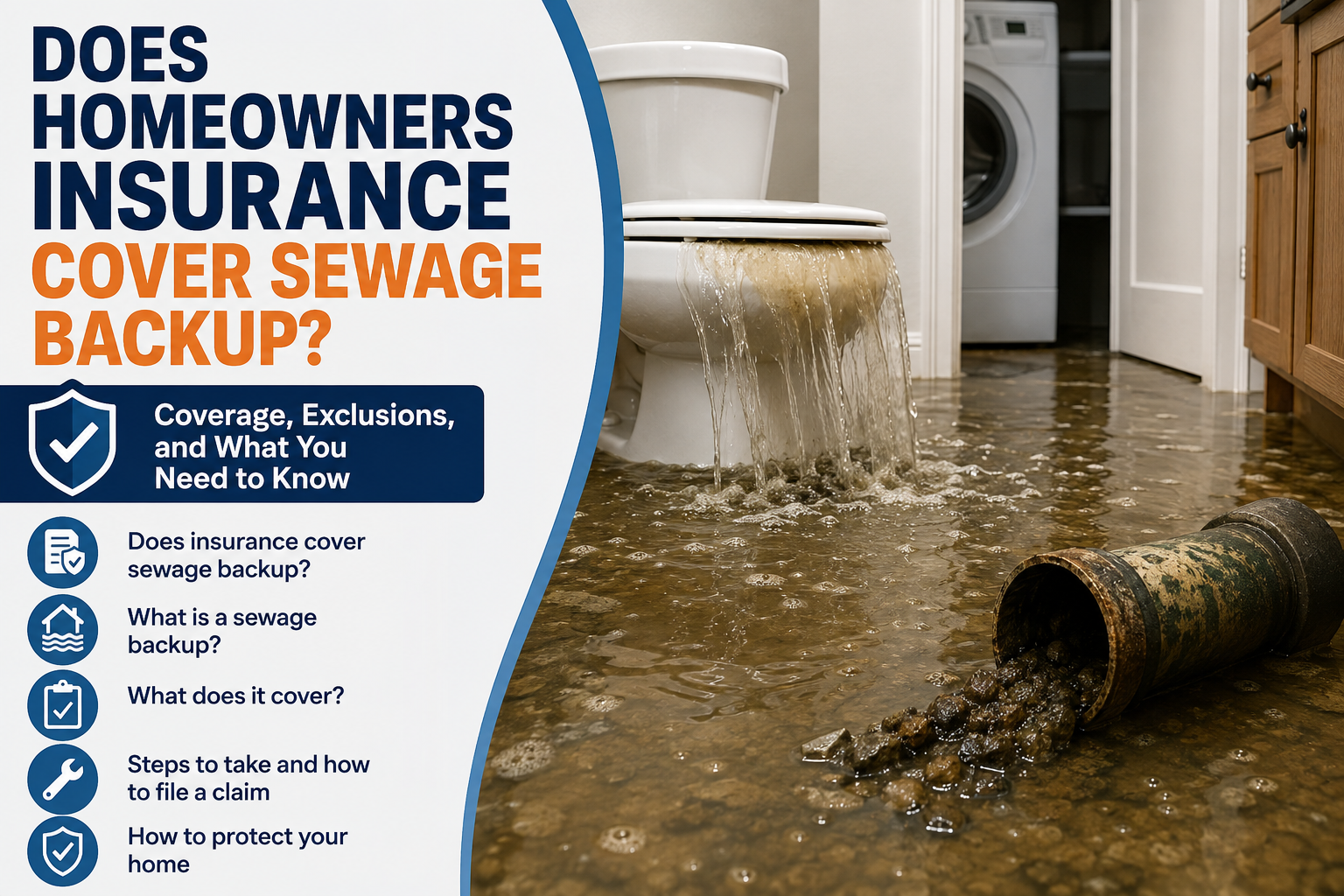
A sewage backup can fill your home with dirty water, harmful germs, and strong odors. It can also damage floors, walls, cabinets, and personal items. If this happens, you may need fast Orange County water damage restoration to remove the waste and dry the affected areas.
But does homeowners insurance cover sewage backup? In many cases, a basic policy does not cover it. You may need a water backup endorsement added to your policy. Coverage depends on the cause of the backup, your policy terms, and your coverage limits.
Does Homeowners Insurance Cover Sewage Backup?
Standard homeowners insurance does not always cover sewage backup damage. Many policies list sewer and drain backups as an exclusion.
However, you may have coverage if you bought an added form of protection called:
Water backup coverage
Sewer backup coverage
Drain backup coverage
Sump pump overflow coverage
Water backup endorsement
An endorsement changes or adds to your main insurance policy. If you have this coverage, your insurance company may pay for covered cleanup and repairs up to the stated limit.
Every policy is different. The California Department of Insurance explains that insurance policies have limits and exclusions, and the actual policy controls what is covered. Homeowners should read their policy and ask their insurance agent about unclear terms.
What Is a Sewage Backup?
A sewage backup happens when wastewater cannot move through a drain or sewer pipe. Instead, the waste flows backward into the home.
Sewage may enter through:
Toilets
Bathtubs
Floor drains
Showers
Utility sinks
Basement drains
Washing machine drains
This water may contain human waste, bacteria, viruses, chemicals, and other harmful materials. It is often treated as Category 3 water, also called black water.
You should avoid touching the sewage with bare skin. Children and pets should stay away from the affected area.
When Does Homeowners Insurance Cover Sewer Backup Damage?
Your insurance may cover sewer backup damage when your policy includes a water backup endorsement and the event meets the endorsement’s rules.
You Have Water Backup Coverage
The strongest sign that you may have coverage is a water or sewer backup endorsement listed on your declarations page.
This added coverage may help pay for:
Sewage removal
Water extraction
Cleaning and sanitizing
Drying and dehumidification
Damaged drywall
Damaged flooring
Built-in cabinets
Some personal property
Odor control
Temporary living costs in some cases
Coverage is still subject to your deductible, limits, and exclusions.
The Backup Was Sudden and Accidental
Insurance is more likely to cover a backup that happened without warning. For example, a sudden blockage in a main sewer line may cause wastewater to rise through a floor drain.
Insurance may be less likely to cover a problem that developed over time because of poor care or a known plumbing issue.
A Covered Plumbing Event Caused the Damage
Some policies may cover certain water damage caused by a sudden plumbing failure. However, sewage and drain backups are often handled under separate policy language.
The cause of the loss matters. A broken pipe inside the home is not always treated the same as sewage entering through a drain.
The National Association of Insurance Commissioners notes that homeowners insurance pays only when damage is caused by a peril covered by the policy.
When Is Sewage Backup Not Covered?
Even with homeowners insurance, some sewage losses may be denied. Common exclusions include poor maintenance, flooding, and damage above your coverage limit.
You Do Not Have a Water Backup Endorsement
Many standard policies exclude water that backs up through a sewer, drain, or sump pump.
Without an endorsement, you may have to pay for the following costs yourself:
Emergency sewage cleanup
Removal of damaged materials
Structural drying
Mold treatment
New flooring
Drywall replacement
Personal property replacement
Check your declarations page for terms such as “water backup” or “sewer and drain backup.”
The Damage Was Caused by Poor Maintenance
Insurance usually does not pay for preventable damage caused by long-term neglect.
A claim may be denied if the backup was caused by:
Tree roots that were ignored
A known broken sewer pipe
Years of grease buildup
Repeated drain problems
An old pipe that was not repaired
Poor septic tank maintenance
You may still have coverage for some resulting damage, but the cost to repair the worn or damaged pipe may not be covered.
Outside Floodwater Caused the Backup
A sewer system can become overloaded during heavy rain or flooding. If rising outside water caused sewage to enter the home, the loss may be treated as flood damage.
Most homeowners policies do not cover flooding. Flood insurance is normally purchased as a separate policy. FEMA states that most homeowners insurance does not cover flood damage.
Flood insurance coverage for sewer backup can also be limited. The backup may need to be directly caused by a covered flood affecting the property. Always review the exact policy language.
The Loss Is Above Your Coverage Limit
Water backup endorsements often have a separate limit. That limit may be much lower than the total value of the home.
For example, a policy could provide $5,000 or $10,000 in water backup coverage. A large sewage loss can cost more than that when it affects several rooms.
You would normally be responsible for costs above the policy limit.
The Backup Happened in an Uncovered Building
Your policy may treat a detached garage, guesthouse, shed, or other structure differently from the main home.
Ask whether the endorsement applies to:
The main dwelling
Detached structures
Finished basements
Personal property
Rental spaces
Additional living expenses
What Does Sewer Backup Insurance Usually Pay For?
Covered costs depend on the policy, but water backup coverage may help with both cleanup and property repairs.
Emergency Cleanup and Sanitizing
Professional cleanup may include:
Removing sewage and standing water
Taking out contaminated materials
Applying cleaning agents
Sanitizing hard surfaces
Drying the building
Controlling odors
Testing moisture levels
Fast cleanup is important because sewage can spread under floors and behind walls.
Repairs to the Home
Coverage may help repair parts of the home damaged by the sewage, including:
Drywall
Baseboards
Insulation
Wood framing
Tile
Carpet
Laminate flooring
Built-in cabinets
Interior doors
The insurer may pay actual cash value or replacement cost, depending on the policy.
Damaged Personal Belongings
Furniture, clothing, electronics, rugs, and other items may be covered if personal property protection applies to the loss.
Some items cannot be safely cleaned after sewage exposure. Keep a list of damaged belongings and take clear photographs before throwing anything away, unless leaving it creates an immediate health risk.
Additional Living Expenses
A severe sewage backup may make the home unsafe to occupy.
Loss-of-use coverage may help pay for reasonable added costs, such as:
Hotel stays
Short-term housing
Added meal costs
Pet boarding
Laundry expenses
This protection usually applies only when the sewage damage itself is covered.
Does Insurance Cover the Broken Sewer Line?
Homeowners often assume that coverage for sewage damage also pays to replace the pipe that caused it. That is not always true.
A policy may pay for damage caused by the backup but not for the old, clogged, or broken sewer line.
Sewer Lines on Your Property
You may be responsible for the sewer lateral that connects your home to the public sewer main. If this pipe cracks because of age, corrosion, or tree roots, standard insurance may not pay for the pipe repair.
Some insurers offer service line coverage as another endorsement. It may help with excavation and repair costs for covered underground utility lines.
Public Sewer Problems
If the city sewer system caused the backup, responsibility can be hard to determine. Contact the local sewer department and report the event.
Do not assume the city will automatically pay. Government claim rules may have short deadlines and special filing steps.
What Should You Do After a Sewage Backup?
Your actions after the loss can protect your health and make the insurance claim easier to review.
Stay Out of the Contaminated Area
Do not walk through sewage unless it is necessary to escape danger. Keep children, older adults, and pets away.
Avoid using affected toilets, sinks, showers, or washing machines. More water use may make the backup worse.
Stop the Source When It Is Safe
If you can do so without entering sewage, stop using water and call a licensed plumber or sewer professional.
You may also need to contact the local public works or sewer department if nearby homes are having the same problem.
Call Your Insurance Company
Report the damage as soon as possible. Ask the insurance representative:
Do I have water backup coverage?
What is my coverage limit?
What is my deductible?
Is emergency cleanup covered?
Do I need approval before repairs begin?
Does my policy cover temporary housing?
What documents are needed?
Write down the claim number and the name of each person you speak with.
Document the Damage
Take photographs and video of:
Standing sewage
The entry point
Damaged rooms
Wet flooring
Stained walls
Damaged furniture
Personal belongings
Cleanup work
Make a written list of each damaged item. Include its age, condition, estimated value, and purchase record when available.
Begin Emergency Mitigation
Most insurance policies require homeowners to take reasonable steps to stop further damage.
Emergency mitigation may include extracting sewage, removing unsafe materials, and drying the structure. Do not delay urgent work while waiting for an adjuster if the delay will make the damage worse.
Keep all invoices, inspection reports, plumbing records, photos, and receipts.
How Do You File a Sewage Backup Insurance Claim?
A clear and organized claim can help the insurer understand what happened.
Review Your Policy
Look at the policy declarations, endorsements, limits, exclusions, and deductible.
Search for terms such as:
Water backup
Sewer backup
Drain backup
Sump overflow
Service line
Flood
Mold
Pollutants
The declarations page gives a summary, but the full policy explains the actual coverage rules.
Explain the Cause Clearly
Tell the insurer when you first noticed the backup and where the sewage entered.
Do not guess about the cause. A licensed plumber may need to inspect the drain or sewer line and provide a written report.
The report may state whether the cause was a blockage, pipe break, tree root, city sewer problem, or another event.
Save All Claim Records
Keep copies of:
Emails
Claim letters
Estimates
Receipts
Photographs
Videos
Plumbing invoices
Cleanup invoices
Repair bids
Damaged property lists
The NAIC recommends keeping records and understanding the claims process after property damage.
How Can You Prevent a Future Sewer Backup?
No prevention step can remove all risk, but regular care can lower the chance of another backup.
Install a Backwater Valve
A backwater valve allows wastewater to flow out while helping stop sewage from flowing back into the home.
The valve should be installed by a qualified plumbing professional and checked as recommended.
Keep Grease Out of Drains
Cooking grease can cool and harden inside pipes. Over time, it may create a large blockage.
Place grease in a container and throw it away after it cools.
Avoid Flushing the Wrong Items
Only flush human waste and toilet paper.
Do not flush:
Wipes
Paper towels
Diapers
Cotton products
Hygiene products
Dental floss
Cat litter
Cooking grease
Even products labeled “flushable” may contribute to drain blockages.
Inspect Older Sewer Pipes
Older clay, cast iron, or Orangeburg pipes may crack, shift, or collapse. Tree roots can also enter small openings.
A sewer camera inspection can help find damage before a major backup occurs.
Ask About Water Backup Coverage
Contact your insurance agent before a loss. Ask about adding enough water backup coverage to handle cleanup, building repairs, and damaged belongings.
Compare the coverage limit with the possible cost of restoring a finished basement or several rooms.
Is Water Backup Coverage Worth Buying?
Water backup coverage may be worth considering because sewage cleanup can become expensive very quickly.
The right amount depends on:
The size of your home
Whether you have a basement
The value of finished rooms
The age of your sewer line
Past neighborhood backups
Local flood and storm risk
Your emergency savings
Do not choose a limit based only on the lowest premium. Think about how much it could cost to remove flooring, drywall, cabinets, and personal items after a large sewage loss.
Frequently Asked Questions
Does homeowners insurance automatically cover sewage backup?
Usually, no. Many standard homeowners policies exclude sewage or drain backups. You may need a water backup endorsement. Check your policy declarations and speak with your insurance agent to confirm your coverage.
Does homeowners insurance cover sewage cleanup?
It may cover sewage cleanup if you have water backup coverage and the cause meets the policy rules. Covered work may include sewage removal, sanitizing, structural drying, and repairs up to the coverage limit.
Does homeowners insurance cover a clogged sewer line?
Insurance may cover resulting water damage in some cases, but it may not pay to clear or replace a sewer line damaged by wear, age, roots, or poor maintenance. Service line coverage may offer added protection.
Is a sewage backup the same as a flood insurance claim?
No. A sewage backup and a flood are different events. However, if outside flooding caused the sewer system to back up, the insurer may treat the loss as flood-related. Standard homeowners insurance usually excludes flood damage.
How much water backup coverage should I buy?
Choose a limit based on the amount of damage a backup could cause. Consider cleanup, flooring, drywall, cabinets, personal belongings, and temporary housing. Ask an insurance agent to explain available limits and deductibles.
Get Help Quickly After Sewage Damage
Homeowners insurance may cover sewage backup when the policy includes the right endorsement and the cause is covered. A standard policy alone may not be enough.
First, protect everyone from contact with the sewage. Then report the loss, document the damage, and begin emergency cleanup. Fast action can limit contamination, reduce structural damage, and help prevent mold growth.
Insurance rules vary by company, state, policy, and cause of loss. Always rely on your written policy and claim decision for final coverage information.