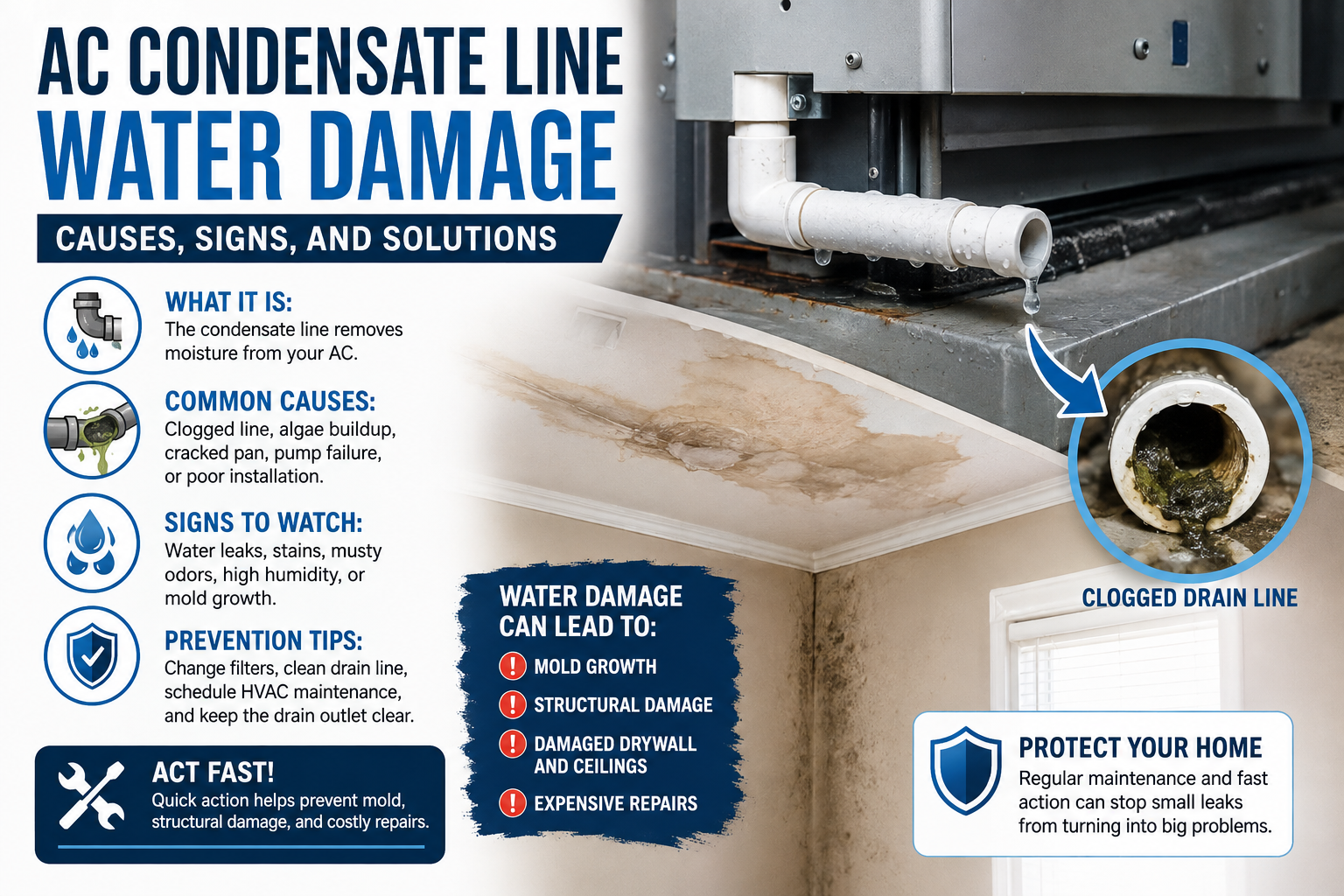
If you notice water around your air conditioner, you could have AC condensate line water damage. A clogged or damaged condensate drain line can allow water to overflow into your home. This can damage drywall, flooring, ceilings, insulation, and even lead to mold growth if it is not fixed quickly. If your home has experienced water damage, professional water damage restoration services can help remove water, dry affected materials, and prevent further damage.
Many homeowners do not realize their AC system creates water every day. Understanding how the condensate line works can help you catch problems early and avoid expensive repairs.
What Is an AC Condensate Line?
An air conditioner does more than cool your home. It also removes moisture from the air.
As warm indoor air passes over the evaporator coil, moisture collects on the coil and drips into a drain pan. The water then flows through the AC condensate drain line and safely exits your home.
This process happens every day during cooling season.
Without a working condensate line, water has nowhere to go and can overflow inside your home.
Main Parts of the Condensate Drain System
- Evaporator coil
- Drain pan
- Condensate drain line
- PVC drain pipe
- Drain trap
- Condensate pump (in some homes)
- Drain outlet
Each part helps move water safely away from your home.
What Causes AC Condensate Line Water Damage?
Several problems can stop water from draining correctly.
Clogged Drain Line
The most common cause is a clogged condensate line.
Over time, dirt, dust, algae, mold, and debris build up inside the PVC pipe. Eventually, water cannot flow through the pipe.
Instead, it backs up into the drain pan until it overflows.
Cracked Drain Pan
Older air conditioners may have rusted or cracked drain pans.
Instead of collecting water, the pan leaks directly into the ceiling or floor.
Broken Condensate Pump
Some HVAC systems use a condensate pump to move water uphill.
If the pump fails, water remains inside the drain pan until it spills over.
Frozen Evaporator Coil
A dirty air filter or low refrigerant level may cause the evaporator coil to freeze.
When the ice melts, it produces more water than the drain can handle.
Poor Installation
Incorrect drain pipe slope or improper HVAC installation can keep water from flowing properly.
Standing water increases the chance of overflow.
Signs of AC Condensate Line Water Damage
The earlier you notice the warning signs, the easier repairs may be.
Water Around the Indoor Unit
One of the first signs is water pooling near the indoor air handler.
Never ignore standing water.
Ceiling Water Stains
If the HVAC system is located in the attic, leaking water may create:
- Brown stains
- Soft drywall
- Bubbling paint
- Sagging ceilings
Musty Odors
Standing moisture creates the perfect place for mold and mildew.
A musty smell often appears before visible mold.
High Indoor Humidity
A clogged drain can reduce your air conditioner’s ability to remove humidity.
Rooms may begin feeling sticky.
Mold Growth
Moist drywall, insulation, wood framing, and carpet can begin growing mold within 24 to 48 hours.
Can a Clogged AC Drain Line Cause Serious Water Damage?
Yes.
Many homeowners assume a small leak is harmless.
However, water leaking day after day can damage many building materials.
Common damage includes:
- Drywall
- Ceiling texture
- Wood flooring
- Laminate flooring
- Carpet
- Baseboards
- Cabinets
- Insulation
- Wood framing
Long-term moisture can also weaken structural materials.
Is AC Condensate Line Water Clean?
Condensate water usually starts as relatively clean water because it comes from humidity in the air.
However, once it passes through the HVAC system and sits inside the drain pan or drain line, it can collect:
- Dust
- Dirt
- Bacteria
- Mold
- Algae
Because of this, standing condensate water should not be considered clean after it overflows.
What Should You Do If Your AC Drain Line Overflows?
Quick action can reduce damage.
Turn Off the Air Conditioner
Shut off your HVAC system immediately.
This stops additional water from entering the drain pan.
Remove Standing Water
Use towels or a wet vacuum if it is safe.
Removing water quickly helps reduce damage.
Inspect the Drain Pan
Look for:
- Cracks
- Rust
- Overflow
- Standing water
A damaged drain pan may need replacement.
Check the Drain Line
If you can safely access the drain line, look for obvious clogs.
Many homeowners use a wet/dry vacuum outside where the drain exits the home to remove blockages.
Call an HVAC Professional
If the clog cannot be cleared safely, an HVAC technician can inspect the entire drainage system.
Dry the Affected Area
Water trapped behind walls or under flooring can lead to mold growth.
Professional structural drying may be needed after larger leaks.
How Water Damage Restoration Helps
Even a slow leak can affect hidden areas.
Water damage restoration professionals use specialized equipment to find moisture you cannot see.
Moisture Inspection
Technicians use:
- Moisture meters
- Thermal imaging cameras
- Hygrometers
These tools locate hidden moisture inside walls and floors.
Water Extraction
Standing water is removed quickly using commercial extraction equipment.
Structural Drying
Industrial air movers and dehumidifiers dry:
- Drywall
- Wood framing
- Flooring
- Insulation
Proper drying helps prevent secondary damage.
Mold Prevention
Fast drying greatly lowers the chance of mold growth.
If mold has already developed, mold remediation may be necessary.
Damage Assessment
Professionals inspect all affected materials to determine whether they can be dried or require replacement.
How to Prevent AC Condensate Line Water Damage
Preventive maintenance is much less expensive than repairs.
Change Air Filters
Dirty air filters reduce airflow and increase the risk of frozen evaporator coils.
Replace filters every 1 to 3 months.
Flush the Drain Line
Many HVAC professionals recommend flushing the condensate line at least once each year.
This helps remove algae and debris.
Schedule Annual HVAC Maintenance
Routine inspections allow technicians to:
- Clean the drain line
- Inspect the drain pan
- Check refrigerant levels
- Test the condensate pump
- Verify proper drainage
Annual maintenance catches small problems before they become major leaks.
Install a Float Switch
Many newer HVAC systems include a safety float switch.
When the drain pan fills with water, the switch automatically shuts off the air conditioner.
This helps prevent flooding.
Keep the Drain Outlet Clear
The outdoor drain outlet should stay free of:
- Leaves
- Dirt
- Grass
- Insects
A blocked outlet can stop water from draining.
Does Homeowners Insurance Cover AC Condensate Line Water Damage?
Coverage depends on your insurance policy and the cause of the leak.
Many homeowners insurance policies may cover sudden and accidental water damage.
However, damage caused by poor maintenance or neglect may not be covered.
Always review your policy or speak with your insurance provider to understand your coverage.
How Long Does It Take for Mold to Grow?
Mold can begin growing within 24 to 48 hours when moisture remains on building materials.
Warm temperatures and high humidity make mold grow even faster.
That is why drying your home quickly after a condensate leak is so important.
When Should You Call a Water Damage Restoration Company?
Call a restoration company if you notice:
- Water inside walls
- Wet flooring
- Ceiling leaks
- Musty odors
- Large amounts of standing water
- Visible mold
- Damage that has lasted more than a day
Professional drying equipment removes moisture much faster than household fans.
Why Fast Action Matters
Small AC leaks often become large repair projects when ignored.
Water can slowly spread behind walls, under flooring, and into insulation without being seen.
The sooner the leak is repaired and the area is dried, the lower the repair costs are likely to be.
Regular HVAC maintenance, annual drain line cleaning, and quick response to leaks can help protect your home from expensive water damage.
Frequently Asked Questions
Can a clogged AC condensate line cause water damage?
Yes. A clogged condensate line can cause the drain pan to overflow, leading to water damage in ceilings, walls, flooring, insulation, and nearby building materials.
How do I know if my AC drain line is clogged?
Common signs include water around the indoor unit, ceiling stains, musty odors, high indoor humidity, and the air conditioner shutting off unexpectedly if it has a safety float switch.
Is AC condensate water dangerous?
Fresh condensate water is generally clean at first, but overflow water may contain dirt, mold, algae, bacteria, and other contaminants after sitting in the drain system.
How often should an AC condensate line be cleaned?
Most HVAC professionals recommend cleaning or flushing the condensate drain line at least once a year as part of routine HVAC maintenance.
Can water damage from an AC leak cause mold?
Yes. Mold can begin growing within 24 to 48 hours if affected materials remain wet. Prompt drying and repairs help reduce the risk of mold growth.