Sewage Backup in House: What to Do Right Away
A sewage backup can fill your home with dirty water, bad smells, and harmful germs. If you are searching for sewage backup in house what to do, the first step is to stay away from the affected area. Sewage water can cause serious property damage and health risks. A trained Orange County water damage restoration team can remove the wastewater, dry the building, and clean contaminated materials safely.
What Should You Do First After a Sewage Backup?
Act fast, but do not rush into the contaminated area. Sewage may contain bacteria, viruses, parasites, chemicals, and sharp objects.
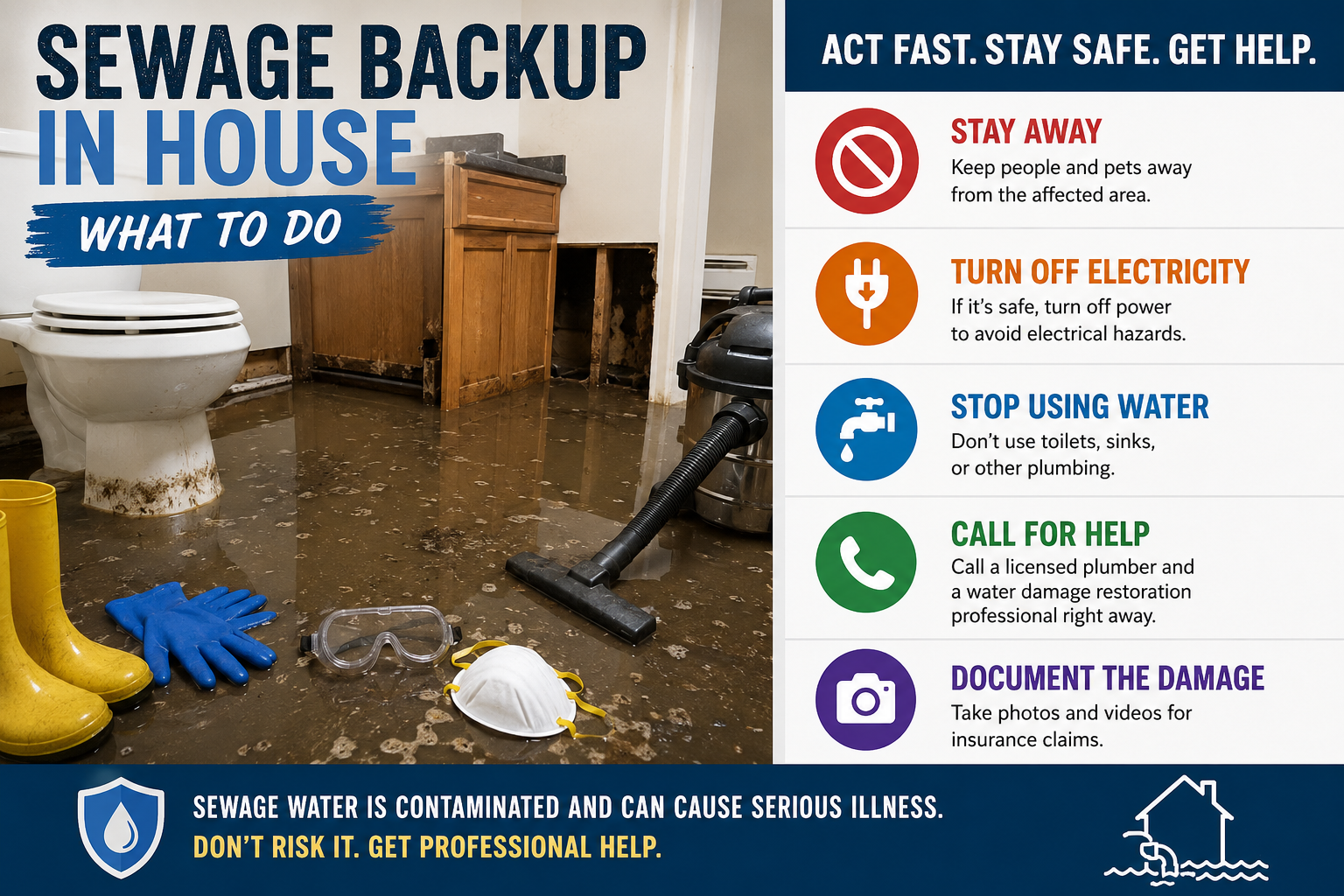
Keep People and Pets Away
Move children, older adults, pets, and anyone with health problems away from the sewage spill. Close the door to the affected room when possible.
Do not walk through sewage water unless you must leave the home. Sewage can enter the body through cuts, the mouth, the nose, and the eyes.
People with asthma, weak immune systems, breathing problems, or open wounds should not enter the area.
Avoid Contact With the Sewage Water
Do not touch sewage with bare hands. Do not try to clean it with a regular mop or household vacuum.
If you must enter the area for an urgent reason, use protective equipment such as:
Waterproof rubber boots
Heavy rubber gloves
Safety goggles
Disposable coveralls
An N95 respirator or better protection
Throw away disposable protective gear after use. Wash your hands with soap and clean water, even if you wore gloves.
Turn Off Electricity When It Is Safe
Water and electricity can cause a deadly shock. If sewage has reached outlets, appliances, cords, or the electrical panel, do not enter the area.
Turn off the electricity from a dry and safe location only if you can do so without touching water. Otherwise, call an electrician or emergency responder.
Never stand in sewage water while touching switches, appliances, or electrical equipment.
Stop Using Water in the Home
Stop flushing toilets, running sinks, washing clothes, and using the dishwasher. More water may make the sewage backup worse.
Ask everyone in the home to avoid using plumbing until the cause has been found and repaired.
Why Is Sewage Backing Up Into the House?
A sewage backup happens when wastewater cannot flow away from the home. The water may come back through a toilet, shower, bathtub, sink, or floor drain.
A Clogged Main Sewer Line
A blockage in the main sewer line is a common cause of sewage backing up into a house. The clog may be made of:
Grease
Hair
Paper products
Wipes
Hygiene products
Food waste
Foreign objects
Even wipes marked as flushable may collect inside pipes and form a blockage.
Tree Roots Inside Sewer Pipes
Tree roots search for water. They can enter small cracks in older sewer pipes and grow inside the line.
As the roots grow, they can catch waste and toilet paper. This may slow the drain or block it fully.
Warning signs may include slow drains, bubbling toilets, bad odors, and repeated sewer clogs.
Damaged or Collapsed Pipes
Older pipes can crack, shift, sag, or collapse. Soil movement, corrosion, construction work, and normal aging may damage a sewer line.
A plumber may use a sewer camera to find broken pipes and locate the damaged section.
Heavy Rain or an Overloaded Sewer System
During heavy rain, a city sewer system may receive more water than it can carry. Wastewater may then flow backward into homes, especially through basement drains or low plumbing fixtures.
A sewer backwater valve may help lower the risk in some homes.
Problems With a Septic System
Homes with septic systems may have a backup when the tank is full, the drain field is damaged, or the system is blocked.
Do not open or enter a septic tank. Septic tanks can contain toxic gases and may create a fall or suffocation hazard.
Who Should You Call for a Sewage Backup?
A sewage backup often needs more than one trained professional. The right person depends on where the backup started and how much damage occurred.
Call a Licensed Plumber
A plumber can find and repair the plumbing problem. The plumber may clear a clogged sewer line, inspect the pipes with a camera, repair a damaged line, or check the septic system.
Removing the clog does not make the affected rooms clean. Sewage water may still be trapped under flooring, inside walls, or around cabinets.
Call a Water Damage Restoration Company
A restoration team handles the contaminated water and building damage. The team may:
Pump out sewage water
Remove solid waste
Take out contaminated materials
Clean and disinfect surfaces
Dry the structure
Control odors
Check moisture levels
Look for hidden water damage
Sewage is often treated as Category 3 water, also called black water. This type of water may contain harmful germs and unsafe waste.
Contact the Local Sewer Department
Call the local public works or sewer department if several homes have backups or if the problem may be in the city sewer main.
The department can tell you whether the public sewer system is blocked. Responsibility for repairs may depend on whether the problem is in the city line or the private line connected to your house.
Notify Your Insurance Company
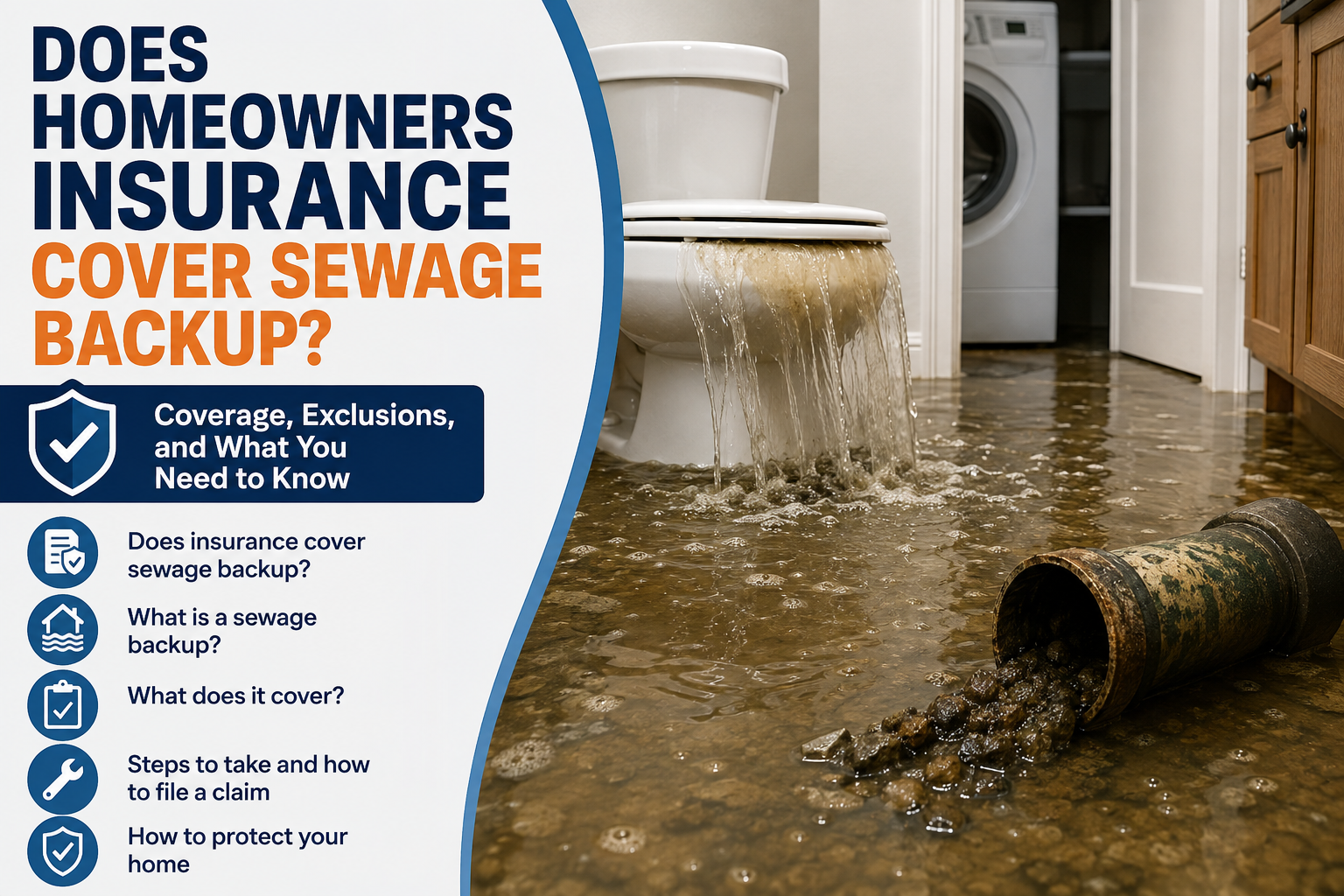
Contact your homeowners insurance company as soon as possible. Ask whether your policy includes sewer backup or water backup coverage.
Standard coverage does not always include sewage backups. Some homeowners buy a separate endorsement for sewer or drain backup damage.
Take photos and videos from a safe location before cleanup begins. Save receipts, reports, repair bills, and lists of damaged items.
Can You Clean Up a Sewage Backup Yourself?
A very small spill from a known source may sometimes be handled by a healthy adult with proper protective gear. However, most sewage backups should be cleaned by trained professionals.
When Professional Cleanup Is Needed
Professional sewage cleanup is strongly recommended when:
Sewage covers a large area
The water reached carpet or padding
Sewage entered drywall or insulation
The backup lasted several hours
The water reached heating or cooling equipment
The spill contains solid waste
Someone in the home has health problems
The sewage came from a city sewer or septic system
The water reached electrical equipment
Mold growth is visible or suspected
Porous materials absorb contaminated water quickly. Cleaning the surface may not remove germs that have entered the material.
Why Bleach Alone Is Not Enough
Pouring bleach over sewage does not remove waste, dirt, moisture, or damaged building materials. Disinfectants work best after physical waste and soil have been removed.
Mixing bleach with ammonia, acids, drain cleaners, or other products can create toxic gases. Never mix cleaning chemicals.
Professionals select cleaning products based on the surface, contamination level, and manufacturer directions.
What Items Must Be Thrown Away After Sewage Damage?
Some hard, nonporous items may be cleaned and disinfected. Many soft and absorbent materials cannot be safely restored after contact with sewage.
Materials That Often Need Removal
Items commonly removed after sewage contamination include:
Carpet
Carpet padding
Upholstered furniture
Mattresses
Cardboard
Paper products
Unsealed wood
Ceiling tiles
Some types of insulation
Severely damaged drywall
Stuffed toys
Contaminated food
Personal care products
Medicine exposed to sewage
Do not eat food that touched sewage water. This includes sealed items if the packaging cannot be cleaned safely.
Items That May Be Cleaned
Some nonporous materials may be cleaned if they are not badly damaged. Examples include glass, metal, sealed plastic, ceramic tile, and certain sealed surfaces.
Each item should be washed, disinfected, rinsed when required, and dried fully.
Valuable papers, photographs, and keepsakes may require a specialty contents restoration company.
How Is Professional Sewage Cleanup Completed?
A professional cleanup process should address both visible waste and hidden moisture.
Inspection and Safety Controls
The team first checks the source, affected rooms, electrical risks, and level of contamination. Workers may place barriers around the damaged area to help prevent contaminants from spreading.
They may also use air filtration equipment to capture airborne particles.
Sewage Water Extraction
Commercial pumps and extractors remove standing wastewater. Solid waste is collected and disposed of according to local rules.
The equipment used for sewage should be cleaned and disinfected after the job.
Removal of Contaminated Materials
Workers remove materials that cannot be safely cleaned. This may include carpet, padding, drywall, insulation, trim, cabinets, or damaged flooring.
Removing unsafe materials also allows the structure behind them to dry.
Cleaning and Disinfection
The remaining surfaces are cleaned to remove soil and waste. A suitable disinfectant is then applied according to its label.
The cleaning process may include walls, floors, framing, subfloors, fixtures, and other affected surfaces.
Structural Drying
Air movers and commercial dehumidifiers help remove moisture from the building. Moisture meters are used to track drying progress.
The area should be dried fully before repairs begin. Covering damp materials too soon can trap moisture and support mold growth.
Odor Control and Final Inspection
Sewage odors may remain if contaminated material or moisture is still present. Odor treatments should not be used as a substitute for cleaning and removal.
A final inspection helps confirm that the affected area is clean, dry, and ready for repairs.
What Health Problems Can Sewage Exposure Cause?
Sewage exposure can cause illness, especially if contaminated water is swallowed or enters a cut.
Common Symptoms After Exposure
Possible symptoms may include:
Nausea
Vomiting
Diarrhea
Stomach pain
Fever
Headache
Skin irritation
Eye irritation
Coughing
Breathing trouble
Weakness
Symptoms may begin soon after exposure or appear later.
When to Seek Medical Care
Contact a healthcare professional if you touched sewage and develop symptoms. Get prompt medical help for severe breathing trouble, ongoing vomiting, a high fever, confusion, dehydration, or an infected wound.
Tell the medical provider that you were exposed to sewage. Ask about care for cuts and whether your tetanus vaccination is current.
Call emergency services for severe or life-threatening symptoms.
How Can You Prevent Another Sewage Backup?
You cannot prevent every plumbing emergency, but regular care can lower the risk.
Flush Only Toilet Paper and Waste
Do not flush wipes, paper towels, diapers, cotton swabs, dental floss, feminine hygiene products, or cat litter.
Place these materials in the trash.
Keep Grease Out of Drains
Do not pour cooking oil, fat, or grease into a sink. Grease can cool, harden, and collect inside the pipe.
Place cooled grease in a sealed container and throw it away according to local rules.
Schedule Sewer Line Inspections
Homes with older pipes, large trees, or repeated drain problems may benefit from a sewer camera inspection.
A plumber can look for roots, cracks, buildup, corrosion, and low spots in the line.
Consider a Backwater Valve
A backwater valve is designed to help stop sewage from flowing backward into a home. A licensed plumber can tell you whether one is suitable for your plumbing system.
The valve must be installed correctly and checked as recommended.
Maintain the Septic System
Have the septic tank inspected and pumped based on household use, tank size, and local guidance.
Do not drive over the septic tank or drain field. Avoid planting large trees near septic pipes.
What Should You Document for an Insurance Claim?
Good records can make the claim process easier.
Take photos or video of:
Standing sewage water
The room where the backup started
Damaged walls and floors
Furniture and personal items
Plumbing fixtures
Cleanup work
Materials removed from the home
Create a list of damaged property. Include each item’s age, estimated value, brand, model, and purchase date when known.
Do not throw away major damaged items until the insurance adjuster gives instructions, unless keeping them would create a health risk. Photograph unsafe items before disposal.
Frequently Asked Questions
How long can sewage sit before it becomes dangerous?
Sewage should be treated as dangerous as soon as it enters the home. It may already contain harmful germs, waste, and chemicals. Keep people away and begin professional removal as soon as possible.
Can I stay in my house after a sewage backup?
You may need to leave if the sewage affects a large area, blocks access to bathrooms, reaches the heating system, creates strong odors, or places children and vulnerable adults at risk. A restoration professional can inspect the damage and explain whether the home is safe to occupy.
Does homeowners insurance cover a sewage backup?
Coverage depends on your policy and the cause of the backup. Many standard policies require an added sewer or drain backup endorsement. Contact your insurance company and ask for a written explanation of your coverage.
How do I get rid of the sewage smell?
The sewage, contaminated materials, and hidden moisture must be removed first. Cleaning, disinfection, structural drying, and odor treatment may then be needed. Air fresheners alone will not solve the source of the smell.
How long does sewage cleanup take?
A small affected area may take a few days to clean and dry. Larger losses may take longer, especially when sewage enters walls, flooring, cabinets, or several rooms. Repairs begin after contaminated materials are removed and the structure is dry.
Get Help Quickly After a Sewage Backup
A sewage backup is more than a plumbing mess. It is a contaminated water emergency that can harm building materials and expose people to unsafe waste.
Stay out of the affected space, stop water use, avoid electrical hazards, and call qualified professionals. Fast sewage removal, proper disinfection, and complete structural drying can reduce damage and help make the home safe again.