Is It Safe to Stay in a House With Sewage Backup?
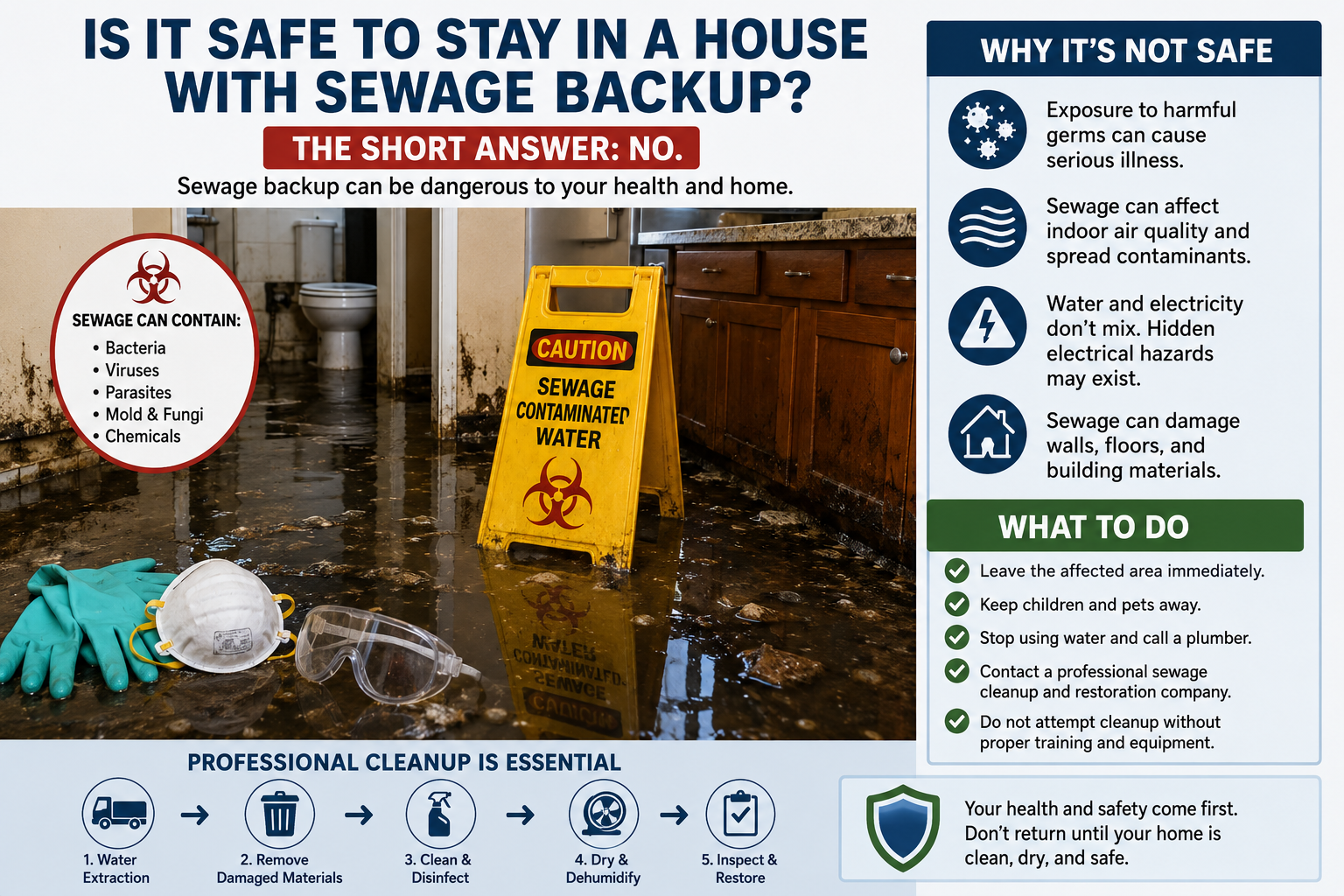
No, it is usually not safe to stay in a house with sewage backup. Raw sewage may contain harmful bacteria, viruses, parasites, and other germs. It can also create electrical dangers, bad indoor air, and hidden water damage. If sewage has entered your home, keep people and pets away from the affected area. Contact a plumber and a professional water damage restoration service in Orange County as soon as possible.
The safest choice may be to leave the home until the sewage is removed, damaged materials are taken out, and the area is cleaned and dried.
Is It Safe to Stay in a House With Sewage Backup?
In most cases, you should not stay in a house with an active sewage backup. This is even more important if sewage has spread into living areas, bedrooms, a kitchen, or an HVAC system.
A sewage backup is more than a bad smell or plumbing problem. It is a health and safety emergency. The U.S. Environmental Protection Agency states that raw sewage may carry bacteria, viruses, parasites, intestinal worms, mold, and fungi. These contaminants can threaten public health when sewage enters a home.
You may need to leave right away when:
Sewage covers a large part of the floor.
Wastewater has reached several rooms.
Children, older adults, or pregnant people live in the home.
Someone has asthma or a weak immune system.
Sewage has entered air vents or ductwork.
Electrical outlets or appliances are wet.
The home has a strong sewage odor.
Toilets or drains are still overflowing.
There is no safe bathroom or clean water.
A restoration professional says the home is unsafe.
Do not assume a closed door makes the rest of the home safe. Contaminated water can travel under walls, beneath flooring, and into nearby rooms.
Why Is Sewage Backup Dangerous?
Sewage contains human waste, dirty water, toilet paper, chemicals, and other contaminated materials. It is often called black water or Category 3 water because it may cause serious illness.
The danger does not always end when the standing water is gone. Germs and moisture can remain inside carpet, drywall, wood, insulation, cabinets, and subfloors.
Sewage Can Contain Harmful Germs
Raw sewage may contain organisms that can cause:
Diarrhea
Vomiting
Stomach cramps
Skin infections
Eye irritation
Breathing problems
Fever
Headaches
Other infections
People may become sick by touching sewage, breathing contaminated droplets, or placing dirty hands near their mouth. The Centers for Disease Control and Prevention warns people to avoid contact with water that may be contaminated by sewage because it can cause illness.
Sewage Can Affect Indoor Air
A sewage backup may release foul odors and airborne contaminants. Moist building materials may also support mold growth.
The smell alone does not tell you how dangerous the area is. A room may still contain germs even after the odor becomes weaker. Air movement from fans, heating systems, or air conditioners can spread contaminated particles to other areas.
Turn off the HVAC system if sewage has reached nearby vents or if contaminated air may be moving through the home. Do not restart it until a qualified professional checks the system.
Wet Areas Can Create Electrical Hazards
Water and electricity are a dangerous mix. Sewage water may reach:
Wall outlets
Extension cords
Appliances
Electrical panels
Furnaces
Water heaters
Power strips
Do not walk through standing sewage to turn off the power. Contact the utility company, fire department, or a licensed electrician when the electrical shutoff cannot be reached safely.
Sewage Damage Can Weaken Building Materials
Drywall, flooring, cabinets, and insulation may absorb sewage water. These materials may swell, break apart, or become unsafe.
Wet floors may also become slippery. In severe cases, damaged ceilings, walls, or floors may lose strength. Stay out of any area that appears unstable.
Who Should Leave the House First?
Some people face a greater risk of becoming sick after exposure to sewage. They should leave the home and avoid all affected items.
High-risk household members include:
Babies and young children
Older adults
Pregnant people
People with asthma
People with open cuts or wounds
People receiving cancer treatment
People with weak immune systems
People with long-term health conditions
Pets should also be removed from the affected area. Dogs and cats may walk through sewage and spread germs onto furniture, rugs, bedding, and people.
Do not let pets drink contaminated water or lick dirty paws. Contact a veterinarian if a pet has swallowed sewage water or shows signs of illness.
What Should You Do Right After a Sewage Backup?
Fast action can limit damage, but personal safety must come first.
Leave the Contaminated Area
Move everyone to a clean part of the home or leave the building. Close doors to the affected rooms when you can do so without touching contaminated surfaces.
Do not enter the area barefoot. Do not allow children or pets near the sewage.
Stop Using Water
Stop flushing toilets and using sinks, showers, dishwashers, and washing machines. More water entering the plumbing system may make the backup worse.
If the problem is connected to a septic system, heavy water use may place more pressure on the system. The EPA advises homeowners to reduce water use when flooding threatens a septic or sewage system.
Call a Plumber
A licensed plumber can locate and stop the cause of the backup. Common causes include:
Clogged drain lines
Tree roots in sewer pipes
Broken sewer lines
Grease buildup
Damaged septic systems
Heavy rainfall
Municipal sewer problems
Objects flushed down a toilet
Removing the wastewater without fixing the plumbing problem may lead to another backup.
Call a Sewage Cleanup Company
Sewage cleanup requires more than a mop and household spray. A trained restoration team can extract the wastewater, remove unsafe materials, disinfect surfaces, control moisture, and dry the building.
The EPA recommends contacting a professional with experience cleaning buildings damaged by sewage or other contaminated water.
Document the Damage
Take photos and videos from a safe location. Record the affected rooms, damaged items, and visible water level.
Contact your homeowners or renters insurance company. Ask whether your policy includes sewer backup coverage, water damage cleanup, temporary housing, and personal property replacement.
Do not delay emergency safety work while waiting for an insurance inspection.
What Should You Avoid During a Sewage Backup?
Many common cleanup actions can spread contamination or cause injury.
Do not:
Touch sewage with bare hands.
Walk through wastewater without protective equipment.
Use a regular household vacuum.
Use a shop vacuum unless trained professionals approve it.
Turn on fans that may spread contaminated air.
Mix bleach with ammonia or other cleaners.
Eat food stored near the backup.
Use dishes or utensils exposed to sewage.
Let children help with cleanup.
Save contaminated carpet or padding.
Run the HVAC system if vents are affected.
Use electrical devices in wet areas.
Never mix bleach with ammonia, acids, or other cleaning products. This can create dangerous gases.
Can You Clean Up a Small Sewage Backup Yourself?
Even a small sewage spill may expose you to harmful pathogens. Professional cleanup is the safer choice, especially when sewage has touched porous materials.
Porous materials absorb contaminated water and can be hard to disinfect. These may include:
Carpet
Carpet padding
Drywall
Insulation
Upholstered furniture
Mattresses
Cardboard
Unfinished wood
Ceiling tiles
These items often need to be removed and discarded.
A homeowner may be able to handle a very small spill limited to a hard, nonporous surface, but only when the source has stopped and there are no electrical, structural, or health risks. Protective gloves, waterproof boots, eye protection, and proper cleaning products are still needed.
The CDC advises workers who handle sewage to receive training in hygiene, protective equipment, and safe waste handling. This shows why major sewage cleanup should be left to trained professionals.
How Is Professional Sewage Cleanup Done?
A professional sewage restoration process may include several steps.
The Source Is Stopped
A plumber or sewer professional finds and repairs the cause. This may involve clearing a clogged drain, repairing a broken pipe, or inspecting a septic system.
Standing Sewage Is Removed
Restoration workers use professional extraction equipment to remove contaminated water. The equipment is built for hazardous water and is cleaned after use.
Damaged Materials Are Taken Out
Carpet, padding, drywall, insulation, and other unsafe materials may be removed. The removal area may extend beyond the visible water line because moisture can travel inside walls and floors.
The Area Is Cleaned and Disinfected
Workers remove dirt and organic waste before applying suitable disinfectants. Cleaning must come before disinfecting because thick dirt can prevent a disinfectant from reaching the surface.
The Home Is Dried
Air movers, dehumidifiers, and moisture meters may be used after contaminated materials have been removed. Proper drying helps prevent mold, odors, and further building damage.
The Area Is Tested and Repaired
Professionals inspect walls, floors, and other materials for hidden moisture. Repairs should begin only after the area is clean and dry.
How Long Should You Stay Out After a Sewage Backup?
There is no single waiting period for every home. The right amount of time depends on:
How much sewage entered the house
Which rooms were affected
How long the water remained
Whether porous materials became wet
Whether the HVAC system was affected
Whether electrical hazards exist
How quickly cleanup began
How long drying takes
A minor event may be resolved faster than a backup that spreads through several rooms. Severe sewage damage may require temporary housing for several days or longer.
Do not return just because the floor looks dry. Wait until the sewage source is fixed, contaminated materials are removed, surfaces are disinfected, the structure is dry, and professionals say the area is safe.
What Signs Mean the House Is Not Ready?
Your home may still be unsafe if you notice:
A sewage or musty smell
Wet drywall or baseboards
Soft or raised flooring
Visible mold
High indoor humidity
Damp carpet
Stains that keep growing
Flies or other pests
Wastewater coming from drains
Family members feeling sick indoors
A strong air freshener does not solve sewage contamination. Odor treatments should be used only after the source and contaminated materials are removed.
Can Sewage Backup Cause Mold?
Yes. Sewage water adds moisture to walls, flooring, cabinets, and other materials. Mold can begin growing when these items stay wet.
Mold may grow behind drywall or beneath flooring where it cannot be seen. This is one reason fast extraction and structural drying are important.
Contaminated porous materials may need removal instead of surface cleaning. The goal is to address both the sewage contamination and the moisture that supports mold growth.
How Can You Prevent Another Sewage Backup?
Not all backups can be prevented, but regular care may lower the risk.
Protect Your Drain Lines
Do not flush wipes, paper towels, diapers, feminine products, cotton swabs, or grease. Even products marked “flushable” may collect inside sewer pipes.
Only flush human waste and toilet paper.
Schedule Sewer Line Inspections
A plumber can inspect a sewer line with a camera. This may reveal tree roots, cracks, grease, corrosion, or collapsed sections.
Older homes may need more frequent inspections.
Install a Backwater Valve
A backwater valve may help stop sewage from flowing backward into a home. A licensed plumber can determine whether the device is allowed and suitable for your plumbing system.
Maintain Your Septic System
Have the septic tank inspected and pumped based on local guidance and household use. Avoid parking or building over the drain field.
The EPA notes that routine inspections can help prevent expensive repairs and sewage backups.
When Should You Seek Medical Help?
Contact a healthcare professional if you were exposed to sewage and develop:
Vomiting
Diarrhea
Stomach pain
Fever
Skin redness
Eye irritation
Trouble breathing
A worsening cough
An infected cut
Unusual weakness
Wash exposed skin with clean soap and water as soon as possible. Remove contaminated clothing without touching your face.
Seek urgent medical care for severe trouble breathing, confusion, fainting, serious dehydration, or another medical emergency.
Final Answer: Should You Stay in the House?
It is generally not safe to stay in a house with an active sewage backup. The water may contain harmful germs, and the home may have hidden electrical, structural, and indoor-air hazards.
Leave the affected area, stop using water, keep children and pets away, and contact a licensed plumber and professional sewage cleanup team. Return only after the source is repaired, contaminated materials are removed, the building is cleaned and dried, and the home is considered safe.
Frequently Asked Questions
Can sewage backup make you sick?
Yes. Sewage may contain bacteria, viruses, parasites, fungi, and other contaminants. Exposure may cause stomach illness, skin infections, eye irritation, breathing problems, or other health concerns.
Is the smell of sewage dangerous?
A sewage smell is a warning that there may be a plumbing problem or contamination. The odor alone cannot show the full level of danger. Leave areas with strong odors and have the source inspected.
Can I sleep upstairs if sewage is in the basement?
It may still be unsafe. Contaminated air can move through stairways and HVAC systems. Sewage may also create electrical or structural hazards. Ask a qualified restoration professional whether any part of the home is safe to occupy.
How long does it take to clean a sewage backup?
A small, contained backup may take less time than widespread damage. Cleanup and drying may take several days or longer, depending on the amount of sewage, affected materials, moisture levels, and repairs needed.
Does everything touched by sewage need to be thrown away?
No, but many porous items cannot be cleaned safely. Carpet, padding, drywall, insulation, mattresses, and upholstered furniture often need to be discarded. Hard, nonporous items may be cleaned and disinfected when they are not damaged.