How to Treat Chemical Inhalation at Home
Breathing in chemical fumes can happen in many homes. Cleaning products, paint, bleach, ammonia, smoke, and other household chemicals can irritate your lungs and airways. Knowing how to treat chemical inhalation at home can help reduce symptoms and prevent more serious health problems. If chemical fumes are caused by smoke or fire damage, professional fire damage restoration services can help remove harmful odors and improve indoor air quality.
Most mild cases get better with fresh air and rest. However, some chemical exposures are medical emergencies. This guide explains what to do, what to avoid, and when to call 911 or your local poison center.
What Is Chemical Inhalation?
Chemical inhalation happens when you breathe in harmful gases, vapors, smoke, or fumes. These chemicals can irritate or damage your:
- Nose
- Throat
- Airways
- Lungs
Many household products release fumes that may cause problems, especially in small or poorly ventilated rooms.
Common Household Chemicals That Can Be Inhaled
Some of the most common sources include:
- Bleach
- Ammonia
- Oven cleaners
- Toilet bowl cleaners
- Paint
- Paint thinner
- Pesticides
- Chlorine products
- Pool chemicals
- Wood stains
- Aerosol sprays
- Gasoline fumes
- Smoke from fires
Mixing bleach and ammonia creates chloramine gas, which can be very dangerous.
Common Symptoms of Chemical Inhalation
Symptoms depend on:
- The type of chemical
- How much was inhaled
- How long you were exposed
- Your overall health
Mild Symptoms
Mild chemical inhalation may cause:
- Coughing
- Sore throat
- Burning nose
- Watery eyes
- Mild headache
- Dizziness
- Nausea
- Hoarse voice
Many people improve within several hours after leaving the exposure area.
Serious Symptoms
Seek emergency care right away if you have:
- Trouble breathing
- Wheezing
- Chest pain
- Blue lips or fingernails
- Severe coughing
- Confusion
- Fainting
- Vomiting that will not stop
- Loss of consciousness
These symptoms may mean the lungs are being damaged.
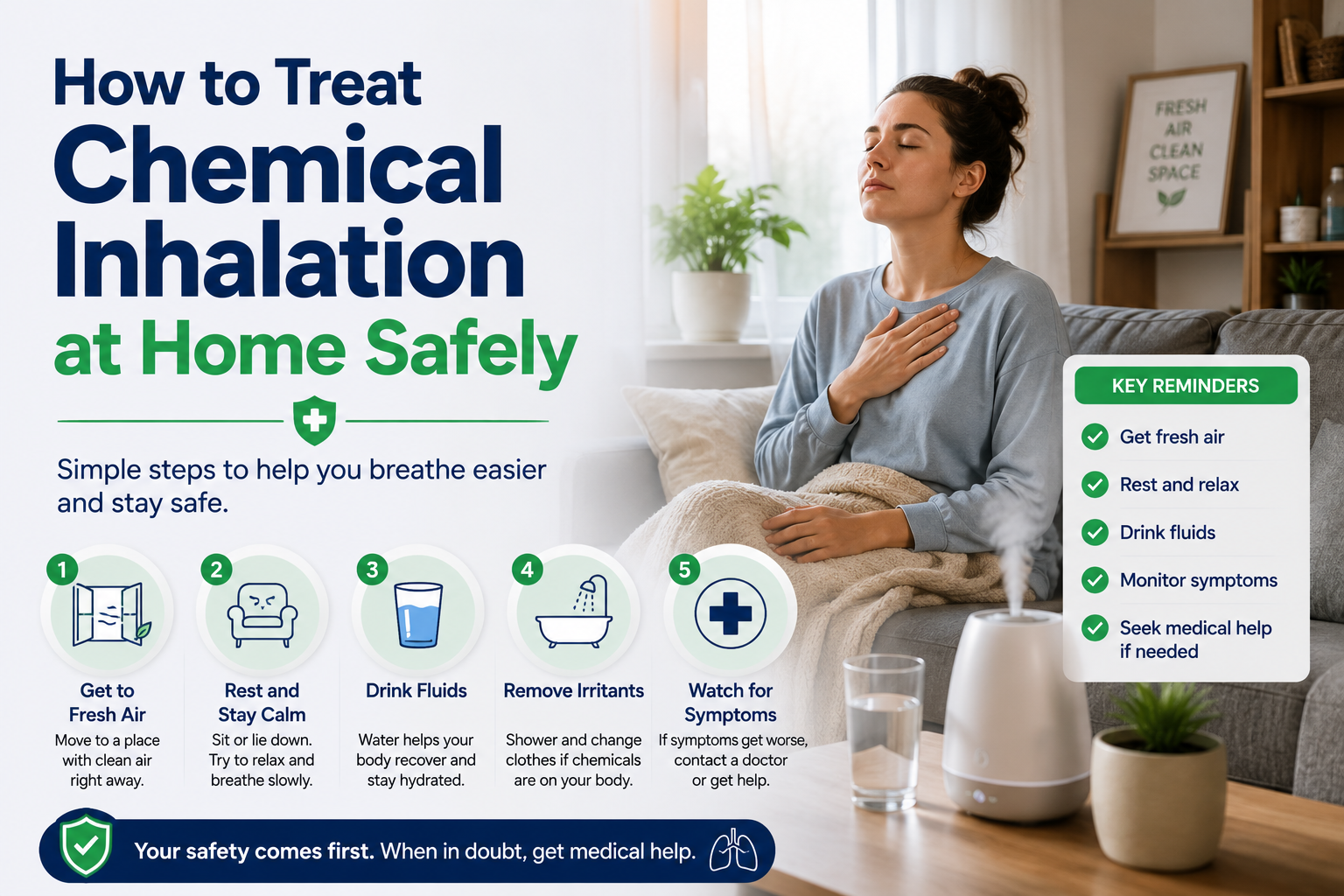
How to Treat Chemical Inhalation at Home
Home treatment is only appropriate for mild symptoms after exposure has stopped.
Step 1: Leave the Area Immediately
The first step is getting away from the chemical source.
Go outside if possible.
If you cannot leave immediately:
- Open windows
- Open doors
- Turn on fans that vent outside
- Avoid breathing more fumes
Fresh air is often the best first treatment.
Step 2: Remove Contaminated Clothing
Chemical vapors can remain on clothing.
Carefully remove:
- Shirts
- Pants
- Shoes
- Gloves
- Jackets
Place them in a plastic bag until they can be washed safely.
If liquid chemicals touched your skin, rinse with plenty of clean water.
Step 3: Breathe Fresh Air
Sit upright in a comfortable position.
Take slow, gentle breaths.
Avoid:
- Heavy exercise
- Running
- Smoking
- Vaping
Your lungs need time to recover.
Step 4: Drink Water
Drinking water helps keep your throat moist if it feels irritated.
Small sips are usually enough.
Water does not remove chemicals from your lungs, but it may help reduce throat discomfort.
Step 5: Rest
Your body needs energy to recover.
Get plenty of rest.
Avoid strenuous activity until your breathing feels normal again.
What You Should Not Do
Some home remedies may actually make symptoms worse.
Do not:
- Force yourself to vomit
- Drink large amounts of milk
- Mix chemicals trying to “neutralize” them
- Go back into the contaminated area
- Continue using the product that caused the exposure
If symptoms continue, seek medical care.
When to Call Poison Control
The Poison Help hotline is available 24 hours a day in the United States.
Call if:
- You are unsure what chemical was inhaled.
- Symptoms are getting worse.
- A child inhaled chemicals.
- You mixed household cleaners.
- You accidentally breathed in toxic fumes.
Poison experts can explain the safest next steps.
When to Go to the Emergency Room
Some chemical exposures require immediate treatment.
Go to the ER If You Have:
- Severe shortness of breath
- Chest tightness
- Trouble speaking
- Swelling in the throat
- Persistent wheezing
- Severe burns around the mouth or nose
- Loss of consciousness
Emergency doctors may give:
- Oxygen therapy
- Breathing treatments
- Chest X-rays
- Blood tests
- Observation for lung injury
Chemicals That Need Immediate Medical Attention
Certain chemicals are especially dangerous.
These include:
Chlorine Gas
Often created by mixing:
- Bleach
- Ammonia
- Acid cleaners
Even a short exposure can damage the lungs.
Carbon Monoxide
Carbon monoxide is colorless and odorless.
It comes from:
- Faulty furnaces
- Generators
- Vehicle exhaust
- House fires
Carbon monoxide poisoning is a medical emergency.
Smoke From House Fires
Smoke contains many toxic chemicals, including:
- Carbon monoxide
- Hydrogen cyanide
- Fine particles
- Toxic gases
Even if you feel okay after a fire, smoke exposure should be taken seriously.
Children and Chemical Inhalation
Children breathe faster than adults.
This means they may inhale more chemicals in less time.
Always seek medical advice if a child has:
- Persistent coughing
- Trouble breathing
- Wheezing
- Sleepiness
- Vomiting
Never assume symptoms will go away on their own.
Older Adults and People With Lung Disease
People with certain medical conditions are at higher risk.
This includes those with:
- Asthma
- COPD
- Emphysema
- Chronic bronchitis
- Heart disease
Even mild chemical exposure may trigger breathing problems.
Talk with your healthcare provider if symptoms continue.
How Long Does Recovery Take?
Recovery depends on the chemical and how much was inhaled.
Mild Exposure
Many people recover within:
- A few hours
- One to two days
Moderate Exposure
Recovery may take:
- Several days
- One week
Some people may need medication from a doctor.
Severe Exposure
Recovery can take:
- Weeks
- Months
Some people may have lasting lung damage.
How to Prevent Chemical Inhalation at Home
Prevention is always the safest choice.
Read Product Labels
Follow all safety instructions.
Never use more than recommended.
Improve Ventilation
When using chemicals:
- Open windows
- Use exhaust fans
- Work outdoors when possible
Fresh airflow reduces chemical buildup.
Never Mix Cleaning Products
Some combinations create dangerous gases.
Never mix:
- Bleach and ammonia
- Bleach and vinegar
- Different drain cleaners
Always use one product at a time.
Wear Protective Equipment
Depending on the product, wear:
- Gloves
- Safety glasses
- Respirators approved for chemical fumes when recommended
- Long sleeves
Always follow manufacturer directions.
Store Chemicals Safely
Keep products:
- In original containers
- Away from children
- Away from pets
- In cool, dry places
Never transfer chemicals into drink bottles.
Why Indoor Air Quality Matters After Chemical Exposure
Even after the fumes disappear, chemical particles and smoke residue can remain on surfaces, walls, insulation, furniture, and HVAC systems.
Poor indoor air quality may continue causing:
- Eye irritation
- Coughing
- Headaches
- Unpleasant odors
- Ongoing respiratory discomfort
After fires, smoke damage, or large chemical spills, professional cleaning can help remove lingering contaminants from your home. Preferred Restoration Services provides fire and smoke damage restoration to help improve indoor environments and reduce exposure to harmful residues.
Final Thoughts
Knowing how to treat chemical inhalation at home starts with getting to fresh air, stopping the exposure, and monitoring symptoms closely. Most mild cases improve with rest, hydration, and clean air. However, serious symptoms such as trouble breathing, chest pain, confusion, or loss of consciousness require immediate emergency medical care.
The best protection is preventing exposure in the first place. Always use household chemicals safely, improve ventilation, and never mix cleaning products. If your home has experienced smoke damage or chemical contamination after a fire, professional restoration can help remove harmful residues and improve indoor air quality.
Frequently Asked Questions
Can chemical inhalation heal on its own?
Yes. Mild cases often improve within a day or two after getting fresh air and avoiding further exposure. Severe cases should always be evaluated by a healthcare professional.
Is it safe to sleep after inhaling chemical fumes?
If your symptoms are mild and improving, resting is usually okay. If you have trouble breathing, chest pain, severe coughing, or worsening symptoms, seek emergency medical care instead of going to sleep.
Can chemical fumes damage your lungs permanently?
Some chemicals can cause permanent lung damage if exposure is severe or prolonged. Quick treatment and avoiding continued exposure can reduce the risk.
Should I drink milk after inhaling chemicals?
No. Drinking milk does not remove chemicals from your lungs. Water may help soothe throat irritation, but it is not a treatment for chemical inhalation.
When should I call 911 after chemical inhalation?
Call 911 immediately if you have severe trouble breathing, chest pain, confusion, blue lips, loss of consciousness, or if the exposure involved carbon monoxide, chlorine gas, or smoke from a fire.