When water suddenly spreads across a room, drips through ceilings, or fills a basement, the first question most homeowners ask is simple: how long does water damage restoration take? The honest answer depends on how much water entered, how quickly you respond, what materials were affected, and whether the source was clean water, grey water, or black water.
In many cases, water damage restoration is completed in a few days for a single room with minor damage. But severe water damage, sewage backups, extensive flooding, or structural damage can stretch the restoration process into several weeks or even months.
This guide gives you a realistic water damage restoration timeline, explains the water damage restoration process, and shows what you can do to act quickly, prevent mold, and reduce repairs.
How Long Does Water Damage Restoration Take? The Short Answer
The short answer: most water damage restoration jobs take 1 to 3 days for minor damage, 1 to 2 weeks for moderate damage, and several weeks for severe damage involving structural damage or reconstruction.
Small localized leaks can be dried in 1 to 3 days. Estimated timelines for minor localized damage are usually 2 to 5 days, especially when the affected areas are limited to a single room and the water source is stopped quickly.
For many homes, water removal and drying takes 3 to 5 days. Restoration can take an additional 1 to 2 weeks if the job includes drywall replacement, flooring repairs, paint, trim, or other finishing work.
In severe cases, the water damage restoration timeline may include demolition, sanitation, permitting, construction, and final inspection. Extensive water damage can take weeks, often requiring construction work. Severe damage can take 2 weeks to several months to restore.
Typical Water Damage Restoration Timeline
A realistic water damage restoration timeline starts with emergency mitigation and ends with final repairs. The whole process may feel overwhelming, but each stage has a purpose: stop the water, remove moisture, dry the structure, clean the property, and rebuild damaged areas.
Initial emergency response takes 1 to 8 hours, although the initial response to water damage should occur within one hour whenever possible. A faster response time reduces water exposure and helps prevent mold.
The inspection process lasts 1 to 4 hours. During this phase, technicians examine affected areas, identify the type of water involved, document visible damage, and use moisture meters to locate hidden dampness behind walls, under flooring, and inside building materials.
Water removal and extraction takes 1 to 2 days in many cases. Water removal is the first step in restoration, and technicians may use high powered pumps, wet vacuums, and professional extraction equipment to remove standing water.
Drying and dehumidification takes 3 to 7 days. Drying typically takes 3 to 5 days after water removal, but the drying process can take longer when humidity is high, building materials are saturated, or water has traveled into wall cavities.
Cleanup typically takes 1 day after drying. Cleaning, sanitizing, and deodorization takes 1 to 2 days, with more thorough cleaning required for contaminated water, sewage backups, and flood damage.
Final repairs can take 1 to 3 weeks depending on extent of damage. Final inspection takes 1 day after restoration and confirms that moisture readings return to acceptable levels before the property is considered complete.
What Affects the Restoration Process?
The restoration process is never one-size-fits-all. The key factors include the extent of the damage, the category of water, the size of the affected areas, the materials involved, the response time, and the environmental conditions inside the property.
The extent of the damage is usually the biggest factor. A small leak under a sink may only affect cabinet materials and a tiny section of flooring. A flooded basement or entire floor may require water extraction, demolition, drying, sanitation, and major repairs.
The type of water also affects the restoration process. Category 1 water damage is sourced from clean water and dries quickly. Category 2 and 3 water damage requires extensive cleaning and sanitation because grey water and black water carry health risks.
Larger affected areas take longer to dry and restore. A single room with a contained leak is faster than multi-room water intrusion from burst pipes, roof leaks, or extensive flooding.
Porous materials absorb water and extend drying time. Drywall, insulation, carpet padding, engineered wood, and other building materials can hold moisture for a long period if they are not opened, ventilated, or removed.
The Main Steps Involved in Water Damage Restoration
Every damage restoration project follows a structured process. The exact steps involved may vary, but professional water damage restoration usually includes inspection, mitigation, drying, cleaning, repairs, and final verification.
- Emergency response and safety assessment.
- Inspection with moisture meters and documentation.
- Stop the water source if it is still active.
- Remove standing water with pumps and extraction equipment.
- Remove affected materials that cannot be saved.
- Set up air movers and industrial dehumidifiers.
- Monitor moisture levels and drying progress daily.
- Clean, sanitize, deodorize, and complete remediation steps.
- Perform repairs and rebuild damaged building materials.
- Complete final inspection and confirm the structure is dry.
Damaged material removal often takes 1 to 2 days. Restoration involves repairing or replacing damaged materials, and the duration depends on whether the repairs are cosmetic or structural.
Step 1: Emergency Response and Inspection
The restoration process begins with safety. If there is standing water near electrical outlets, sagging ceilings, contaminated water, or signs of structural damage, avoid the area until trained professionals arrive.
During the inspection, technicians look for damage that is immediately visible and damage hidden inside walls, flooring, cabinets, and other building materials. They also separate affected areas from unaffected areas to limit further damage.
Moisture meters and thermal imaging tools help create a full picture of the problem. Moisture readings guide the drying plan and tell technicians where to place equipment for the best results.
If you have a water damage emergency, act fast. Time before mitigation starts affects cleanup duration, and responding within 24-48 hours helps prevent mold growth.
Step 2: Water Removal and Extraction
Water removal is the first major field operation. The goal is to remove as much liquid as possible before it soaks deeper into floors, baseboards, drywall, and framing.
Technicians use water extraction tools, high powered pumps, and specialized equipment to remove standing water quickly. The faster crews remove standing water, the faster the structure can begin to dry.
A flooded basement may require pumps before smaller extraction tools can be used. A single room with shallow standing water may only require portable extraction equipment and targeted drying.
Even clean water from burst pipes can become a bigger problem if it stays on building materials for too long. Not all water damage is catastrophic at first, but moisture can spread into hidden cavities and cause further damage.
Step 3: Drying and Dehumidification
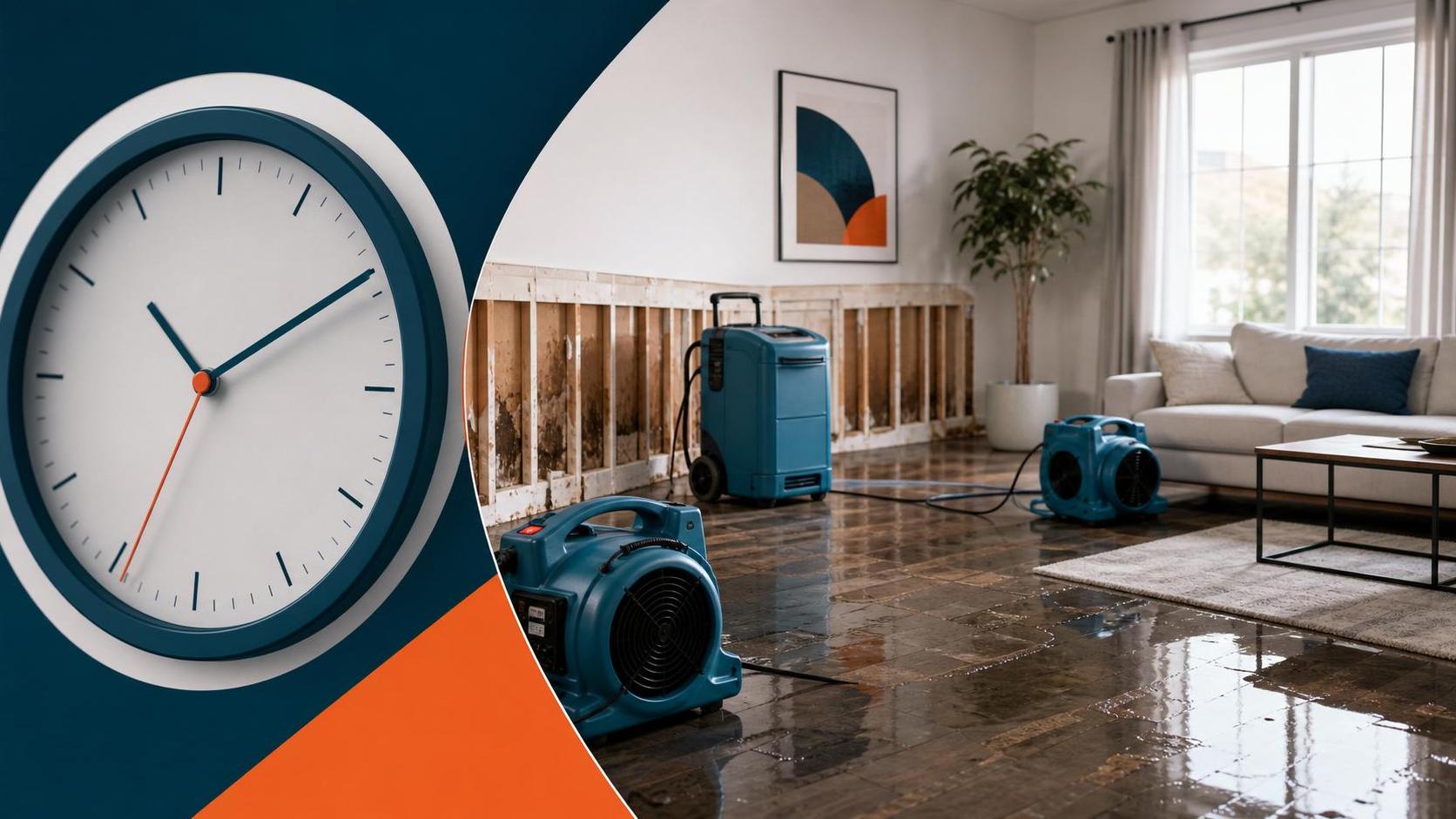
After extraction, the drying process begins. Professionals use air movers to increase evaporation and industrial dehumidifiers to pull moisture from the air.
Air movers are placed along walls, under cabinets, near flooring, and around affected areas. The placement of air movers matters because airflow must reach damp surfaces without spreading contaminants.
Industrial dehumidifiers help maintain low humidity so wet building materials can dry faster. High humidity slows down the drying process significantly, especially in basements, bathrooms, crawl spaces, and poorly ventilated rooms.
Monitoring occurs daily throughout the water damage restoration process. Technicians check moisture levels with moisture meters and adjust equipment as needed. When moisture readings return to acceptable levels, the structure is ready for cleaning and repairs.
Materials like carpet and drywall can take 2 to 4 days to dry under good conditions. Structural materials may require longer specialized drying times, particularly when water reached subflooring, studs, insulation, or masonry.
Step 4: Cleaning, Sanitizing, and Odor Control
Cleaning and sanitization follow the drying process. This stage is especially important when grey water, black water, flood damage, or sewage backups are involved.
Clean water from supply lines usually requires less sanitation than grey water from appliances or black water from toilets, stormwater, and sewage backups. Highly contaminated water can expose occupants to bacteria, viruses, and other health risks.
More thorough cleaning may include antimicrobial treatment, odor control, disposal of unsalvageable contents, and containment of affected areas. The goal is to prevent mold, reduce microbial growth, and make the property safe again.
Clean water jobs can move quickly, but clean water is not always harmless if it sits for a long time. Grey water and black water require stricter procedures, specialized equipment, and careful documentation.
Step 5: Repairs and Reconstruction
Once the property is dry and clean, repairs can begin. Repairs may include replacing drywall, reinstalling flooring, painting, fixing trim, rebuilding cabinets, or replacing insulation and other building materials.
Minor repairs may finish in a few days. Moderate damage may need 1 to 2 weeks. Major repairs after extensive flooding, burst pipes, roof leaks, or sewage backups can require several weeks.
Water damage repair may also involve electricians, plumbers, flooring installers, painters, and carpenters. If structural damage is found, repair time may be longer because framing, subflooring, or load-bearing components need careful evaluation.
The extent of the damage determines whether repairs are simple or complex. Replacing a small section of drywall is very different from rebuilding an entire floor after contaminated water spreads through multiple rooms.
Water Categories and Why They Change the Timeline
The water source influences the length of restoration. Knowing whether the property was affected by clean water, grey water, or black water helps determine cleanup requirements, drying needs, and safety procedures.
- Clean water: Category 1 water from broken supply lines, rainwater leaks, or burst pipes. Clean water damage usually dries faster if handled immediately.
- Grey water: Category 2 water from washing machines, dishwashers, or some appliance leaks. Grey water may contain contaminants and needs careful sanitation.
- Black water: Category 3 water from sewage backups, flooding, or toilet overflows with waste. Black water requires strict safety controls and disposal of many affected materials.
Clean water damage restoration is often faster because sanitation needs are lower. Grey water damage restoration takes longer because affected areas need cleaning and disinfection. Black water damage restoration often takes the longest because contaminated materials may need removal.
How Likely Is Mold After Water Damage?
Mold growth can begin within 24 to 48 hours when moisture remains, especially in warm, humid spaces. That is why you should act quickly after water damage and keep the affected areas ventilated until professional equipment arrives.
The risk of mold growth increases when walls, flooring, insulation, or other building materials remain wet. Hidden moisture behind walls is especially risky because it may not be visible until odors or staining appear.
To prevent mold, technicians dry wet materials quickly, monitor moisture levels, remove unsalvageable materials, and apply antimicrobial treatments when appropriate. Proper restoration is the best way to prevent mold from becoming a second disaster.
Examples: Minor, Moderate, and Severe Timelines
Minor water damage in a single room may take 1 to 3 days for drying and another day or two for cleanup. This could include a small appliance leak, a clean water supply line, or a limited ceiling spot.
Moderate damage often takes 1 to 2 weeks to restore. This may involve water spreading into multiple affected areas, wet drywall, damp flooring, and repairs after the dry-out is complete.
Severe water damage restoration can take several weeks or longer. A flooded basement, extensive flooding, black water contamination, structural drying, and reconstruction all extend the restoration process.
When the extent of the damage includes saturated subfloors, insulation, cabinets, and walls, crews may need to remove affected materials before drying can be successful.
How to Speed Up Damage Restoration
You can’t control everything, but you can improve the outcome if you act quickly. Fast action protects valuables, shortens the restoration process, and reduces the chance that water damage becomes permanent.
- Shut off the water source if it is safe to do so.
- Call a damage restoration company immediately.
- Move valuable items away from wet areas.
- Do not enter rooms with electrical hazards or black water.
- Use towels only for small clean water spills, not contaminated water.
- Keep photos and receipts for your insurance company.
- Let professionals place air movers and equipment correctly.
Investing in professional-grade equipment matters. Air movers, dehumidifiers, specialty drying mats, and monitoring tools dry materials faster than household fans. Regularly monitor moisture levels with moisture meters so crews know when materials have reached acceptable levels.
Insurance, Documentation, and Adjusters
Your insurance company may cover damage restoration depending on the cause of loss and your policy terms. Sudden events like burst pipes are often treated differently from long-term leaks or maintenance issues.
Before removing materials, take pictures and videos. A professional restoration company can document moisture readings, the extent of the damage, affected areas, equipment placement, and repairs for your insurance company.
An insurance adjuster may inspect the property before approving some repairs. Stay in communication with your insurance company so approvals do not delay the restoration process unnecessarily.
How to Tell If Water Damage Is Permanent
Water damage may be permanent when materials warp, crumble, delaminate, swell, rot, or grow mold even after drying. If flooring buckles, drywall sags, wood stays soft, or odors persist, the affected materials may need replacement.
Permanent damage is more likely when water sits for a long period, when contaminated water is involved, or when building materials were never fully dry. Hidden moisture inside walls can also cause stains, peeling paint, and recurring microbial growth.
A professional inspection is the safest way to decide what can be saved. Moisture meters, structural assessment, and material evaluation help determine whether restoration or replacement is the better option.
Final Inspection: When Is the Job Done?
Final inspection usually takes one day to complete. The technician confirms the property is dry, clean, safe, and ready for occupancy or final repairs.
The restoration process is complete only when moisture readings show acceptable levels, odors are controlled, damaged materials are removed or repaired, and the property owner understands what was done.
Because the extent of the damage varies from property to property, the final inspection should never be rushed. A careful closeout reduces the risk of missed moisture, future mold growth, and repeat repairs.
Frequently Asked Questions
How long does it take for water damage to be repaired?
Most minor water damage can be dried and repaired in a few days, while moderate damage may take 1 to 2 weeks. Severe damage restoration involving structural repairs, sewage backups, or reconstruction can take several weeks or months.
How long does water damage restoration take for one room?
How long does water damage restoration take for one room depends on the water source, materials, and response time. A single room with clean water may take 2 to 5 days, while grey water or black water may take longer because of sanitation and material removal.
What are the main steps in water damage restoration?
The main steps are emergency response, inspection, water extraction, drying, cleaning, sanitizing, repairs, and final inspection. Professional damage restoration also includes daily monitoring, documentation, and equipment adjustments.
How likely is mold after water damage?
Mold can begin growing within 24 to 48 hours if materials stay wet. You can reduce the risk if you act quickly, remove moisture, use proper drying equipment, and verify that affected areas are completely dry.
Can I dry water damage myself?
You may be able to dry a very small clean water spill, but hidden moisture is difficult to detect without moisture meters. For soaked walls, flooring, sewage backups, or a flooded basement, professional restoration is safer and more reliable.
How to tell if water damage is permanent?
Water damage may be permanent if materials remain warped, stained, soft, swollen, moldy, or smelly after drying. A professional can determine whether affected materials can be restored or must be replaced.
Does insurance cover water damage restoration?
Coverage depends on your policy and the cause of the water damage. Sudden events such as burst pipes may be covered, while gradual leaks may be denied. Contact your insurance company quickly and document the extent of the damage.
Bottom Line
So, how long does water damage restoration take? Minor jobs often take 1 to 3 days, typical water removal and drying takes 3 to 5 days, and final repairs may add 1 to 3 weeks. Severe damage, structural drying, contaminated water, or reconstruction can extend the timeline to several weeks or months.
The best way to shorten the water damage restoration timeline is simple: act quickly, stop the source, call a qualified restoration team, and let professional equipment dry the affected areas properly. Fast, thorough damage restoration protects your home, your health, and your investment.