Drying a Home vs Dehumidifying a Home
After water gets into your house, it can feel confusing fast. Do you need full drying, or do you just run a dehumidifier? The short answer: drying a home removes wetness from surfaces and materials, while dehumidifying removes extra humidity from the air. Both matter after water damage.
If you’re dealing with a flood, burst plumbing line, or rain that leaked inside, the safest path is usually water damage restoration. In the first 100 words, here’s the key idea: if your home has water damage, you may need a mix of “drying a home” and dehumidifying to protect your wall, floors, and air. You can learn more about our full process here.
Why This Difference Matters for Your Home
When water sits, it spreads. It can soak into drywall, baseboards, flooring, and even the framing behind the wall. Moist materials can lead to odor, staining, and long-term damage.
Dehumidifying helps the air, but it does not always pull trapped moisture out of materials fast enough. True drying often needs airflow, temperature control, and professional equipment. That’s why a “one-tool fix” can fail.
The Hidden Places Water Can Reach
Water does not just sit in a puddle. It can move into:
- The bottom of drywall
- Insulation behind a wall
- Under flooring
- A basement slab edge and corners
- Wood framing like a joist
- Cabinets and toe-kicks
What “Drying a Home” Really Means
Drying a home is the full job of removing moisture from building materials and surfaces. The goal is to get the structure back to a safe, dry level.
Drying usually includes:
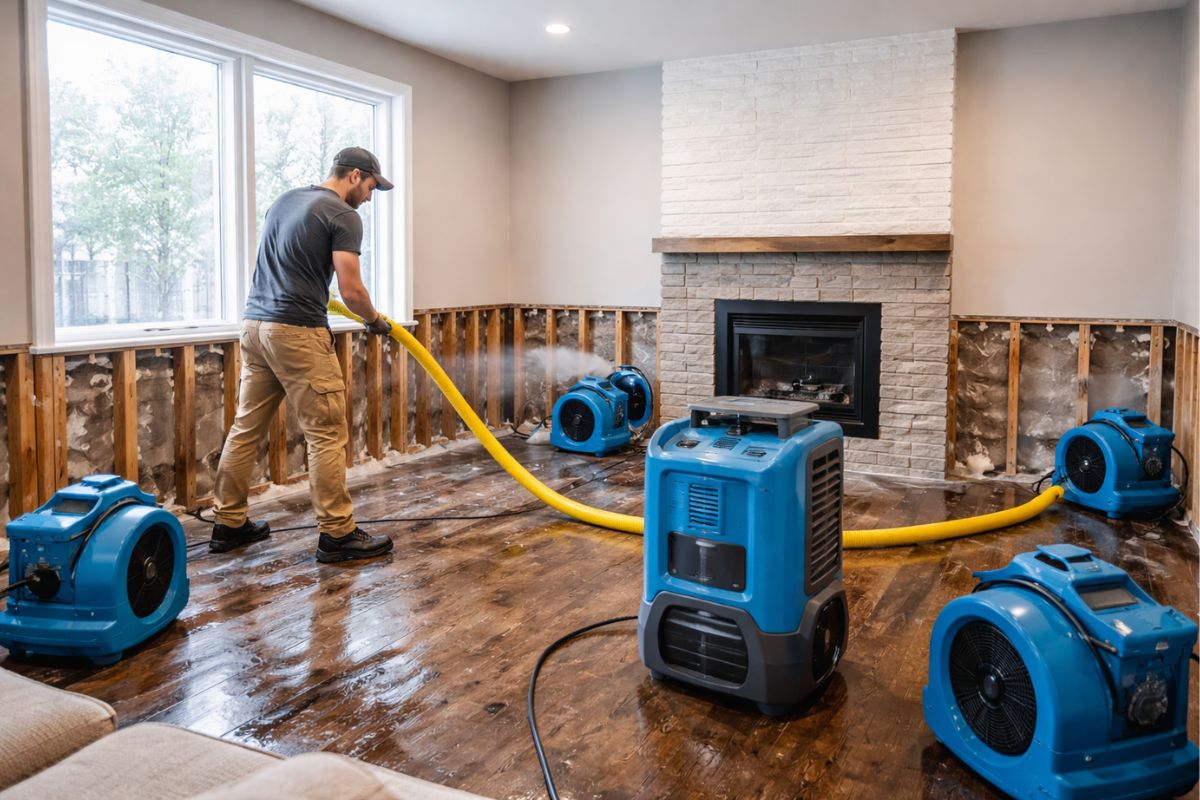
- Removing standing water with extraction tools or a pump
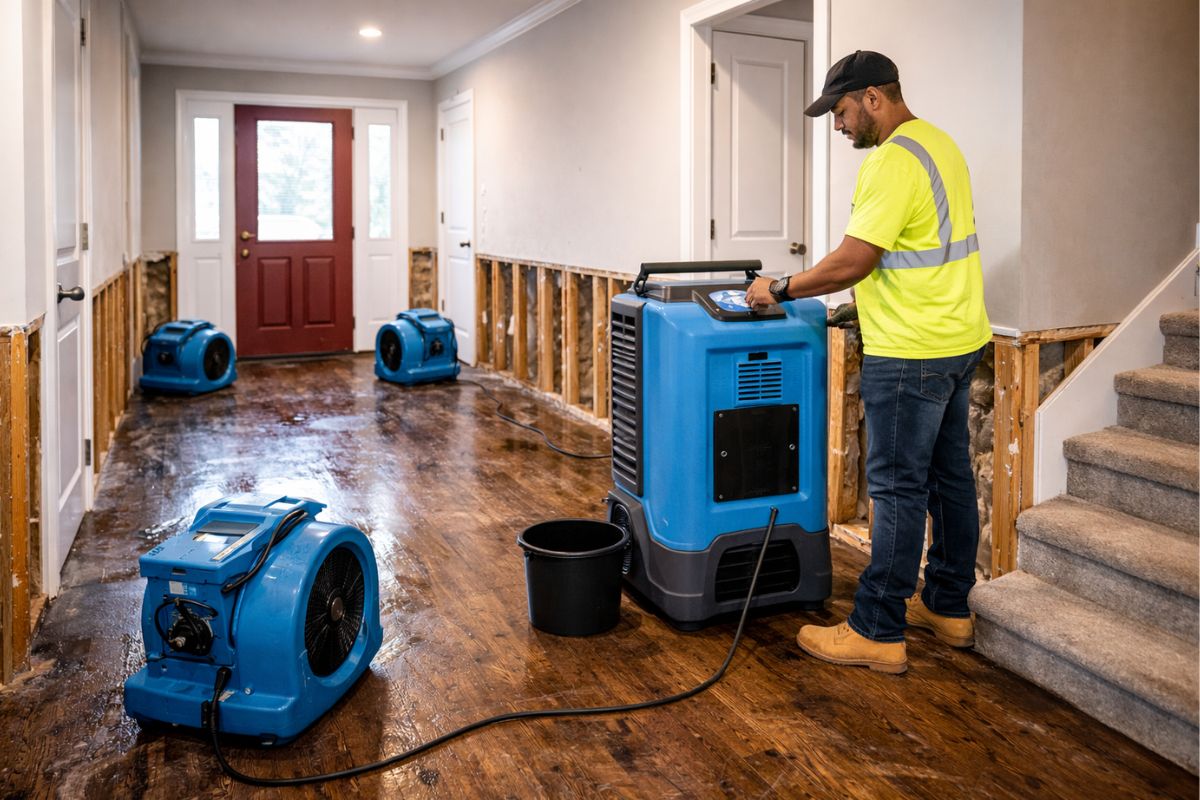
- Setting up air movers to push air across wet areas
- Using controlled heat (when safe) to speed evaporation
- Monitoring moisture levels in materials
Drying Is About Evaporation
A big part of drying is turning liquid water into vapor. This happens faster when:
- Air moves across wet surfaces (air movers)
- The temperature is controlled (sometimes with safe heat)
- The air can “hold” more moisture (lower indoor humidity)
What “Dehumidifying a Home” Really Means
Dehumidifying a home means removing water vapor from the air. It lowers humidity, which helps materials dry faster and helps protect indoor air quality.
A dehumidifier pulls humid air in and removes water. Many units use a cooling coil that works like a small condenser system:
- Warm, humid air passes over a cold coil (often called an evaporator coil in many systems)
- Moisture condenses into water and drains to a tank or hose
- Drier air is released back into the room
Why Dehumidifying Alone May Not Be Enough
If materials are soaked, dehumidifying can help, but it may take too long without:
- Strong airflow
- Proper ventilation
- Professional moisture checks
- Controlled temperature using your air conditioning or heating system (only when appropriate)
Drying vs Dehumidifying: Simple Comparison
Here’s the easiest way to think about it:
Drying a Home
- Focus: wet materials and surfaces
- Removes: moisture inside floors, drywall, framing
- Tools: air movers, extraction, heat control, moisture meters, sometimes demolition
- Best for: real water damage, leaks, floods, wet walls
Dehumidifying a Home
- Focus: the air
- Removes: humidity (water vapor)
- Tools: dehumidifier
- Best for: damp air, minor moisture, helping the drying process
When You Need Both (Most Water Damage Jobs)
Most water damage restoration projects need drying AND dehumidifying. Why? Because:
- Drying pushes moisture out of materials into the air
- Dehumidifying removes that moisture from the air so drying can continue
If you skip dehumidifying, the air can get “full” of moisture. Drying slows down. If you skip drying tools and only dehumidify, trapped water can stay inside a wall, under floors, or in a joist.
Example: A Wet Basement After Rain
A basement can feel damp after heavy rain, even without a big puddle. If water seeped into flooring edges or drywall, you may need professional drying. If it’s mostly high humidity and condensation, dehumidifying might be enough. The right answer depends on where the moisture is hiding.
Common Causes of Water Damage That Need Drying
Drying is often needed after these events:
- Broken or leaking plumbing
- Water heater failure
- Washing machine overflow
- Dishwasher leak
- Storm rain leaks through the roof or window
- A true flood from outside
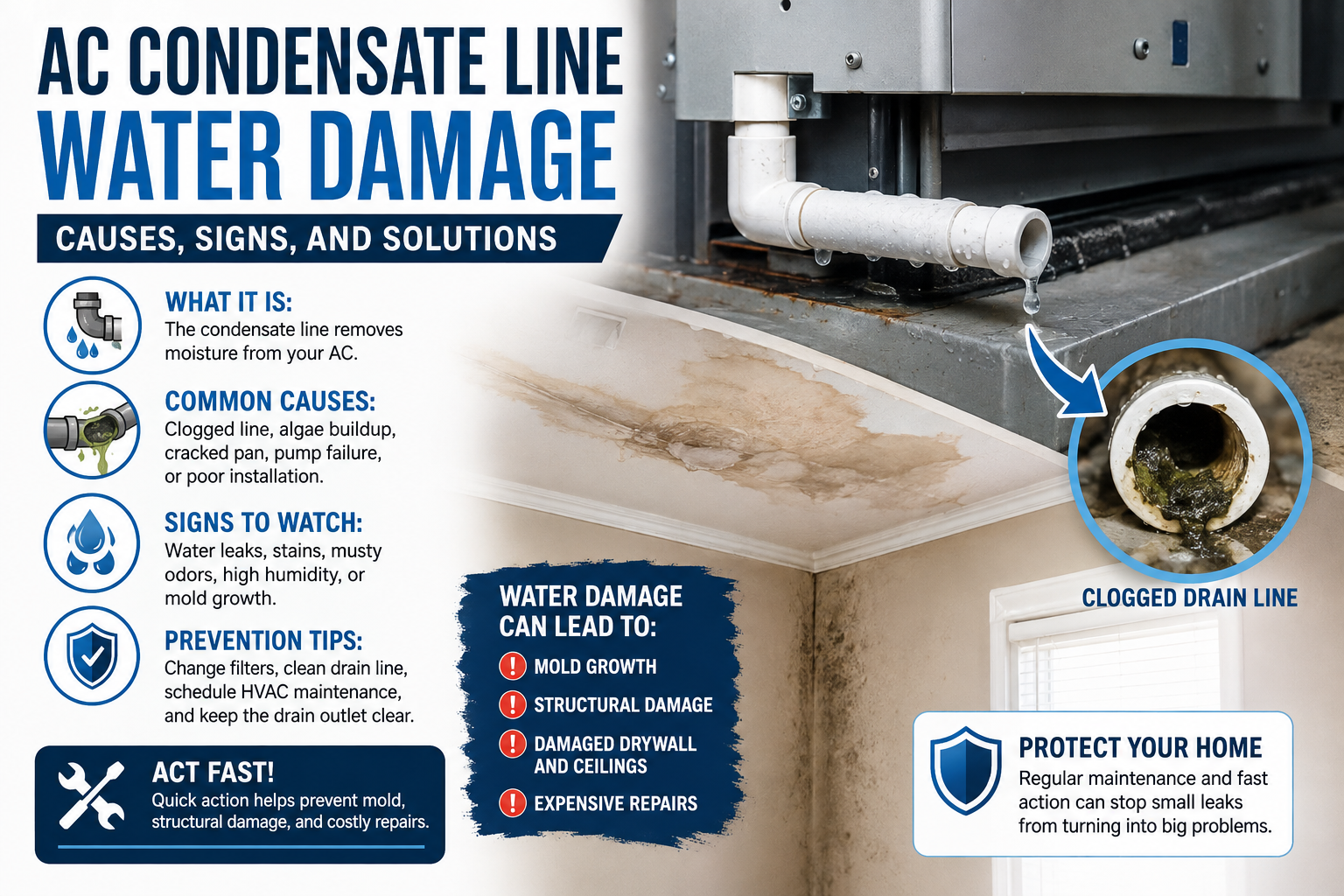
- HVAC issues (like clogged drains)
HVAC Can Add Moisture Too
If your air conditioning drain line backs up, water can overflow into ceilings or walls. Also, poor airflow or wrong settings can raise humidity. HVAC parts like the condenser and evaporator coils must work correctly to control moisture.
Why “Just Open the Windows” Can Backfire
People often try natural ventilation first. Sometimes it helps. But it can also make things worse.
Open windows can be risky when:
- It’s humid outside (common in many seasons)
- Outdoor air brings in more moisture
- Temperatures swing and cause condensation
A controlled drying setup is usually better than guessing. Professional drying uses measured airflow and moisture readings, not hope.
What Professional Drying Looks Like
Professional drying is not just placing a fan. It’s a planned system that protects the home and speeds safe drying.
A typical professional process includes:
- Water removal (extraction) and setting a plan
- Air movers placed to move air across wet surfaces
- Dehumidifiers sized for the space
- Moisture checks on drywall, flooring, and framing
- Adjustments every day based on readings
- Repairs and restoration after drying is complete
Why Moisture Testing Matters
Some materials look dry on the outside but stay wet inside. That’s how hidden damage happens. Moisture meters and thermal tools can help locate wet spots in a wall, under floors, and near a joist.
Building Materials That Hold Water (And Cause Trouble)
Some materials soak up water like a sponge:
- Drywall (especially the bottom edge)
- Wood framing and subfloor
- Carpet padding
- Insulation
- Cabinets made of pressed wood
When these stay wet, the structure can weaken. That can affect construction parts of your home and increase repair needs.
What About Building Code?
In many cases, repairs must follow local code requirements. That can include safe removal of damaged materials and proper replacement methods. A proper restoration plan should consider code, safety, and long-term durability—not just quick drying.
How Heating and Air Conditioning Fit Into Drying
Your heating system and air conditioning can support drying, but they are not always enough by themselves.
Air Conditioning
- Can lower humidity and cool the air
- Helps when outdoor air is humid
- Must be running correctly (clean drain line, correct airflow)
Heating System
- Warm air can speed evaporation
- But heat without dehumidifying can push moisture into other areas
- Must be used carefully to avoid warping materials or creating condensation elsewhere
Signs You Need Water Damage Restoration (Not Just a Dehumidifier)
A dehumidifier may help a mildly damp room. But you likely need water damage restoration when you notice:
- Wet drywall or soft walls
- Bubbling paint, peeling baseboards, warped floors
- Musty smell that won’t go away
- Water stains on ceilings or walls
- Standing water that needs a pump
- You had a burst pipe, flood, or major leak
- Moisture readings stay high after 24–48 hours
DIY Tips That Are Safe (Until Pros Arrive)
If it’s safe and you can do it without risk:
- Turn off electricity to wet areas if needed
- Stop the source (shut off water for plumbing leaks)
- Remove small items from wet floors
- Blot or extract small puddles
- Run a dehumidifier if you have one
- Keep airflow moving if conditions allow
Important: If water reached a wall, soaked drywall, or spread under flooring, DIY steps may not be enough. Hidden moisture can cause more damage over time.
How Long Does Drying Take?
Every job is different, but many drying projects take 3–7 days. Bigger floods, wet basements, or heavy saturation can take longer.
Drying time depends on:
- How much water entered the home
- How long it sat before cleanup
- Temperature and humidity levels
- Materials affected (drywall vs tile vs wood)
- Airflow and equipment setup
Why Indoor Air Quality Matters After Water Damage
When a home is wet, the air can feel heavy, sticky, and unpleasant. High humidity can impact indoor air quality and comfort. Drying and dehumidifying both support a healthier indoor space by removing extra moisture from the structure and the air.
How Preferred Restoration Can Help
Preferred Restoration focuses on safe, measured restoration after water damage. We don’t guess—we use readings, proven drying methods, and the right tools to protect your home’s structure, from the wall surface to the framing and joist areas.
If you’re unsure whether you need drying, dehumidifying, or full water damage restoration, it’s better to act early. Early action can reduce long-term damage and the amount of construction work needed.
FAQs
Is drying a home the same as using a dehumidifier?
No. Drying a home removes moisture from materials like drywall and flooring. A dehumidifier mainly removes humidity from the air, which supports drying but does not replace it.
How do I know if water is trapped behind a wall?
Common signs include soft drywall, stains, bubbling paint, or musty odor. Moisture tools can confirm hidden moisture behind the wall and near framing like a joist.
Can air conditioning dry out water damage?
Air conditioning can reduce humidity, but it usually can’t fully dry wet materials by itself. Water damage often needs airflow, dehumidification, and professional drying methods.
What should I do first after a flood in my basement?
Stop the water source if possible, avoid electrical hazards, and remove standing water if safe (sometimes with a pump). Then start drying and dehumidifying quickly to limit damage.
Why does my home still feel damp after I ran a dehumidifier?
If moisture is still inside drywall, flooring, or framing, the air may improve but the structure stays wet. That can keep the space feeling damp and may require professional drying.