Does Bleach Kill Mold?
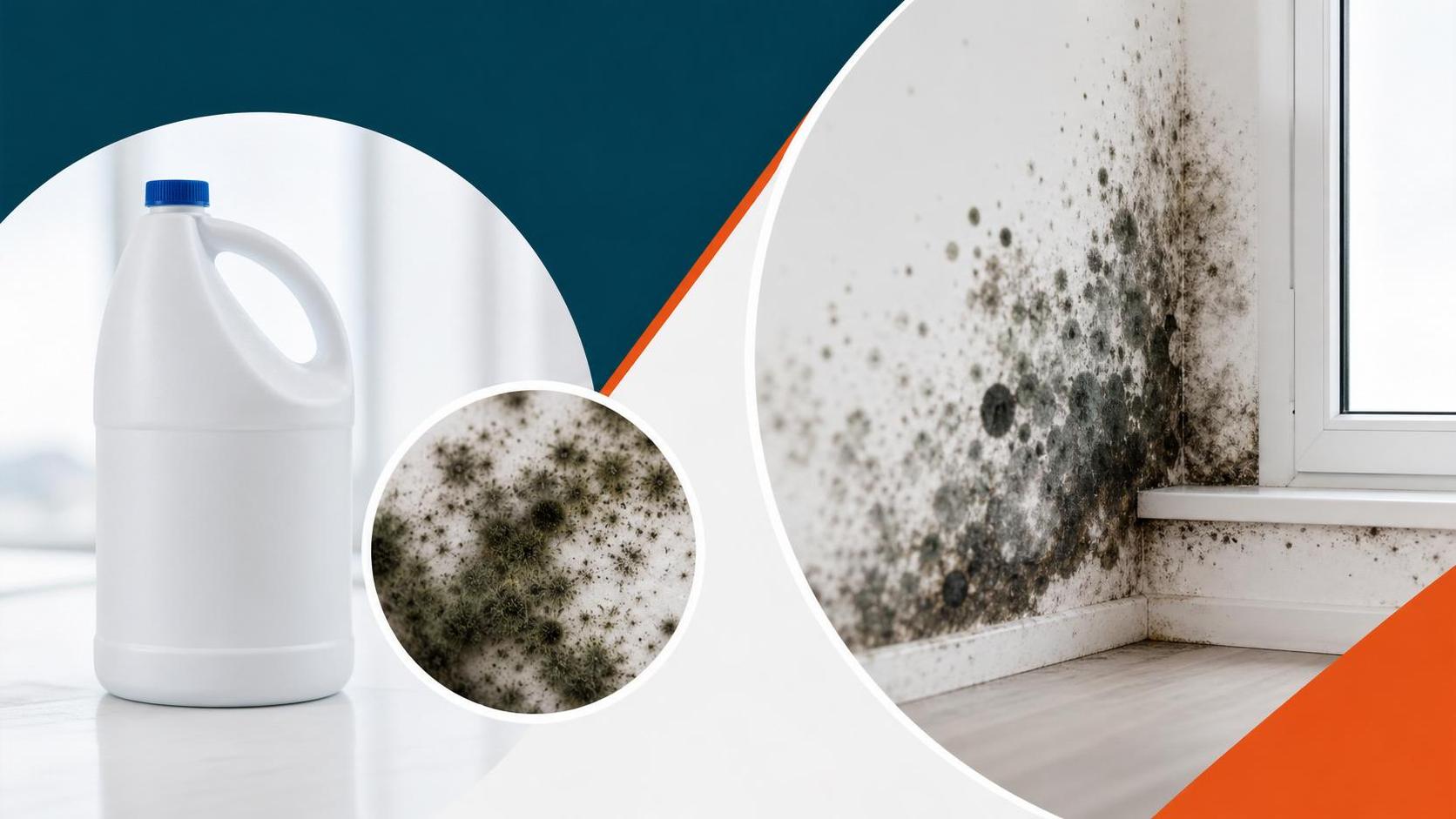
If you have spotted black mold around a shower, on drywall, or near a leaky window, your first instinct may be to grab bleach. It smells strong, it looks powerful, and many people assume it can kill mold instantly. But does bleach kill mold in the way homeowners need it to? The answer is more complicated than most cleaning labels suggest.
The key takeaway is this: bleach can kill mold on hard non porous surfaces, but it is usually the wrong tool for porous surfaces such as wood, drywall, grout, ceiling tiles, and fabric. Worse, using bleach incorrectly can leave moisture behind, create dangerous fumes, and make a mold problem return.
Does Bleach Kill Mold? The Short Answer
Yes, bleach can kill mold on hard non porous surfaces when it is used correctly. A proper bleach solution needs about 10 minutes of contact time to kill mold. That means the moldy surface must stay wet long enough for the solution to work.
However, bleach cannot penetrate deep into porous materials. Mold has root-like structures called hyphae that grow below the surface, especially in porous surfaces. When you use bleach on drywall or wood, it may lighten mold stains and kill surface mold, but the hidden mold can remain alive.
This is why the question “does bleach kill mold” often leads to disappointment. The visible surface may look cleaner, but the underlying moisture problem and embedded growth can still be there.
Why Bleach Works on Some Surfaces but Fails on Others
Bleach is a disinfectant. Chlorine bleach kills organisms by breaking down proteins and cellular structures. On hard non porous surfaces like glass, glazed tile, tubs, sinks, and sealed countertops, bleach can contact the mold directly and kill mold effectively.
But porous surfaces are different. Wood, drywall, unsealed grout, carpet, and insulation absorb liquid. Bleach is mostly water, and the active ingredient may stay near the top while water moves into the porous materials. That added moisture can feed mold growth instead of stopping it.
On porous surfaces, the bleach may remove surface discoloration while the deeper mold remains. This is why mold often returns within 2-4 weeks after bleach treatment if the root cause is not corrected.
When Can You Use Bleach Safely?
You can use bleach on hard non porous surfaces when the affected area is small, ventilation is good, and you can rinse or wipe away the dead mold afterward. Dead mold can still trigger allergies, so cleaning it away is important.
If you use bleach, mix ⅓ cup of bleach per gallon of water. Apply it with a sponge or spray bottle, keep the surface wet for 10 minutes, then wipe and let it air dry. This contact time is critical if you want bleach to kill mold rather than simply fade the stain.
Never mix bleach with ammonia, vinegar, toilet cleaners, or acids. Bleach and ammonia can create chlorine gas, and bleach with acids may release dangerous fumes. If a product label is unclear, do not mix bleach with it.
When Should You Avoid Bleach?
You should not use bleach on porous surfaces such as drywall, wood framing, subflooring, carpet, or fabric. Bleach is ineffective on porous surfaces like wood and drywall because it cannot penetrate deep enough to reach the root system.
Using bleach on porous materials can worsen a mold problem because the water content may soak in. The surface may appear clean while mold spores and hyphae remain underneath.
You should also avoid bleach in poorly ventilated rooms, around people with asthma, children, pets, or immune compromised individuals. Bleach exposure can cause respiratory irritation, watery eyes, coughing, and a runny nose.
Why the EPA Does Not Recommend Routine Bleach Mold Cleanup
The EPA’s guidance discourages using bleach as a routine practice for mold cleanup. The main reason is that mold removal is not just about killing mold. You must remove mold physically, eliminate moisture, and discard materials that cannot be cleaned.
If you only bleach a moldy surface without fixing the leak, condensation, or high humidity, the mold will return. Mold requires moisture, organic material, and warm temperatures to thrive. Remove one of those conditions, especially moisture, and you prevent mold more effectively.
Bleach vs. Vinegar: Which Is Better?
Vinegar is often better than bleach for many home situations because white vinegar can penetrate porous materials and attack mold at the root. Vinegar contains acetic acid, which helps break down mold structures. Research commonly states that vinegar kills approximately 82% of mold species.
Bleach kill mold results are strongest on non porous surfaces. Vinegar is more useful on some porous surfaces because it can soak in without adding the same harsh chemical risk. However, vinegar should not be mixed with bleach. Do not spray vinegar after bleach unless the surface has been thoroughly rinsed with clean water and fully dried.
For many homeowners, vinegar, hydrogen peroxide, baking soda, borax, and tea tree oil are safer alternatives. These options are often less irritating and better suited for targeted mold cleanup.
Best Alternatives to Bleach to Kill Mold
White Vinegar
White vinegar is affordable, widely available, and less harsh than bleach. Pour vinegar into a spray bottle, spray the affected area, let it sit for at least one hour, scrub with a sponge, wipe with clean water, and let the surface air dry. The acetic acid in vinegar can help remove mold from porous surfaces better than bleach.
Hydrogen Peroxide
Hydrogen peroxide is often safer for the environment than bleach and can kill mold on both porous surfaces and non porous surfaces. Use 3% hydrogen peroxide in a spray bottle, apply it to the moldy areas, wait 10 minutes, scrub, and wipe. Hydrogen peroxide may lighten fabrics or finishes, so test first.
Baking Soda
Baking soda is gentle, deodorizing, and useful for scrubbing. Mix baking soda with water, apply with a spray bottle or sponge, scrub the moldy surface, rinse, and air dry. Baking soda can also be combined with vinegar, but never use it in a sequence that involves bleach residue.
Tea Tree Oil
Tea tree oil is a natural antifungal that many people use to kill mold. Mix a small amount of tea tree oil with water in a spray bottle, spray the surface, and allow it to dry. Tea tree oil has a strong scent, but it can be effective against black mold and other mold types on small areas.
Borax
Borax inhibits mold growth and leaves a protective residue. It is useful on certain hard surfaces and can help prevent mold when used properly. Always read labels, ventilate the room, and keep it away from children and pets.
How to Remove Mold the Right Way
To remove mold safely, start by identifying the source. A leak behind drywall, condensation on windows, damp carpet, or high humidity can all fuel mold growth. Fixing leaks can significantly reduce mold growth risk.
Wear gloves, eye protection, and a mask. Isolate the affected area if possible, increase air flow, and run exhaust fans. Avoid spreading spores through hvac systems; do not aim fans directly at moldy materials if loose contamination is present.
For hard non porous surfaces, you may use bleach, vinegar, or hydrogen peroxide. For porous materials, skip bleach and consider removal, replacement, or professional assessment. Drywall, insulation, ceiling tiles, and carpet padding often need to be removed when contaminated.
Step-by-Step Bleach Application for Non Porous Surfaces
Confirm the item is non porous, such as glass, glazed tile, porcelain, or sealed counters.
Open windows and use exhaust fans to improve air circulation.
Put on gloves and eye protection before handling bleach.
Mix bleach at ⅓ cup per gallon of water. Do not mix bleach with ammonia, vinegar, or acids.
Apply with a sponge or spray bottle until the moldy surface is wet.
Let the bleach solution sit for 10 minutes. This contact time helps kill mold.
Scrub, wipe away dead mold, rinse if needed, and let the surface air dry.
This method can help kill surface mold on hard non porous surfaces, but it is not a cure for mold hidden behind caulk, under flooring, or inside drywall.
Common Mistakes That Make Mold Worse
Using only bleach on porous surfaces and assuming the problem is solved.
Trying to use bleach to clean drywall instead of removing contaminated sections.
Failing to fix the moisture problem that caused the mold growth.
Spraying a moldy surface aggressively and sending mold spores into the air.
Mixing bleach with ammonia, which can produce toxic fumes and chlorine gas.
Painting over mold without cleaning and drying the surface first.
What Kills Mold Permanently?
Nothing can kill mold permanently if moisture returns. To get rid of mold for the long term, you must remove mold physically, dry the materials, and correct humidity, leaks, or condensation. Products can kill mold, but prevention controls the environment.
Use dehumidifiers to control indoor humidity, especially in basements. Improving ventilation in bathrooms and kitchens helps prevent mold. Regularly check for condensation around windows, pipes, and exterior walls to catch mold early.
Is Bleach or Vinegar Better for Killing Mold?
Bleach is better on hard non porous surfaces where it can fully contact the contamination. Vinegar is often better on porous surfaces because it can penetrate deep into some materials. Vinegar is also less likely to create dangerous fumes when used alone.
If the goal is to kill mold on tile or glass, bleach can work. If the goal is to remove mold from wood, unsealed grout, or drywall, vinegar or hydrogen peroxide may be a better choice, though badly contaminated porous materials may need replacement.
Why Should You Not Use Bleach on Mold?
You should not use bleach on mold when the material is porous, the room is poorly ventilated, or you cannot safely remove the residue. Bleach may lighten mold stains without solving the mold problem. It can also irritate lungs and eyes and may create toxic fumes if mixed with other cleaners.
Bleach kill mold claims are most accurate only for nonporous surfaces. On porous materials, bleach cannot penetrate deep, and the water in the solution can contribute to mold regrowth.
What Not to Spray on Mold
Do not spray bleach mixed with ammonia, vinegar, or acidic cleaners on mold. Do not spray strong chemicals in enclosed spaces without ventilation. Do not spray moldy areas so forcefully that spores become airborne.
You should also avoid scented cover-up sprays. They do not kill mold, remove mold, or prevent mold growth. A smell-good product may hide the odor while the mold problem spreads.
When to Call a Mold Remediation Professional
Call a mold remediation professional if the affected area is large, black mold is widespread, the mold is inside walls, or people in the home have health symptoms. Professional judgment matters when contamination involves hvac systems, sewage, repeated leaks, or structural materials.
Mold remediation may include containment, filtration, safe demolition, drying, cleaning, and post-remediation verification. A qualified mold remediation team can decide whether porous materials should be preserved or discarded.
How to Prevent Mold After Cleanup
To prevent mold, keep indoor humidity below about 50% when possible. Use dehumidifiers in damp spaces, run exhaust fans during showers and cooking, and repair plumbing or roof leaks quickly.
Clean bathrooms regularly, dry wet areas within 24-48 hours, and increase ventilation. These habits prevent mold growth more reliably than repeated bleach use.
For recurring black mold around tubs or windows, replace failed caulk, improve air circulation, and check for hidden leaks. If mold is commonly found in the same spot, there is usually a moisture source nearby.
Final Verdict: Should You Use Bleach to Kill Mold?
Bleach can be a solution effective for small patches of surface mold on hard non porous surfaces. If you need bleach to kill mold on tile, glass, or porcelain, use the correct dilution, keep it wet for 10 minutes, and remove the residue.
But bleach is not ideal for porous surfaces, porous materials, drywall, wood, insulation, or recurring contamination. To get rid of mold for good, focus on moisture control, safe cleaning, and the right product for the surface.
So, does bleach kill mold? Sometimes. But asking “can bleach kill mold here?” is better than assuming it works everywhere. The truth is that smart mold removal depends on the material, the size of the affected area, and whether moisture has been fixed.
Frequently Asked Questions
Can bleach kill mold on bathroom tile?
Yes. Bleach can kill mold on bathroom tile, tubs, glass, and other non porous materials when the surface stays wet for 10 minutes. Use a spray bottle or sponge, ventilate well, and wipe away residue afterward.
Can I use bleach on drywall mold?
No, it is usually a bad idea to use bleach on drywall. Drywall is one of the porous materials bleach cannot penetrate properly. If drywall is moldy, it may need removal and replacement, especially if the mold covers a large area.
Does vinegar really kill mold?
Yes. Vinegar can kill mold, and it is often recommended for smaller areas because acetic acid can penetrate some porous surfaces. Vinegar kills approximately 82% of mold species, but severe contamination may still require mold remediation.
Is hydrogen peroxide better than bleach?
Hydrogen peroxide can be better for some jobs because it is often less toxic, safer for the environment, and useful on both porous surfaces and nonporous surfaces. It can also help clean mold without the same harsh fumes as bleach.
Can I mix bleach and vinegar to make a stronger cleaner?
No. Never mix bleach and vinegar. This combination can create dangerous fumes that irritate the lungs and eyes. Also never mix bleach with ammonia because the reaction can create chlorine gas.
Why does mold come back after bleaching?
Mold returns after bleaching when the material is porous, the roots remain, or moisture is still present. Bleach may clean the surface, but if humidity, leaks, or condensation remain, spores can start growing again.
What is the safest way to remove mold naturally?
For small areas, vinegar, baking soda, hydrogen peroxide, or tea tree oil may help. Apply with a spray bottle, allow enough dwell time, scrub with a sponge, wipe clean, and let the area air dry.
When is professional mold remediation necessary?
Professional mold remediation is necessary when mold covers a large area, keeps returning, affects porous materials, follows flooding, or causes health symptoms. A specialist can contain spores, remove damaged materials, and correct contamination safely.