Dehumidifiers for Water Damage: Why They Matter
When your home has water damage, fast action is very important. Water from leaks, flooding, or a hurricane can soak your walls, floors, and furniture. This can lead to excess moisture, which creates the perfect place for mold growth and mildew.
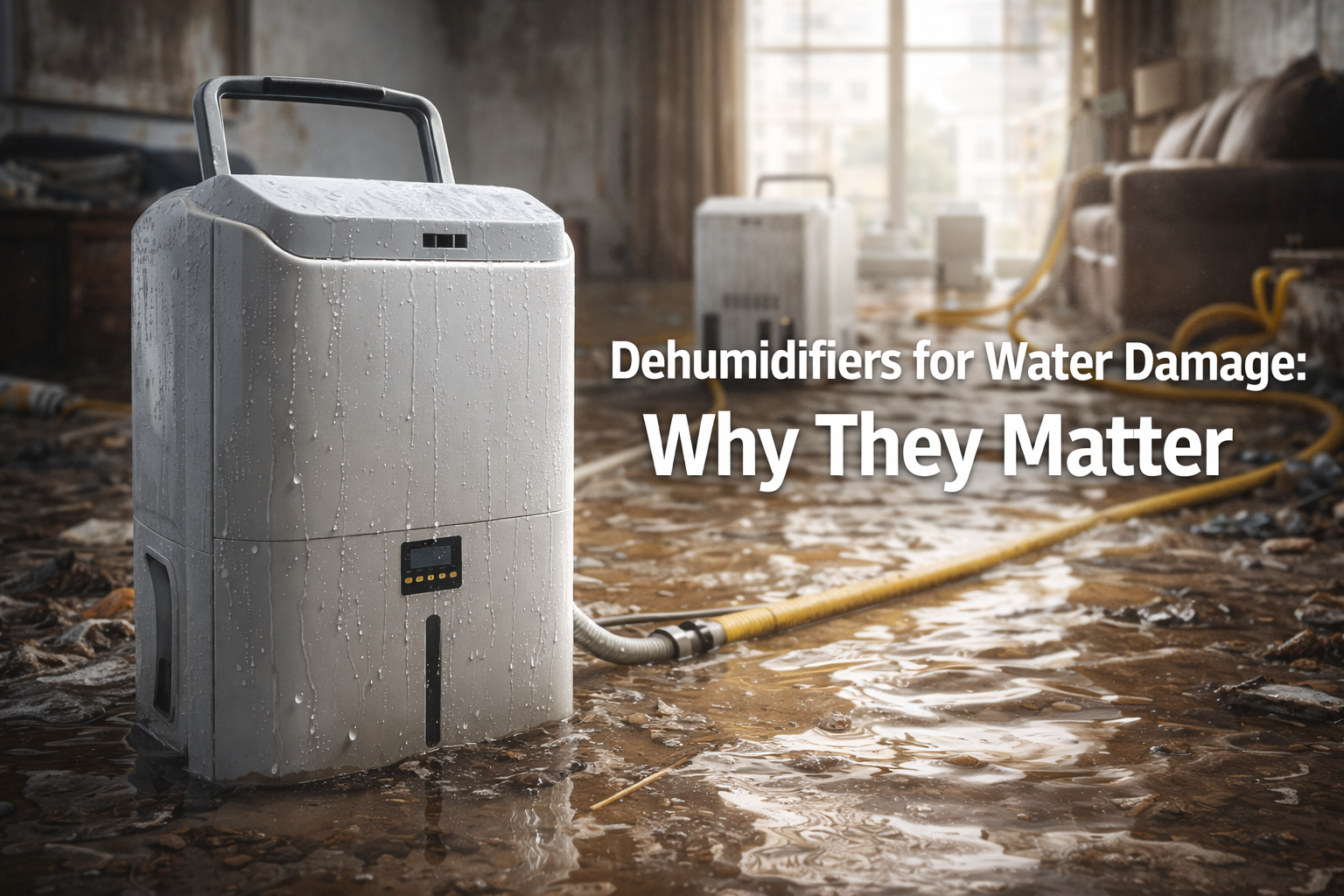
One of the most important tools used is dehumidifiers for water damage. These machines help remove moisture from the air and materials. This helps dry your home quickly and safely.
What Do Dehumidifiers Do After Water Damage?
Removing Excess Moisture from the Air
After water damage, the air becomes heavy with humidity. This makes it hard for surfaces to dry. Dehumidifiers pull moisture out of the air and collect it.
This helps:
Speed up the drying process
Improve indoor air quality
Reduce the risk of mold
Protecting Your Home’s Structure
Too much moisture can harm your home’s structural integrity. It can weaken:
Drywall
Wood floors
Beams inside walls
Dehumidification helps protect these materials and keep your house safe.
Types of Dehumidifiers for Water Damage
Refrigerant Dehumidifiers
Refrigerant dehumidifiers are very common. They work best in warm environments. These machines cool the air and collect water as it condenses.
They are great for:
Residential homes
Large rooms
Standard water damage restoration jobs
Desiccant Dehumidifiers
Desiccant dehumidifiers use special materials to absorb moisture. They work well in cooler spaces.
They are often used:
Inside walls
In tight spaces
For serious water damage
Both types play a vital role in drying your home.
How Dehumidifiers Work with Other Equipment
Air Movers and Fans
Dehumidifiers do not work alone. Professionals use air movers and fans to push air across wet surfaces.
This helps:
Move moisture into the air
Let dehumidifiers remove it faster
Make the job more efficiently
Specialized Equipment for Restoration
Experts use specialized equipment to measure moisture levels. This helps them know the extent of the damage.
They may check:
Moisture inside walls
Wet carpet and flooring
Hidden water in materials
This helps them create a clear restoration plan.
Why Quick Drying Is Essential
Preventing Mold Growth
Mold prevention is one of the biggest reasons to use dehumidifiers. Mold can start to grow within 24–48 hours.
Mold can:
Damage your home
Harm your health
Lower indoor air quality
Drying fast helps stop mold before it spreads.
Avoiding Rot and Mildew
If moisture stays too long, it can lead to:
Wood rot
Mildew smells
Damage to furniture and carpet
Dehumidification helps keep your home clean and safe.
Where Moisture Hides in Your Home
Inside Walls and Drywall
Water can stay hidden inside walls and behind drywall. This makes it hard to see the damage.
Professionals use tools to find hidden moisture and remove it.
Floors and Carpet
Water can soak into:
Carpet
Padding
Subfloor
If not dried, these areas can grow mold and bacteria.
Windows and Air Spaces
Condensation can build up near windows and in air pockets. This adds to the moisture problem.
Dehumidifiers help remove moisture from all these areas.
The Full Water Damage Restoration Process
Step 1: Inspection and Security Check
Before work starts, teams may perform a type of security verification. This helps ensure safe access to the property.
In some cases, systems may show:
“performing security verification”
“verification successful”
“security service verifies access”
This step ensures the job can move forward safely.
Step 2: Water Removal
The next step is removing standing water. Pumps and vacuums are used to clear the space.
Step 3: Drying and Dehumidification
This is where dehumidifiers for water damage play a key role.
The team will:
Set up dehumidifiers
Use air movers
Monitor moisture levels
They track progress using tools and sometimes record data like a respond ray id or job tracking number.
Step 4: Cleaning and Restoration
After drying, the team cleans and repairs damaged areas.
They may:
Replace drywall
Restore floors
Clean furniture
The goal is to fully restore your home.
Benefits of Using Dehumidifiers
Faster Drying
Dehumidifiers help dry your home faster. This reduces damage and saves time.
Better Indoor Air Quality
Removing moisture helps improve indoor air quality. This makes your home healthier.
Lower Repair Costs
Quick drying can reduce the need for big repairs. This helps homeowners save money.
Protection for the Future
Dehumidification helps protect your home from future problems like mold and rot.
Tips for Homeowners After Water Damage
Act Quickly
Do not wait. The longer you wait, the worse the damage can get.
Remove Wet Items
Take out wet:
Furniture
Carpet
Personal items
This helps speed up the drying process.
Use Proper Equipment
Basic fans may help, but professional equipment works much better.
Call Experts
Water damage can be complex. Experts have the expertise and tools to handle it.
Common Challenges During Restoration
Hidden Moisture
Water can hide in places you cannot see. This makes drying harder.
High Humidity Levels
High humidity slows down drying. Dehumidifiers fix this problem.
Large Damage Areas
Big spaces take more time and specialized equipment to dry.
Understanding the Role of Dehumidification
Dehumidification is not just about drying. It is about creating a safe environment.
It helps:
Stop mold
Improve air
Protect your home
Without it, the restoration process is not complete.
Why Choose Professional Help
Advanced Tools and Technology
Professionals use tools that most homeowners do not have. These tools help them work faster and better.
Experience and Knowledge
They understand how water moves and where it hides. This helps them fix the problem fully.
Complete Restoration
From start to finish, they handle every step of the job.
Preferred Restoration Services specialize in helping homeowners recover from water damage with care and expertise.
What to Expect During the Process
Clear Communication
You will know what is happening at every step. The team may share updates like:
Job progress
Moisture levels
Timeline for completion
Safe Work Practices
They follow safety steps, including security checks and proper handling of materials.
A Restored Home
At the end, your home should be clean, dry, and safe again.
Conclusion: Dehumidifiers Play a Vital Role
Dealing with water damage can feel overwhelming. But with the right tools, like dehumidifiers for water damage, recovery is possible.
These machines play a vital role in:
Removing moisture
Preventing mold
Protecting your home
If you are dealing with water damage, do not wait. Take action and get the help you need to restore your home and protect your future.
FAQs
What do dehumidifiers do after water damage?
Dehumidifiers remove moisture from the air. This helps dry your home faster and prevents mold growth.
How long should dehumidifiers run after water damage?
They may run for several days, depending on the extent of the damage and moisture levels.
Can I use a regular dehumidifier for water damage?
Small units can help, but professional equipment works much better for serious damage.
Do dehumidifiers help prevent mold?
Yes, removing excess moisture helps stop mold from growing.
Should I call a professional for water damage?
Yes, experts have the tools and experience to handle water damage safely and fully.