Why This Comparison Matters
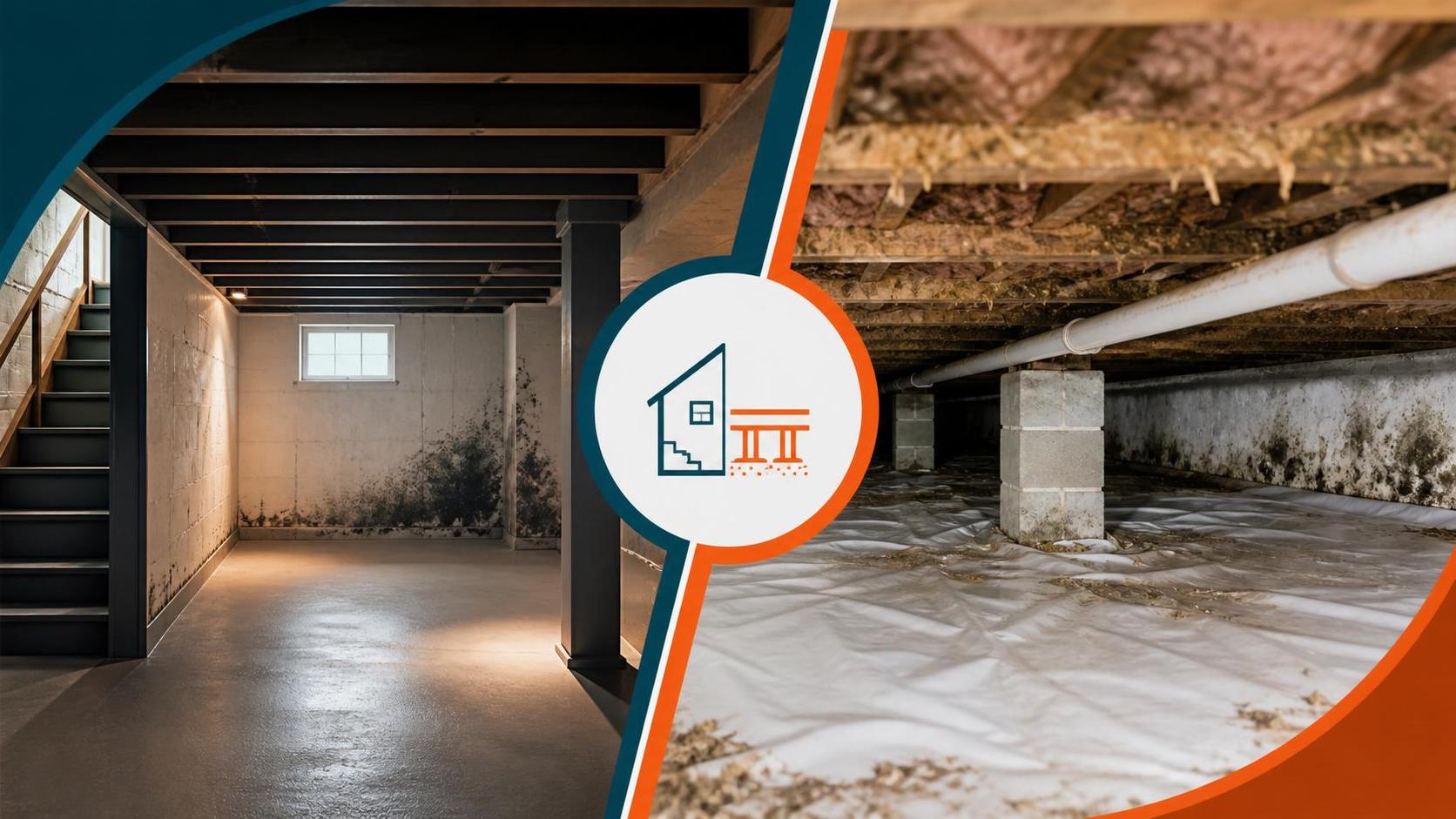
Basement vs Crawl Space Mold: Key Differences Explained starts with one simple truth: whatever is happening beneath your house can significantly impact the entire home.
About 40-60% of home air can come from a basement or crawl space, so mold below the main living space can affect indoor air quality upstairs.
That means a damp crawl space and basement problem is not just a cosmetic nuisance. It can influence your family’s comfort, your home’s health, and your overall health.
Mold thrives in areas with high humidity and organic materials, and it can begin growing when relative humidity rises above 60%.
Basement and Crawl Space Basics
A basement is a below-grade or partly below-grade level that may be unfinished, finished, or converted into additional living space.
A crawl space is a shallow area beneath a house, usually 18 inches to 3 feet high, designed for access to plumbing, ductwork, and electrical lines.
Both foundation types have their own advantages, but each basement or crawl space handles water, air, and temperature differently.
A full basement provides more usable square footage than a crawl space, which is why homeowners often turn a basement into home offices, guest rooms, or recreation areas.
A crawl space is typically easier and cheaper to build. Crawl space construction costs about $13 per square foot, while basement construction costs approximately $33 per square foot.
Crawl spaces are generally 30-50% cheaper to build than basements, but a crawl space can carry higher maintenance costs due to moisture problems.
Crawl Space vs Basement: Where Mold Starts
When homeowners compare crawl space vs basement risk, the biggest difference is how moisture enters and lingers.
A crawl space often suffers from open-ground soil evaporation, outdoor air condensation, and damp earth under the home.
A basement usually faces hydrostatic pressure, which pushes water through concrete floors and foundation walls.
Moisture can originate from rain, humidity, plumbing leaks, or poor drainage around the house.
Poor drainage can cause water buildup against the exterior, leading to water intrusion, active seepage, and moisture damage.
Condensation occurs when warm humid air contacts cool surfaces, which is common in a basement, crawl space, or utility room.
In both areas, moisture removal is essential for permanent mold elimination, not just surface cleaning.
Are Basements More Likely to Have Mold?
Basements can develop mold because they are cool, enclosed, and exposed to liquid water, seepage, and damp concrete.
High humidity levels can foster mold growth in basements, especially when the basement is finished with drywall, carpet, wood trim, or stored cardboard.
However, a crawl space can be even more prone to moisture issues than a basement because it sits close to soil and is often poorly sealed.
So, are basements more likely to have mold? Not always. A neglected crawl space may have a higher risk than a well maintained basement.
The specific answer depends on geographic location, soil conditions, exterior grading, climate considerations, and whether the basement or crawl space has moisture control systems.
Moisture Problems in a Basement
A basement can experience moisture problems from cracks, sump pump failure, clogged gutters, poor drainage, or hydrostatic pressure under the slab.
Regular inspections for leaks are critical for basements because small stains, musty odors, and efflorescence can warn of larger moisture issues.
Sealing foundation cracks prevents groundwater seepage, and hydraulic cement can be used to seal active groundwater seepage in some situations.
Gutters should be cleaned regularly to move roof water away from the house and reduce pressure around the foundation.
Install proper drainage solutions to avoid water accumulation, especially if you notice standing water after storms.
Dehumidifiers help control humidity levels in basements and crawl spaces, and indoor humidity management helps to prevent mold.
Moisture Problems in a Crawl Space
A crawl space is vulnerable because ground moisture migrates through soil and concrete, while water vapor rises into framing, insulation, and subfloor materials.
Heavy-duty vapor barriers are necessary in crawl spaces to block ground moisture and reduce dampness.
A vapor barrier prevents moisture from seeping into crawl spaces, but it must be sealed well at seams, piers, and edges.
Standing water in crawl spaces can lead to mold growth and structural damage, especially when joists and beams remain damp.
Use a dehumidifier to reduce dampness in crawl spaces, and aim for crawl space humidity below 50% to prevent moisture problems.
Check and clean ventilation systems regularly for effectiveness, because ventilation issues in crawl spaces allow humid air to enter and increase moisture levels.
Crawl Space Ventilation and Encapsulation
Traditional crawl space ventilation was once considered enough, but in humid regions, vents can bring in wet outdoor air.
Crawl space encapsulation involves sealing vents to block humid air, covering the soil, insulating walls, and separating the structural wood frame from wet earth.
Complete crawl space encapsulation helps control moisture levels, reduce pest infestations, improve temperature regulation, and support an energy efficient home.
When the crawl space needs a more permanent fix, encapsulation with a heavy vapor barrier, drainage matting, sealed vents, and a dehumidifier is often the most reliable option.
Proper ventilation still matters in mechanical systems and conditioned areas, but in many crawl space designs, sealing and dehumidification outperform open vents.
Health and Air Quality Concerns
Mold growth in damp areas releases spores into indoor air, and those spores can travel from the crawl space and basement into the living space.
Moisture in crawl spaces can contribute to respiratory issues, allergies, odors, and poor air quality.
If indoor air quality declines, people may notice musty smells, coughing, eye irritation, or worsening asthma symptoms.
Poor air quality is often a sign that the basement or crawl space is too damp, contaminated, or connected to leaky ductwork.
A dry crawl space and basement helps create a healthy living environment and protects the comfort of every living space above.
Structural Risks You Should Not Ignore
Moisture problems do more than feed mold. They can also weaken structural integrity over time.
Damp framing may develop wood rot, and wood rot can compromise beams, joists, subfloors, and supports.
Pest infestations are also more common in damp areas, and termite infestations can wreak havoc on a home’s structure.
Damp crawl spaces attract pests that can damage property, while basement leaks can cause foundation problems and costly repairs.
Protecting a home’s structural integrity starts with keeping water out, drying wet materials quickly, and monitoring moisture levels.
Usable Space, Value, and Comfort
A basement delivers more usable space than a crawl space, which can increase resale value when finished correctly.
Basements can lead to long-term savings by providing extra living space instead of requiring an addition at ground level.
A crawl space offers easy access to utilities, but it is rarely pleasant storage space unless it is dry, sealed, and clean.
That said, every crawl space must support a solid foundation, protect the living space above, and keep the house comfortable.
Temperature control is also different. A conditioned basement can feel like part of the living space, while an unsealed crawl space may cause cold floors and higher utility bills.
Crawl Space vs Basement: Which Is Better?
Is it better to have a crawl space or basement? The answer depends on budget, soil conditions, climate, and goals for usable space.
A basement costs more, but it provides square footage, more living space potential, and storage flexibility.
A crawl space costs less to build and may work well in certain climates, sloped lots, or areas where a deep excavation is impractical.
However, the crawl space and basement decision should include long-term maintenance, not just construction price.
Choose the basement or crawl space option that best matches your geographic location, drainage needs, and plan for moisture control.
How to Prevent Mold in Both Areas
To prevent mold, focus on moisture control before stains appear or odors spread.
Aim for humidity levels below 50% in the basement, crawl space, and other moisture-prone zones.
Running a dehumidifier helps maintain low humidity levels and reduces the chance of excess moisture collecting on cool surfaces.
Use proper drainage, sealed cracks, sump pumps, downspout extensions, and grading to prevent moisture from accumulating near the foundation.
Keep organic materials off damp floors, remove wet insulation, and avoid storing paper goods where high humidity is common.
Schedule regular inspections to catch leaks, plumbing drips, pest infestations, damaged insulation, and new moisture issues early.
When to Call a Professional
Call a professional if you see visible mold, recurring standing water, strong odors, sagging floors, or unexplained indoor air quality problems.
A remediation specialist can test moisture levels, identify water sources, and create a plan for the crawl space and basement.
For a basement, the solution may include crack repair, sump improvements, drainage work, and drying equipment.
For a crawl space, the solution may include debris removal, vapor barrier installation, dehumidification, insulation upgrades, and encapsulation.
Never rely on bleach alone. If the basement or crawl space remains wet, mold growth will return.
FAQs
Is mold in a crawl space a big deal?
Yes. Mold in a crawl space is a big deal because air from below can move into the living space and affect indoor air quality. It can also signal deeper moisture problems that may lead to wood rot, pest activity, and damage to structural integrity.
Will homeowners insurance cover mold in crawl space?
Homeowners insurance may cover mold in a crawl space if it results from a sudden covered event, such as a burst pipe. It usually does not cover mold caused by long-term leaks, poor drainage, neglect, flooding, or maintenance-related moisture issues. Always review your policy and document the damage quickly.
Is it better to have a crawl space or basement?
A basement is better if you want more usable space, additional storage, or future living space. A crawl space is better if lower construction cost is the priority. The best choice depends on soil conditions, climate, budget, and how well moisture control will be handled.
Are basements more likely to have mold?
Basements can be likely to have mold because they are below grade and exposed to seepage, condensation, and high humidity. However, a crawl space can be more vulnerable when soil is exposed, vents allow humid air in, or drainage is poor.
What humidity level prevents mold?
Mold requires a relative humidity above 60% and organic materials to grow, so keeping indoor and below-grade humidity under 50% is a safer target. Use a dehumidifier, monitor gauges, and fix leaks quickly.
What is the best moisture control solution for a crawl space?
The best moisture control solution often combines drainage correction, sealed vents, a heavy vapor barrier, dehumidification, and professional encapsulation. This separates the crawl space from wet soil and helps stabilize moisture levels.
Can a basement be converted into safe living space after mold?
Yes, a basement can become safe living space after the water source is fixed, contaminated materials are removed, surfaces are cleaned, and humidity is controlled. Finishing a basement without solving moisture problems first can trap dampness behind walls and flooring.
How often should I inspect a basement or crawl space?
Inspect a basement or crawl space at least twice a year and after major storms. Look for stains, odors, standing water, insects, sagging insulation, damaged ductwork, and any signs that moisture control systems are failing.
Does encapsulation improve indoor air quality?
Encapsulation can improve indoor air quality by reducing damp soil exposure, blocking humid air, limiting mold growth, and reducing musty odors. It works best when paired with drainage upgrades and dehumidification.
What is the biggest warning sign of hidden mold?
A persistent musty odor is one of the biggest warning signs. Even if you do not see mold, odors in the basement, crawl space, or first-floor living space can indicate damp materials or hidden contamination.
Final Takeaway
The crawl space and basement both protect the house, but they fail in different ways when water is ignored.
A basement offers more usable space and can become valuable living space, but it needs drainage, sealing, and humidity control.
A crawl space costs less upfront, but it often needs stronger moisture control, a vapor barrier, and sometimes full encapsulation.
Whether you have a basement or crawl space, the winning strategy is simple: stop water entry, dry the area, lower humidity, protect the structure, and monitor the space before small issues become expensive repairs.