Toilet Overflow Flooded Bathroom: What to Do Next
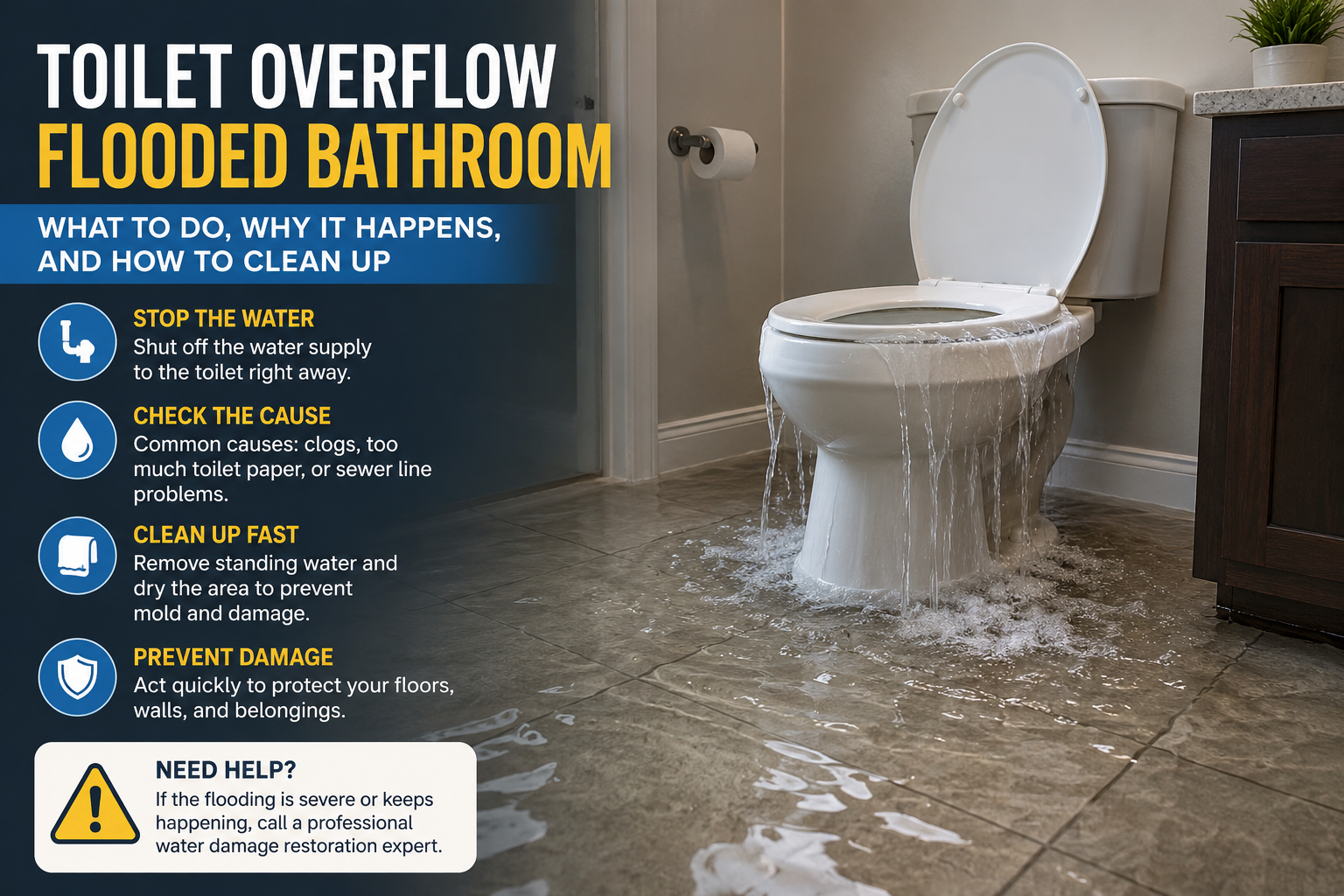
A toilet overflow flooded bathroom can become a serious problem in only a few minutes. Water may spread under the floor, soak the walls, and damage nearby rooms. The first step is to stop the water and keep everyone away from the wet area. If the flooding is large or the water may contain sewage, professional Orange County water damage restoration can help remove the water, dry hidden spaces, and lower the risk of mold.
Fast action can protect your bathroom, floors, walls, and personal items. It can also help reduce cleanup costs.
What Should You Do When a Toilet Overflows?
When a toilet starts overflowing, stay calm and act quickly. The goal is to stop more water from entering the bathroom.
Turn Off the Toilet Water Supply
Look behind or beside the toilet for a small shutoff valve. Turn the valve clockwise until it stops.
This cuts off the water flowing into the toilet tank. If the water keeps rising, remove the toilet tank lid and lift the float. You can also push down the flapper at the bottom of the tank to stop water from entering the bowl.
Do not flush the toilet again. Flushing may cause more water to spill onto the floor.
Stop the Water From Spreading
Place towels around the bathroom doorway to slow the water. Move rugs, wastebaskets, toilet paper, and other items away from the wet area.
Keep children and pets out of the bathroom. Wet floors are slippery, and dirty toilet water may contain harmful germs.
Shut Off Electricity if Needed
Water and electricity are a dangerous mix. If floodwater reaches outlets, cords, lights, or powered devices, do not walk through the water.
Turn off power to the bathroom at the circuit breaker only if you can reach it safely. If you are unsure, stay out of the room and contact a trained professional.
Why Did the Toilet Overflow and Flood the Bathroom?
A toilet can overflow for several reasons. Finding the cause helps prevent the problem from happening again.
A Clogged Toilet Trap
A clogged toilet is one of the most common causes of an overflow. Too much toilet paper, wipes, paper towels, or other items may block the toilet trap.
The trap is the curved part of the toilet drain. When it becomes blocked, water cannot move through the pipe. It rises in the bowl and spills onto the floor.
A Blocked Drain Line
Sometimes the clog is deeper inside the plumbing system. A blockage may affect one toilet, several drains, or the main sewer line.
Signs of a deeper drain problem may include:
-
Gurgling sounds from the toilet
-
Slow bathroom drains
-
Water backing up in a tub or shower
-
More than one toilet overflowing
-
Bad sewer odors inside the home
A plumber may need to inspect and clear the drain line.
A Sewer Line Backup
A sewer backup can push dirty water through the toilet and into the bathroom. Tree roots, grease, broken pipes, soil movement, and old plumbing may block a sewer line.
Sewer water is often called black water. It may contain bacteria, viruses, waste, and other harmful materials.
Do not try to clean a large sewage backup with basic household supplies.
A Faulty Toilet Tank Part
A broken float, fill valve, or flapper may cause the toilet tank to keep filling. This problem may send too much water into the bowl.
A toilet repair professional can replace damaged parts and test the toilet.
Is Toilet Overflow Water Dangerous?
The danger level depends on where the water came from and what it touched.
Clean Water From the Toilet Tank
Water from the toilet tank may begin as clean water. However, once it reaches the bathroom floor, it can pick up dirt, bacteria, cleaning products, and debris.
Clean tank water still needs fast removal and drying.
Contaminated Toilet Bowl Water
Water from the toilet bowl may contain urine, feces, germs, or chemicals. This water should be treated as contaminated.
Avoid touching it with bare skin. Wear gloves, boots, eye protection, and clothing that covers your skin.
Sewage or Black Water
A sewer backup is a health risk. Black water may carry organisms linked to stomach illness, skin infections, and breathing problems.
The Centers for Disease Control and Prevention advises people to avoid direct contact with sewage-contaminated water. Porous items exposed to sewage may need to be removed instead of cleaned.
How Do You Clean Up a Flooded Bathroom?
Small, clean-water spills may be manageable. Larger floods, sewage, or water under the floor often require professional help.
Remove Standing Water
Use towels, a mop, a wet vacuum, or a pump to remove standing water. Do not use a standard household vacuum because it can create an electrical hazard.
Place wet towels and washable items in sealed bags or plastic bins until they can be cleaned.
Remove Wet Bathroom Items
Take out rugs, bath mats, towels, cardboard boxes, and other wet items. Wash safe materials using hot water and detergent.
Throw away items that cannot be fully cleaned, especially if they touched sewage.
Clean Hard Surfaces
Wash tile, sealed stone, toilets, tubs, and other hard surfaces with soap and clean water.
After cleaning, use a disinfectant approved for the surface. Follow the product label closely. Never mix bleach with ammonia or other cleaners because dangerous fumes may form.
Dry the Bathroom Fully
Removing visible water is only the first step. Moisture may remain under flooring, behind baseboards, inside drywall, and beneath the toilet.
Use fans and dehumidifiers only when the water is not contaminated. Open windows if outdoor air is dry.
Professional restoration teams may use:
-
Moisture meters
-
Air movers
-
Commercial dehumidifiers
-
Infrared cameras
-
Floor drying systems
-
HEPA air filtration
These tools help find and remove hidden moisture.
Can a Toilet Overflow Cause Water Damage?
Yes. A toilet overflow can cause major water damage, even if the flood looks small.
Damage to Bathroom Flooring
Tile may look waterproof, but water can pass through grout lines and gaps. It may soak the subfloor below.
Vinyl, laminate, wood, and engineered flooring may lift, swell, crack, or separate.
Damage to Drywall and Baseboards
Drywall absorbs water quickly. The lower part of the wall may become soft, stained, or crumbly.
Baseboards may swell or pull away from the wall. Wet insulation may also need to be removed.
Damage to the Ceiling Below
If the bathroom is upstairs, water may leak through the floor and damage the ceiling below.
Warning signs include:
-
Ceiling stains
-
Bubbling paint
-
Sagging drywall
-
Dripping water
-
Musty odors
-
Cracks in the ceiling
Stay away from a sagging ceiling because wet drywall can fall.
Damage Around the Toilet
Water may collect around the toilet base. A failed wax ring can also allow water to leak below the toilet each time it is flushed.
A plumber may need to remove the toilet, replace the wax ring, and check the floor for rot.
How Fast Can Mold Grow After a Toilet Overflow?
Mold may begin growing within 24 to 48 hours when building materials stay wet.
Bathrooms already have moisture, low airflow, and many hidden spaces. These conditions can make mold growth more likely.
Common Signs of Mold After Flooding
Watch for:
-
Musty or earthy smells
-
Dark spots on walls or grout
-
Peeling paint
-
Swollen baseboards
-
Soft drywall
-
New allergy-like symptoms
-
Stains that keep returning
Mold can grow behind walls and under flooring before it becomes visible.
Why Fast Drying Matters
Fast drying lowers the chance of mold, bacteria growth, and structural damage.
A surface may feel dry while the material underneath is still wet. Moisture testing is the best way to confirm the bathroom is fully dry.
When Should You Call a Water Damage Professional?
Professional help is recommended when the water is contaminated, widespread, or hidden.
Call for help when:
-
Sewage entered the bathroom
-
Water spread into another room
-
Water reached drywall or cabinets
-
The bathroom is on an upper floor
-
The ceiling below is wet
-
Flooring is lifting or swelling
-
The room smells musty
-
Water reached electrical outlets
-
The flood sat for several hours
-
You cannot find the source
A trained restoration team can inspect the damage, remove unsafe materials, dry the structure, and document the work.
Should You Call a Plumber or a Restoration Company?
You may need both.
What a Plumber Does
A plumber finds and repairs the cause of the overflow. This may include clearing a clog, repairing a drain, replacing toilet parts, or fixing the sewer line.
What a Restoration Company Does
A restoration company handles the water damage. The team removes water, cleans affected areas, dries the building, removes damaged materials, and helps prevent mold.
The plumber stops the plumbing problem. The restoration team handles the damage caused by the water.
Does Homeowners Insurance Cover a Toilet Overflow?
Homeowners insurance may cover sudden and accidental water damage from a toilet overflow. Coverage depends on the cause, the policy, and how quickly the homeowner responds.
Insurance may help cover:
-
Water removal
-
Structural drying
-
Damaged drywall
-
Flooring repairs
-
Ceiling damage
-
Cleanup services
Insurance may not cover damage caused by poor maintenance, repeated leaks, or an outside sewer backup unless the policy includes special coverage.
Take photos and videos before moving damaged items when it is safe to do so. Save repair receipts and cleanup records.
How Can You Prevent Another Toilet Overflow?
Simple habits can lower the risk of future bathroom flooding.
Only Flush Toilet Paper
Do not flush wipes, paper towels, tissues, cotton swabs, diapers, hygiene products, food, grease, or cat litter.
Even products labeled flushable may cause plumbing clogs.
Use Less Toilet Paper
Large amounts of toilet paper can block the trap. Flush more than once if needed instead of forcing too much material through the toilet.
Keep a Plunger Nearby
A toilet plunger can clear some small clogs. Use slow, firm pushes to create pressure.
Stop if the bowl is already close to overflowing.
Watch for Plumbing Warning Signs
Call a plumber if you notice slow drains, gurgling pipes, repeated clogs, sewage odors, or water backing up into other fixtures.
Early repairs may prevent a large flood.
Inspect the Toilet
Check for loose parts, leaks, cracks, and water around the toilet base. Replace worn tank parts when needed.
Older toilets and plumbing systems may need more frequent inspection.
What Should You Avoid After a Toilet Flood?
Some actions can make the damage or health risk worse.
Do not:
-
Flush the toilet again
-
Touch sewage with bare hands
-
Use a regular vacuum on water
-
Mix cleaning chemicals
-
Run fans over sewage water
-
Ignore wet drywall or flooring
-
Turn on wet electrical devices
-
Paint over water stains
-
Assume the room is dry by touch
-
Delay cleanup until the next day
Fast, safe action gives the bathroom the best chance of a full recovery.
Final Thoughts on a Toilet Overflow Flooded Bathroom
A toilet overflow flooded bathroom needs quick action. Shut off the water, keep people away from contaminated areas, and remove standing water as soon as it is safe.
The biggest risks are hidden moisture, sewage contamination, mold growth, and damage below the floor. A plumber can repair the toilet or drain problem, while a restoration team can clean and dry the affected area.
Revival Mental Health encourages people to protect their health and avoid unsafe cleanup when sewage, mold, or electrical risks are present. A clean-looking bathroom may still have moisture under flooring or behind walls, so a full inspection may be needed after a serious overflow.
Frequently Asked Questions
How long does it take to dry a flooded bathroom?
Drying may take two to five days, depending on the amount of water, the materials affected, airflow, and whether water reached the subfloor or walls. Moisture testing should be used to confirm the area is dry.
Can I clean toilet overflow water myself?
You may clean a very small spill if the water came from the clean toilet tank and did not reach porous materials. Sewage, dirty bowl water, large floods, and hidden moisture should be handled by trained professionals.
Will a toilet overflow damage tile flooring?
Yes. Water may pass through grout, cracks, and gaps around the toilet. The tile may remain in place while the subfloor underneath becomes wet or damaged.
How do I know if water went under the floor?
Signs include loose tile, bubbling vinyl, swollen wood, soft flooring, musty odors, stains, and moisture around the toilet base. A moisture meter can help locate hidden water.
Should I replace drywall after a toilet overflow?
Drywall may need replacement if it absorbed sewage, stayed wet too long, became soft, or developed mold. Small areas affected by clean water may sometimes be dried, but professional testing is recommended.