After the Flames: Why Fast Action Matters
A house or business fire is overwhelming, but the hours immediately after the fire department leaves are critical. Soot, smoke residues, standing water, and exposed openings can keep causing fire damage long after the flames are gone.
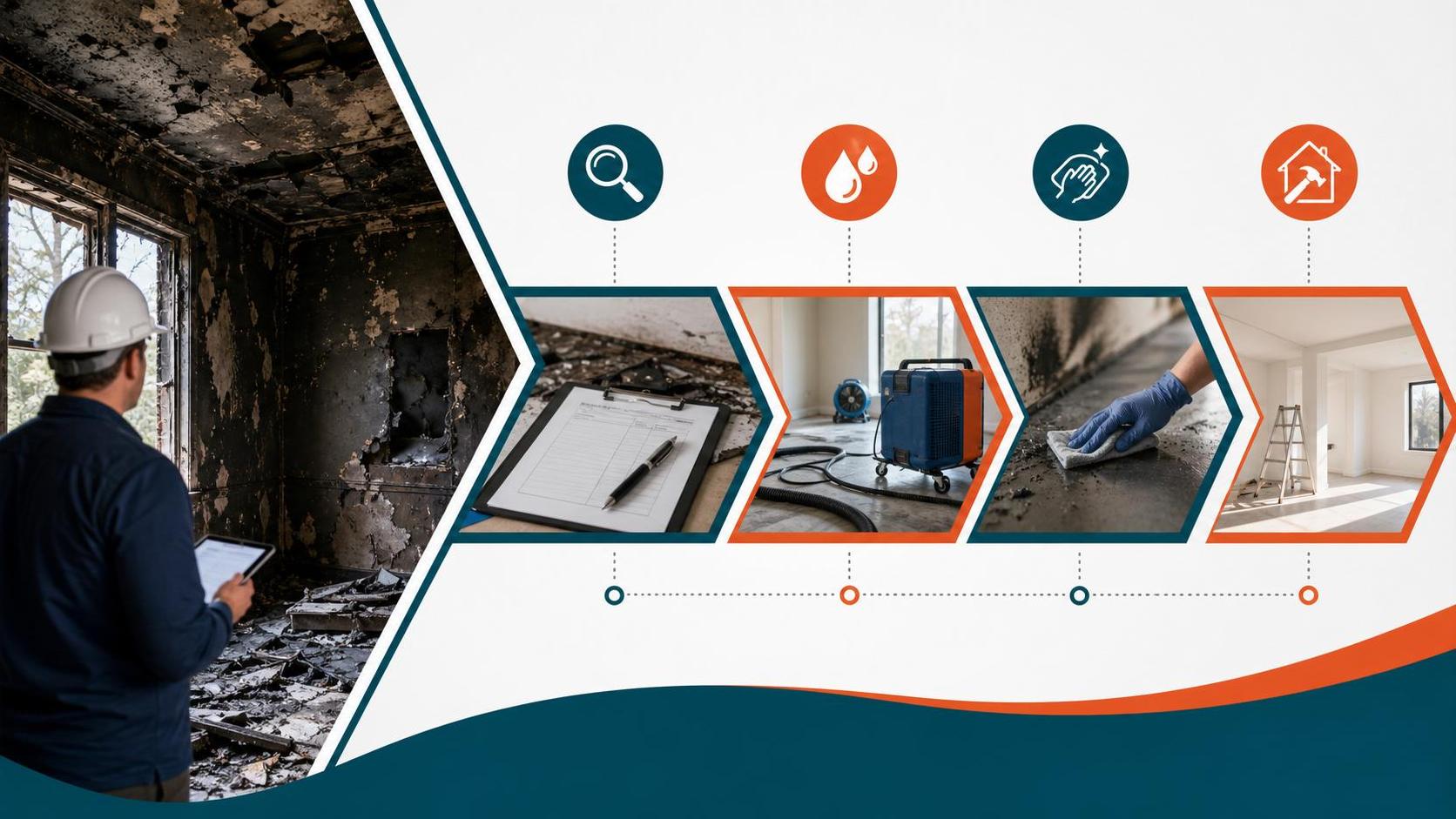
The fire damage restoration process is designed to stabilize the property, clean hazardous residues, remove moisture, repair damage, and return the structure to its pre loss condition as safely and efficiently as possible.
Professional fire damage restoration also helps property owners avoid costly mistakes. Quick response helps prevent further damage from weather, smoke residue, and water left behind by firefighting efforts.
What Fire Damage Restoration Really Means
Fire damage restoration is the professional cleanup, repair, deodorization, and rebuilding of a fire damaged property. It may include emergency board-up, water removal, smoke removal, soot removal, structural repairs, content cleaning, and odor control.
In simple terms, damage restoration is about making the building safe, clean, dry, and usable again. The goal is not just cosmetic improvement; it is complete restoration to pre loss condition whenever possible.
Step 1: Wait for Fire Department Clearance
The restoration process begins only after fire department clears the building for entry. This matters because hidden hot spots, unsafe electrical systems, weak framing, and contaminated debris can create serious safety hazards.
Never enter the affected area until the fire department or other authorities say it is safe. Even if visible damage looks limited, structural damage, toxic soot, and unstable materials may still be present.
Step 2: Emergency Response and Property Securing
The first active phase of fire damage restoration is emergency response. Restoration companies secure the site to reduce liability, protect belongings, and prevent further damage from rain, wind, theft, or animals.
This step typically involves boarding up broken windows and doors, tarping damaged roofs, installing temporary fencing, removing debris around the perimeter, and sealing off unaffected rooms to minimize cross contamination.
These actions are vital because direct fire damage often leaves openings in walls, roofs, and exterior surfaces. Without immediate protection, water damage and weather exposure can make the recovery process longer and more expensive.
Step 3: Initial Assessment and Documentation
A professional restoration company performs an initial assessment to determine the extent of the fire damage, smoke damage, water damage, and structural damage. This damage assessment is the roadmap for the entire restoration process.
A detailed damage assessment includes photos, videos, moisture readings, safety notes, and itemized documentation. Restoration professionals use this information to plan the work and support insurance claims.
Insurance companies usually require detailed damage inventories for insurance claims. Delays in starting the claims process can complicate coverage, especially if secondary damage develops after the fire.
Step 4: Identify the Types of Damage
Not all fire damage is the same. Direct fire damage includes charred walls, burned furniture, damaged drywall, melted fixtures, and compromised building materials.
Smoke damage can penetrate deep into porous materials, including upholstery, insulation, clothing, unfinished wood, paper, and carpeting. Smoke odors can linger and affect air quality if not treated correctly.
Soot is acidic and can permanently stain interior and exterior surfaces if it is not cleaned promptly. Smoke and soot also settle on other surfaces that may not appear heavily damaged at first glance.
Water used to extinguish flames can cause significant secondary damage. Water from firefighting efforts can soak flooring, wall cavities, insulation, and contents, creating conditions for mold growth.
Step 5: Water Removal and Drying
Water removal is critical after a fire because moisture can quickly trigger mold growth and weaken materials. Water mitigation includes removing remaining water left by firefighters and drying the structure thoroughly.
Restoration contractors may use pumps, dehumidifiers, air movers, and thermal imaging cameras to locate hidden moisture. Specialized equipment helps dry wall cavities, flooring, ceilings, and contents more effectively.
Preventing mold growth is a major priority during damage restoration. If water damage is not addressed quickly, antimicrobial chemicals may be applied after extraction and drying to reduce microbial risk.
Step 6: Debris Removal and Fire Cleanup
Fire cleanup includes removing unsalvageable materials, charred debris, contaminated insulation, destroyed furniture, and unsafe building components. This work may involve manual labor, containment, protective equipment, and careful disposal.
Fire damage cleanup also helps expose hidden problems. Once debris is removed, restoration contractors can assess damage more accurately and identify the necessary fire damage repairs.
Step 7: Smoke and Soot Cleaning
Smoke and soot require specialized cleaning methods for removal. Professional fire damage restoration teams use specialized cleaning techniques based on the type of soot, surface material, temperature of the fire, and level of contamination.
It takes proper equipment to properly clean smoke residue because dry soot, oily soot, protein residue, and fuel-based residue behave differently. A proper clean may require gentle sponges, chemical cleaners, HEPA vacuuming, and controlled deep cleaning.
Professional cleaning is especially important for electronics, documents, artwork, and delicate personal belongings. Contaminated items can often be cleaned and restored instead of discarded.
Step 8: Deodorization and Odor Removal
Deodorizing agents remove lingering smoke odors after cleanup. HEPA air scrubbers filter airborne particles during deodorization, while ozone generators can eliminate odors at the molecular level in controlled conditions.
Thermal fogging neutralizes smoke odor effectively because it mimics the way smoke travels into cracks, crevices, and porous materials. This phase of fire restoration helps make the building comfortable again.
Without proper deodorization, a smoke odor may return during humid weather or when HVAC systems run. That is why professional fire damage restoration includes odor testing before the final approval.
Step 9: Cleaning Contents and Salvageable Items
Many items inside a fire damaged property can be saved. Restoration professionals clean furniture, clothing, dishes, tools, electronics, books, documents, and heirlooms when safe and practical.
Depending on the item, damage restoration may involve ultrasonic cleaning, HEPA vacuuming, hand washing, fabric restoration, freeze-drying documents, or off-site storage. The goal is to preserve value and reduce replacement costs.
Step 10: Repairs, Reconstruction, and Rebuilding
Once the structure is clean and dry, fire damage repairs can begin. Contractors are responsible for rebuilding or repairing structural elements, finishes, framing, flooring, roofing, cabinetry, and mechanical systems.
Minor repairs may include painting, replacing trim, installing fixtures, or patching walls. Larger projects may require structural repairs, roof replacement, framing reinforcement, and permits to rebuild fire damaged areas.
This stage of the fire damage restoration process focuses on returning spaces to pre loss condition. The scope depends on the fire damaged areas, structural integrity, code requirements, and insurance approval.
Step 11: Final Inspection and Completion
The final step is inspection and verification. Restoration companies check moisture levels, odor control, cleanliness, safety, and workmanship before declaring the project complete.
A successful complete restoration should leave the property safe, dry, clean, deodorized, and returned as closely as possible to pre loss condition. Final inspection also confirms that odors are eliminated and safety is restored.
How Long Does Fire Damage Restoration Take?
The timeline depends on the size of the fire, extent of fire damage, amount of water damage, smoke contamination, insurance approvals, material availability, and reconstruction needs.
A small kitchen fire may take several days to two weeks. Moderate fire damage restoration may take several weeks. A major loss with structural damage can take several months, especially when permits and reconstruction are required.
What Does a Restoration Company Do After a Fire?
Restoration companies respond quickly, secure the property, document damage, remove water, clean soot, control odors, restore contents, coordinate with insurers, and manage repairs. Professional restoration reduces stress because one team oversees the recovery process from emergency stabilization through completion.
Many restoration companies also communicate directly with adjusters, which can streamline the claims process. Professional restoration helps organize photos, estimates, inventories, and progress reports for insurance claims.
Remediation vs. Restoration: What Is the Difference?
Remediation focuses on stopping contamination, hazards, and ongoing loss. In a fire restoration context, remediation may include removing smoke residue, extracting water, drying materials, and addressing mold growth.
Restoration focuses on returning the property to pre loss condition. In the broader restoration process, remediation comes first, followed by repair, reconstruction, finishing, and final quality checks.
Why Professional Help Is Worth It
Professional fire damage restoration is safer and more thorough than DIY cleanup. Soot chemistry, moisture mapping, odor removal, and structural safety require training, equipment, and experience.
Professional restoration also helps prevent further damage. Soot and smoke can cause damage long after a fire, and water left behind can lead to mold growth if untreated.
Most homeowner’s insurance covers fire damage restoration services when the fire is a covered event. Because coverage can vary, property owners should contact their insurer quickly and keep all documentation.
Choosing the Right Fire Restoration Partner
Look for restoration companies with emergency availability, fire restoration experience, proper licensing, insurance, clear communication, and strong local reviews. The best restoration companies explain each phase before starting work.
Ask whether the provider handles water removal, smoke damage cleaning, contents restoration, reconstruction, and insurance claims support. A qualified team should provide a written scope and explain the fire damage restoration process in plain language.
Step-by-Step Fire Damage Restoration Checklist
- Wait for the fire department to confirm the building is safe.
- Call restoration companies for immediate stabilization.
- Board up openings, tarp roofs, and secure the perimeter.
- Complete the initial assessment with photos and documentation.
- Begin water mitigation and drying to reduce secondary damage.
- Remove debris, damaged materials, and contaminated contents.
- Clean soot, smoke residue, and affected surfaces.
- Deodorize using methods such as thermal fogging, HEPA filtration, and ozone treatment when appropriate.
- Repair, rebuild, and restore the property to pre loss condition.
- Complete final inspection and close out the project.
Common Mistakes to Avoid
Do not wash soot-covered walls with ordinary household cleaners, because acidic soot can smear and stain. Do not turn on HVAC systems until they are checked, because smoke particles can spread quickly.
Do not delay the insurance claims process. Documentation is essential for insurance claims after fire damage, and immediate action minimizes secondary damage to property.
Do not assume visible damage tells the full story. Hidden moisture, smoke residue, and weakened framing may require professional fire damage restoration even when the property looks manageable.
Final Takeaway
Fire damage restoration is a coordinated series of safety, cleanup, drying, deodorization, repair, and reconstruction steps. The fire restoration process begins with clearance and ends with verification that the property is safe, clean, and functional.
If your building has suffered fire damage, fast professional fire damage restoration can reduce further damage, protect your claim, improve indoor conditions, and help you move forward with confidence.
Frequently Asked Questions
What are the steps involved in fire damage restoration?
The core steps are fire department clearance, emergency securing, initial assessment, water removal, debris removal, smoke damage cleaning, deodorization, content restoration, reconstruction, and final inspection. The fire damage restoration process may vary depending on the severity of the loss.
How long does fire damage restoration take?
Small projects may take a few days to two weeks, while moderate fire damage restoration often takes several weeks. Severe fire damage with structural rebuilding can take months, especially if permits, inspections, or custom materials are involved.
What does a restoration company do after a fire?
A restoration company secures the property, documents the loss, removes water, cleans soot and smoke residue, restores contents, deodorizes the structure, coordinates with insurance, and completes repairs. Many restoration companies manage both cleanup and reconstruction.
What is the difference between remediation and restoration?
Remediation stops active hazards such as contamination, moisture, odor, and unsafe debris. Restoration is the full rebuilding and finishing phase that returns the property to its pre loss condition.
Can smoke damage be removed completely?
In many cases, yes. Professional fire damage restoration uses HEPA filtration, chemical cleaning, sealing, thermal fogging, and ozone treatment where appropriate. The result depends on the material, exposure time, and depth of contamination.
Is it safe to stay in a house after a fire?
Not until professionals confirm it is safe. Fire damage can leave toxic residues, unstable materials, electrical hazards, roof openings, and hidden moisture. Always wait for clearance and a safety evaluation.
Will insurance pay for fire damage restoration?
Most homeowner policies cover covered fire damage, cleanup, repairs, and related damage restoration costs. However, coverage depends on the policy, cause of loss, deductibles, and documentation, so start the claims process quickly.
Why does water damage happen after a fire?
Water damage often comes from hoses, sprinkler systems, and firefighting efforts. If not removed quickly, standing water and trapped moisture can cause mold, swelling, odors, and further damage.
Should I clean soot myself?
It is usually better to wait for professional fire damage restoration. Soot is acidic, spreads easily, and may permanently stain surfaces if cleaned incorrectly. Trained technicians know which methods are safe for each material.