Mold Remediation for Commercial Buildings
Mold can cause serious problems inside commercial buildings. It spreads fast when there is moisture, water damage, or poor ventilation. If mold is not removed quickly, it can damage the building and harm indoor air quality. This can also affect the health and safety of employees and customers.
Many businesses face mold problems after a leak, roof damage, flooding, or condensation buildup. Mold can grow in drywall, carpet, ceilings, ducts, crawl spaces, basements, and bathrooms. The spores can spread through the air and create contamination in indoor air.
Professional commercial mold remediation helps stop mold growth and restore safe conditions. Companies like Preferred Restoration use advanced tools and trained specialists to handle mold damage in commercial spaces.
If your property has mold issues, professional mold removal and remediation services can help. You can also learn more about professional solutions by visiting mold removal services.
Understanding how mold forms and how remediation works helps businesses protect their property, employees, and customers.
What Causes Mold in Commercial Buildings?
Mold growth starts when moisture and organic materials are present. Commercial buildings often have many areas where mold can grow.
Water Damage and Leaks
Water problems are the most common cause of mold. Issues can come from:
- Plumbing leaks
- Roof damage
- Broken pipes
- Flooding
- Appliance leaks
- Sprinkler system failures
When water damage happens, materials like drywall, carpet, insulation, and flooring can stay wet. This creates the perfect place for fungus and mold spores to grow.
Condensation and Humidity
Condensation forms when warm air touches cool surfaces. This happens often in:
- Basements
- Crawl spaces
- Bathrooms
- Around HVAC ducts
- Windows and ceilings
Poor ventilation allows moisture to stay trapped inside the building, increasing the risk of mold.
Poor Ventilation Systems
Commercial HVAC systems help control airflow and indoor air quality. If ducts become damp or dirty, mold spores can grow inside them. This allows mold to spread through the entire building.
Why Mold Is Dangerous for Businesses
Mold does more than damage a building. It can create serious health, safety, and legal liability risks.
Health Risks from Mold Exposure
Mold spores can affect people who breathe contaminated air. Some common symptoms include:
- Allergy symptoms
- Sneezing and coughing
- Skin irritation
- Eye irritation
- Headaches
- Breathing problems
- Asthma attacks
Some mold species can produce toxins. One example is Stachybotrys chartarum, often called black mold. This mold thrives in wet materials like drywall and wood.
Impact on Indoor Air Quality
When mold spores spread through the air, they reduce indoor air quality. Poor indoor air can make employees sick and reduce workplace comfort.
Commercial buildings with mold may also develop a strong musty odor, which can affect customers and clients.
Property Damage and Business Interruption
Mold can destroy building materials such as:
- Drywall
- Ceiling tiles
- Carpet
- Flooring
- Wood structures
Over time, mold damage can weaken parts of the building. Businesses may need to close temporarily during remediation and restoration.
Signs of Mold in Commercial Spaces
Early detection helps prevent serious damage.
Visible Mold Growth
Mold may appear as:
- Black spots
- Green or white patches
- Fuzzy or slimy growth
These spots may appear on walls, ceilings, floors, or HVAC ducts.
Musty Odor
A strong mold odor often appears before visible mold growth. The smell usually comes from hidden mold inside walls, crawl spaces, or duct systems.
Water Stains and Damage
Water stains on ceilings or walls often mean there is a leak or moisture problem. These areas can quickly develop mold contamination.
Employee Health Complaints
If employees experience increased allergy symptoms, irritation, or asthma, mold spores may be present in the air.
A professional inspection can help confirm the source of the problem.
The Commercial Mold Remediation Process
Professional commercial mold remediation follows a structured process to remove contamination safely.
Inspection and Mold Testing
The first step is a detailed inspection. Specialists examine the building to locate:
- Water damage
- Mold growth
- Moisture sources
- Hidden contamination
Environmental testing may identify specific mold species, including stachybotrys.
Containment of Contaminated Areas
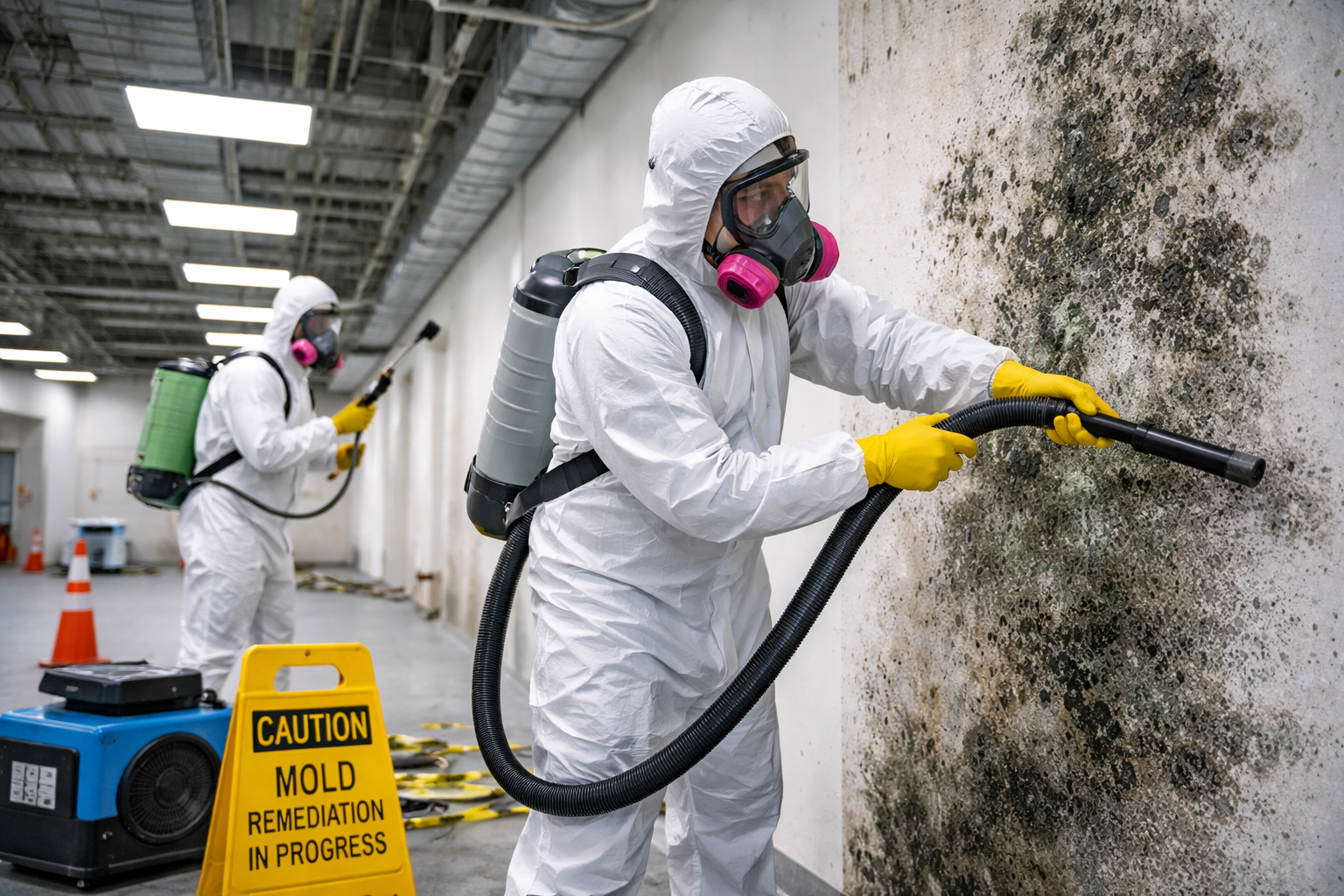
Technicians isolate the contaminated space using plastic barriers and negative air pressure systems. This prevents mold spores from spreading to other commercial spaces.
Air Filtration and HEPA Equipment
Advanced HEPA filtration equipment removes mold spores from the air.
HEPA filters trap microscopic spores and improve indoor air quality during remediation.
Mold Removal and Cleaning
Technicians remove mold from affected materials such as:
- Drywall
- Carpet
- Ceiling tiles
- Ducts
- Insulation
Severely damaged materials may require full removal.
Cleaning methods may include:
- Antimicrobial treatments
- HEPA vacuuming
- Surface scrubbing
- Debris removal
Antimicrobial Treatment
After mold removal, surfaces are treated with antimicrobial solutions. This helps prevent mold spores from returning.
Restoration of the Building
The final step is restoration. This may involve replacing:
- Drywall
- Flooring
- Ceiling panels
- Insulation
- Carpets
The goal is to return the commercial building to a safe and functional condition.
Safety Measures During Mold Remediation
Commercial mold removal requires strict safety standards.
Personal Protective Equipment
Technicians wear personal protective equipment (PPE) such as:
- Respirators
- Gloves
- Protective suits
- Eye protection
These items protect workers from mold spores and contamination.
Air Pressure and Containment
Negative air pressure systems prevent spores from spreading to other spaces.
This protects employees and visitors during remediation.
Professional Hygiene and Cleanup
After the remediation process, technicians perform deep cleaning and filtration to remove remaining debris and spores.
Areas of Commercial Buildings at Risk
Certain areas of buildings are more likely to develop mold.
Basements and Crawl Spaces
These spaces often have:
- High humidity
- Poor airflow
- Hidden water leaks
Moisture in these areas allows mold spores to grow quickly.
Bathrooms and Kitchens
Water use in bathrooms and kitchens creates constant humidity and condensation.
Without proper ventilation, mold growth can occur behind walls or under flooring.
Roof and Ceiling Areas
Leaks from the roof can damage ceilings and insulation.
Moisture trapped in these materials allows mold colonies to grow.
HVAC Systems and Ducts
Mold can grow inside air ducts if moisture builds up. This spreads mold spores through the ventilation system.
Preventing Mold in Commercial Buildings
Preventing mold growth helps businesses avoid expensive remediation.
Fix Water Leaks Quickly
Repair any leak or water damage immediately. Even small leaks can cause mold problems.
Improve Ventilation
Good airflow reduces humidity and condensation. HVAC systems should be inspected regularly.
Control Indoor Humidity
Using dehumidifiers helps maintain safe moisture levels inside commercial spaces.
Routine Inspections
Regular environmental inspections can detect moisture problems early.
Early action prevents mold contamination from spreading.
Why Professional Commercial Mold Remediation Is Important
DIY mold removal is not recommended for commercial buildings.
Professional remediation ensures:
- Complete mold removal
- Proper containment
- Safe air filtration
- Identification of moisture sources
- Compliance with environmental safety standards
Professionals also help businesses reduce legal liability risks related to mold exposure.
Working with experienced remediation specialists protects your employees, customers, and building.
Choosing a Trusted Mold Remediation Company
When selecting a remediation company, look for professionals with experience in commercial mold remediation.
Important factors include:
- Certified technicians
- Advanced remediation equipment
- HEPA air filtration systems
- Safe mold removal methods
- Emergency response services
Companies like Preferred Restoration specialize in handling mold damage in commercial buildings and restoring safe environments.
FAQs About Mold Remediation for Commercial Buildings
What is commercial mold remediation?
Commercial mold remediation is the process of inspecting, containing, and removing mold contamination from commercial buildings. The process includes cleaning, antimicrobial treatment, air filtration, and restoration.
How long does mold remediation take?
The timeline depends on the size of the contamination and the building. Small projects may take a few days, while larger commercial spaces may take several weeks.
Is mold dangerous for employees?
Yes. Mold spores can trigger allergies, asthma, irritation, and respiratory problems. Poor indoor air quality can affect employee health and productivity.
Can mold come back after remediation?
Mold can return if moisture problems are not fixed. Proper remediation includes addressing water leaks, humidity, and ventilation issues to prevent mold growth.
What should businesses do if they discover mold?
Businesses should contact a professional remediation company immediately. Quick action helps limit mold damage, protect indoor air quality, and reduce legal risks.