How Mold Affects Children?
Mold in a home is more than an unpleasant smell or a stain on walls; it can be a serious concern for babies, toddlers, and older children. Because their bodies are still developing, children can be affected faster than adults, especially in damp indoors spaces where moisture is not controlled. This guide explains how mold exposure children risks show up, what symptoms to watch for, and how to make your home safer.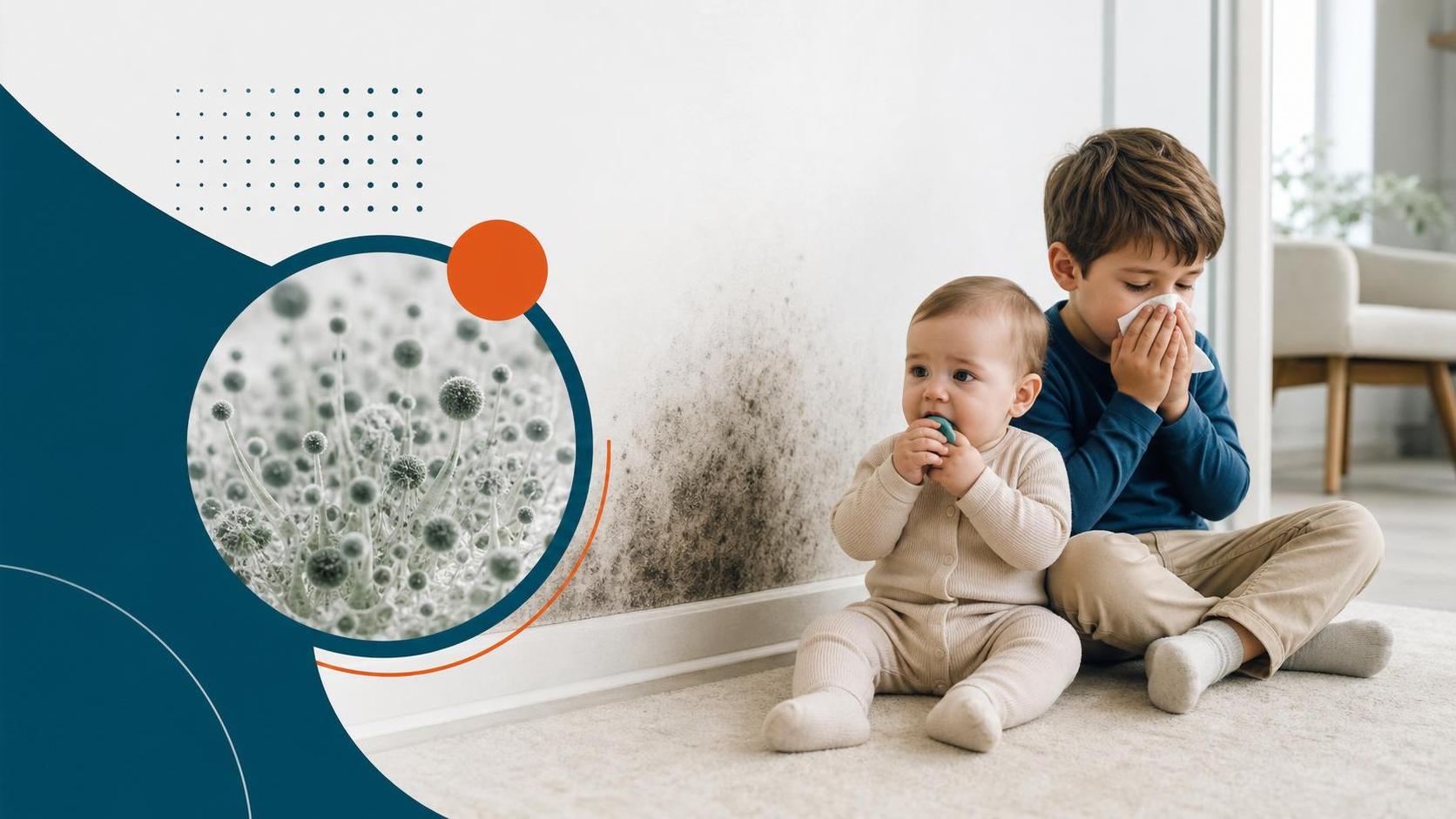
Why Mold Is Riskier for Babies and Children
Mold is a fungus that thrives where there is moisture, dampness, and warm temperatures. Mold grows on wet surfaces such as drywall, carpet, wood, paint, and bathroom grout. As it spreads, mold spores move through the air and settle in dust, floors, fabrics, and vents.
Children are more susceptible because they breathe more air relative to their body size, spend more time near floors where mold spores settle, and have developing respiratory and immune systems. That is why children’s health can be affected even when adults in the same house feel fine.
Early mold exposure can lead to allergy and asthma development, especially in susceptible children. The Institute of Medicine found sufficient evidence linking indoor exposure to mold with upper respiratory tract symptoms and asthma symptoms in susceptible individuals.
Common Symptoms Parents Should Watch For
The most common symptoms often look like a never-ending cold or seasonal allergy. A child may have a runny nose, stuffy nose, sore throat, coughing, wheezing, itchy eyes, skin rashes, headaches, fatigue, or breathing problems. Some children develop allergic reactions or a mold allergy that seems worse in certain rooms.
Exposure to damp and moldy environments may cause a variety of health effects, including respiratory symptoms such as coughing and wheezing. Mold can cause irritation even without an allergy, and children with asthma may be at higher risk for asthma attacks and difficulty breathing.
Infections are not the most common outcome for healthy children, but babies, medically fragile kids, and those with weakened immunity may face greater concern. Rarely, intense exposure may contribute to serious inflammatory lung conditions such as hypersensitivity pneumonitis.
How Do I Know If My Child Has Mold Poisoning?
“Mold poisoning” is not always a precise medical diagnosis, but parents often use the phrase when symptoms appear after exposure to mold. Clues include allergy symptoms that worsen at home, improve after your child leaves for a few days, and return when they come back.
Look for patterns: symptoms in a basement bedroom, coughing after bath time, worsening wheezing near windows, or skin irritation after spending time in a room with visible mold growth. If symptoms are severe, persistent, or your child has underlying asthma, contact a pediatrician or doctor for guidance.
Can Mold in a House Affect a Child’s Behavior?
Yes, it can indirectly affect behavior. Poor sleep from congestion, chronic coughing, itchy skin, fatigue, headaches, and breathing problems can lead to irritability, trouble focusing, meltdowns, or lower school performance. Prolonged mold exposure may lead to chronic health effects, including cognitive complaints, chronic inflammatory responses, weakened immunity, and asthma.
Behavior changes alone do not prove mold is the cause, but when they occur with respiratory or allergy symptoms in a damp home, the environment should be investigated. Protecting children’s health means taking the home condition seriously, not waiting to identify the exact type of mold.
Where Mold Hides Indoors
Mold often appears in bathrooms, under sinks, around windows, behind walls, near roof leaks, around plumbing leaks, in crawl spaces, and after a flood. A musty odor may be the first sign; if you smell mold, check humid areas carefully.
Mold can enter through open doors, windows, vents, heating systems, and air conditioners. It can spread when a roof leak, water leaks, or a flood leaves materials wet for too long. Household items should be dried within 48 hours after getting wet to reduce risk.
Common trouble spots include bathrooms without exhaust fans, a basement with damp air, cabinets below leaky pipes, and walls near old leaks. If a home also has peeling paint, asbestos, or other hazards, cleanup planning should be extra careful.
Safe Cleanup and Remediation
If mold is seen, remove it and fix the moisture problem; you do not need to know the type before taking action. Safely cleaning small affected areas can be done with soap and water. Larger infestations, repeated flood damage, or contamination inside walls should be handled by remediation professionals.
Children should not be present during cleanup or remediation because scrubbing can release airborne particles. For hard surfaces, clean with detergent and water, then dry fully to prevent mold regrowth. Mold can also be removed from hard surfaces with household products or a bleach solution of no more than 1 cup of household laundry bleach in 1 gallon of water.
Never mix bleach with ammonia or other cleaners. Use bleach only with ventilation, follow label directions, and protect skin. Porous items that remain wet or heavily affected may need to be discarded so the family can get rid of the source.
How to Prevent Mold Growth at Home
Prevention starts with moisture control. Keep indoor humidity between 30% and 50% to prevent mold growth. Fix roof leaks, plumbing leaks, and water leaks quickly, and dry damp materials after a flood as fast as possible.
- Use exhaust fans in bathrooms and kitchens.
- Open windows when weather allows and open doors between rooms to improve ventilation.
- Increase airflow around furniture and closets.
- Repair leaks before stains spread across walls.
- Maintain heating and cooling systems so indoor air stays balanced.
- Clean visible mold on surfaces promptly and keep humid areas dry.
To prevent mold long term, reduce moisture, clean dust, monitor windows for condensation, and act fast after any flood. Good ventilation is one of the simplest ways to protect health indoors.
Long-Term Effects and Recovery
How long it takes to heal from mold exposure depends on the child, the duration of exposure, and whether the home problem is fixed. Many children improve significantly within days to weeks after leaving the contaminated environment, while asthma, allergy, or infections may require longer care.
Long-term effects of exposure to mold in children can include persistent allergy, chronic wheezing, asthma development, repeated respiratory irritation, fatigue, and, in some cases, learning or attention difficulties linked to poor sleep and inflammation. The biggest risk comes from ongoing exposure, so prompt action can lead to better health outcomes.
Frequently Asked Questions
How do I know if my child has mold poisoning?
Watch for symptoms that act like constant allergies: runny nose, coughing, wheezing, rashes, fatigue, or headaches that improve away from home. If the pattern points to mold, inspect for moisture and call a professional if needed.
Can mold in a house affect a child’s behavior?
Yes. Congestion, poor sleep, headaches, and breathing problems can make children irritable, distracted, or tired. Behavior changes should be considered alongside physical symptoms and home conditions.
How long does it take to heal from mold exposure?
Some children feel better after several days away from the affected space. Others need weeks or longer, especially if they have asthma, allergy, or ongoing exposure inside the home.
What are the long term effects of mold exposure in children?
Possible long-term health effects include chronic allergy, asthma, repeated wheezing, respiratory irritation, weakened immune responses, and fatigue. Early cleanup and prevention reduce the risk.
Is black mold more dangerous than other mold?
Any indoor mold should be removed. The color does not determine safety, and families should fix the moisture source and clean the affected area regardless of type.
Should babies be in the house during mold cleanup?
No. Babies and children should be kept away during cleanup or remediation because disturbed materials can release particles into the air.
Where can parents find more resources?
For more resources, consult your pediatrician, local health department, or environmental health professionals who understand safe cleanup and indoor moisture control.