Mold Removal vs Remediation: What Homeowners Need to Know
When people find mold in their home, they often search for help right away. A common question is the difference between mold removal vs remediation. Many homeowners believe mold can simply be removed, but the truth is more complex.
Mold is a type of fungus that grows when there is moisture, humidity, or water damage inside a building. It spreads through tiny spores that travel through the air and settle on surfaces. Because of this, mold can quickly spread in places like a basement, attic, bathroom, or behind drywall.
If you suspect mold, it is important to contact a restoration company that provides professional mold remediation. A trusted team like Preferred Restoration can perform a full inspection, find the root of the problem, and restore safe indoor air quality.
Understanding the difference between mold removal and mold remediation can help you choose the right solution and protect your health.
What Is Mold?
Mold is a living fungus that grows in damp areas. It feeds on organic materials like drywall, wood, and dust. Mold spreads through spores, which float through the air.
When spores land on surfaces with water, moisture, or humidity, they begin to grow and form colonies. This can lead to serious mold problems inside a home.
Common Places Mold Grows
Indoor mold often appears in areas that have hidden moisture.
These include:
- Basement walls and floors
- Bathroom ceilings
- Under sinks with plumbing leaks
- Around a roof leak
- Inside an attic with poor ventilation
- Behind drywall after water damage
- Areas affected by a flood
When these conditions exist, mold can grow quickly and lead to contamination in the home.
Why Mold Is a Health Concern
Mold is not just a cosmetic issue. It can impact both your home and your health.
When mold spores spread through the air, they can lower indoor air quality. People breathing these spores may experience symptoms like:
- Allergy reactions
- Sneezing
- Coughing
- Headaches
- Skin irritation
People with asthma, allergies, or breathing problems may have stronger reactions.
Mold and Respiratory Issues
Exposure to indoor mold can trigger breathing issues. Mold spores can irritate the lungs and airways.
Children, older adults, and people with weakened immune systems are often more sensitive.
That is why professional mold remediation is important. Simply cleaning visible mold does not stop spores from spreading.
What Causes Mold Growth in Homes
Mold grows when three conditions exist:
- Moisture or water
- Organic material to feed on
- Warm indoor temperatures
Common Causes of Mold
Several issues can cause mold infestations inside homes.
Water Damage
Water damage from a flood, broken pipe, or plumbing leak can soak materials like carpet and drywall.
If not dried quickly, mold will begin growing within 24–48 hours.
Roof Leaks
A damaged roof can allow rainwater into the attic or ceiling. Moisture trapped in insulation or wood supports mold growth.
High Humidity
Too much humidity inside a home can cause condensation on walls and windows. Bathrooms, basements, and kitchens often have this problem.
Using a dehumidifier can help control moisture.
Poor Ventilation
Lack of ventilation traps moisture indoors. This is common in bathrooms, laundry rooms, and attics.
Without airflow, mold spores grow quickly.
What Is Mold Removal?
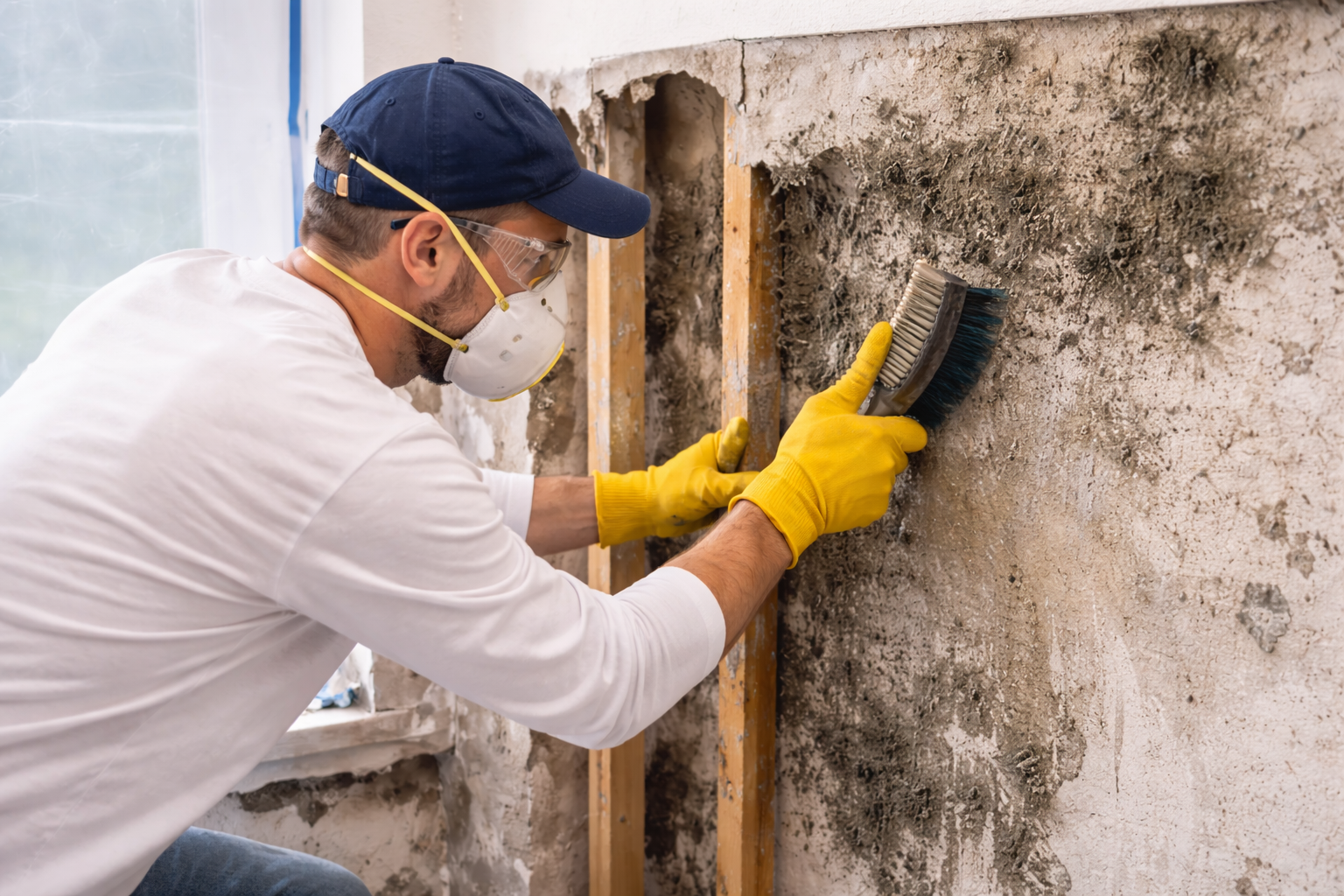
Mold removal refers to the process of cleaning visible mold from surfaces.
This may involve:
- Scrubbing mold from walls
- Cleaning contaminated materials
- Using antimicrobial cleaning solutions
However, mold removal alone does not solve the full problem.
Why Mold Removal Alone Is Not Enough
Mold exists almost everywhere in the environment. Because spores are microscopic, they cannot be completely removed from indoor spaces.
Even after cleaning, spores may remain in the air or hidden inside building materials.
If the root moisture problem is not fixed, mold will return.
This is why many experts prefer the term mold remediation instead of mold removal.
What Is Mold Remediation?
Mold remediation is a full process that goes beyond simple cleaning.
The goal of remediation is to control mold levels and prevent it from returning.
A mold remediation company uses specialized tools and procedures to stop mold growth and restore safe indoor conditions.
Key Steps in the Remediation Process
Professional mold remediation services follow a structured process.
Inspection and Assessment
The first step is a detailed inspection. Technicians identify:
- The size of the mold infestation
- The source of moisture
- Areas of contamination
This helps determine the best remediation process.
Containment
Containment prevents mold spores from spreading to other parts of the home.
Plastic barriers and negative air pressure systems may be used.
Air Filtration
Professionals use HEPA filtration systems to capture mold spores in the air.
This improves indoor air quality and removes airborne contaminants.
Mold Removal and Cleaning
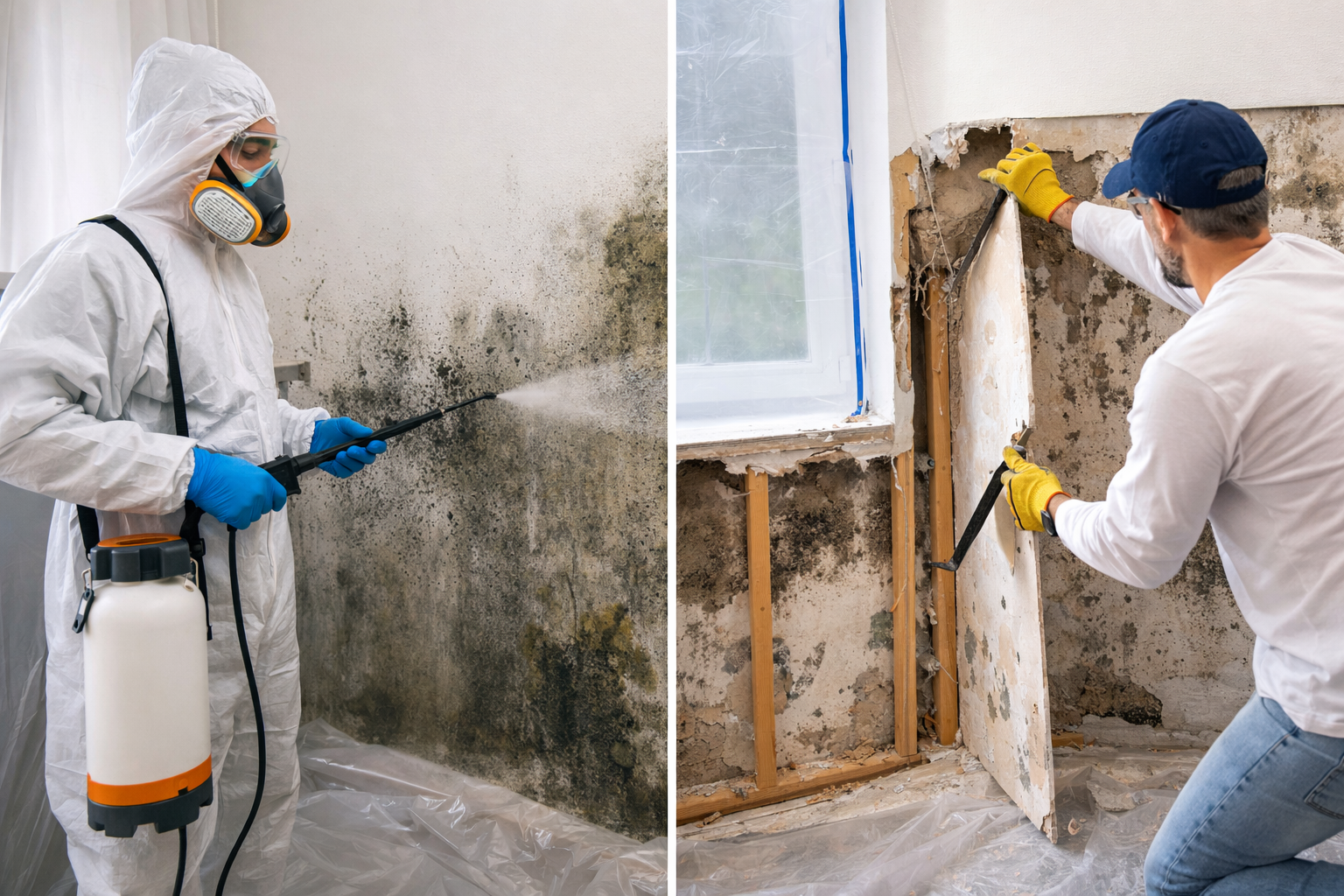
Specialized cleaning solutions and antimicrobial treatments are used to remove mold from surfaces.
Technicians wear personal protective equipment during this process.
Removal of Damaged Materials
In severe cases, materials like drywall, carpet, or insulation must be removed if they are heavily contaminated.
Drying and Dehumidification
Technicians use drying equipment and a dehumidifier to remove moisture.
Proper drying prevents mold from growing again.
Restoration
The final step is restoration, which may include replacing drywall, repairing ceilings, or rebuilding damaged areas.
Mold Mitigation vs Remediation
Another common question homeowners ask is the difference between mold mitigation vs remediation.
While the terms are similar, they are slightly different.
Mold Mitigation
Mold mitigation focuses on stopping mold growth quickly. It includes:
- Drying wet areas
- Controlling moisture
- Preventing mold spread
Mitigation is often used immediately after water damage.
Mold Remediation
Remediation is a more complete process.
It includes:
- Inspection
- Containment
- Cleaning
- Removal of contaminated materials
- Restoration
Most mold remediation companies provide both mitigation and remediation services.
Signs You May Have a Mold Problem
Sometimes mold is visible, but other times it grows behind walls or ceilings.
Watch for these warning signs:
Musty Odors
A strong musty smell is often a sign of indoor mold.
Water Stains
Brown stains on ceilings or walls may indicate a hidden roof leak or plumbing issue.
Peeling Paint or Drywall
Moisture behind walls can cause paint to bubble or drywall to crack.
Allergy Symptoms Indoors
Frequent allergy symptoms, headaches, or breathing problems indoors may indicate mold contamination.
Why Professional Mold Remediation Matters
DIY mold cleaning is often not enough.
Large infestations require trained professionals and specialized equipment.
A trusted restoration company like Preferred Restoration can safely handle mold problems.
Benefits of Professional Mold Remediation
Working with experts provides several advantages:
- Proper inspection and testing
- Advanced HEPA filtration
- Safe use of antimicrobial treatments
- Full remediation process
- Improved indoor air quality
Professional teams also identify the root moisture source, such as plumbing leaks, condensation, or roof damage.
Fixing these issues prevents mold from returning.
Preventing Mold Growth in Your Home
Preventing mold is easier than dealing with a full infestation.
Control Moisture
Keep humidity levels below 50%. Use a dehumidifier if needed.
Fix Leaks Quickly
Repair plumbing leaks, roof damage, and water issues as soon as possible.
Improve Ventilation
Use exhaust fans in bathrooms and kitchens to reduce humidity.
Dry Wet Areas Fast
After spills or flooding, dry affected areas within 24–48 hours.
Keep Basements and Attics Dry
Monitor moisture levels in your basement and attic, especially after storms or heavy rain.
When to Call a Mold Remediation Company
If mold covers more than a small area, professional help is recommended.
Contact a mold remediation company if:
- Mold keeps coming back
- You see mold after water damage
- There is a strong musty odor
- Mold appears inside walls or ceilings
- Family members have asthma or severe allergies
Early action prevents mold infestations from spreading and protects your home.
FAQs About Mold Removal vs Remediation
What is the difference between mold removal and mold remediation?
Mold removal focuses on cleaning visible mold from surfaces. Mold remediation is a full process that includes inspection, containment, cleaning, and moisture control to prevent mold from returning.
Is mold removal possible?
Complete mold removal is nearly impossible because mold spores exist naturally in the environment. The goal of remediation is to reduce mold levels and stop growth.
How long does mold remediation take?
The remediation process can take anywhere from one day to several days depending on the size of the infestation and the amount of water damage.
Can mold come back after remediation?
Mold can return if moisture problems are not fixed. Professional mold remediation identifies and repairs the root cause, such as leaks or humidity.
Is mold dangerous to health?
Exposure to mold spores can cause allergy symptoms, breathing problems, and asthma flare-ups in sensitive individuals.