What To Do Immediately After a House Fire
A house fire is scary and overwhelming. In just minutes, a fire can cause serious fire damage, smoke damage, and even water damage from putting the flames out. If your house burns, you may not know where to start. This guide will help you understand what to do after a house fire so you can stay safe and protect your home.
If you need professional help, you can learn more about expert fire damage restoration services and how they support families after a fire. Acting quickly can reduce more damage and help your home recover faster.
Make Sure Everyone Is Safe First
Your safety comes before anything else.
Check for Injuries
If anyone is hurt, call 911 right away. Firefighters and emergency teams are trained to handle burns and smoke breathing problems. Even if injuries seem small, it is best to get checked.
Do Not Re-Enter the Home
After a fire, your home may not be safe. The structure could be weak. There may be hidden hot spots, soot, or toxic smoke in the air. Always wait until the firefighter or fire department says it is safe.
Contact Your Insurance Company
Once everyone is safe, call your insurance company.
Report the Fire
Tell your insurer about the fire as soon as possible. Give them basic details about what happened. Your insurance policy may cover fire damage, smoke damage, and water damage caused by putting out the fire.
Review Your Insurance Policy
Take time to understand your home insurance policy. Ask questions like:
- What types of fire damage are covered?
- Does the policy cover wildfire?
- Is temporary housing included?
- What is your deductible?
Your insurance company may send an adjuster to inspect the damage. Keep all receipts for hotel stays, food, and clothing if you cannot stay at home.
Secure Your Property
After the fire department leaves, your home may still be exposed.
Board Up and Tarp
Fires can break windows and damage the roof. Rain or flood water can enter the home and cause more water damage. A professional restoration team can board up windows and place tarps on the roof to protect your property.
Prevent Theft
Sadly, empty homes can attract theft. Securing your home quickly helps protect your belongings.
Contact a Fire Damage Restoration Company
Cleaning up after a fire is not a simple task. Smoke, soot, and water can spread through the entire home.
Why Professional Restoration Is Important
Fire damage restoration professionals have special tools to:
- Remove soot and smoke odors
- Dry out water from firefighting efforts
- Prevent mold growth
- Repair structural damage
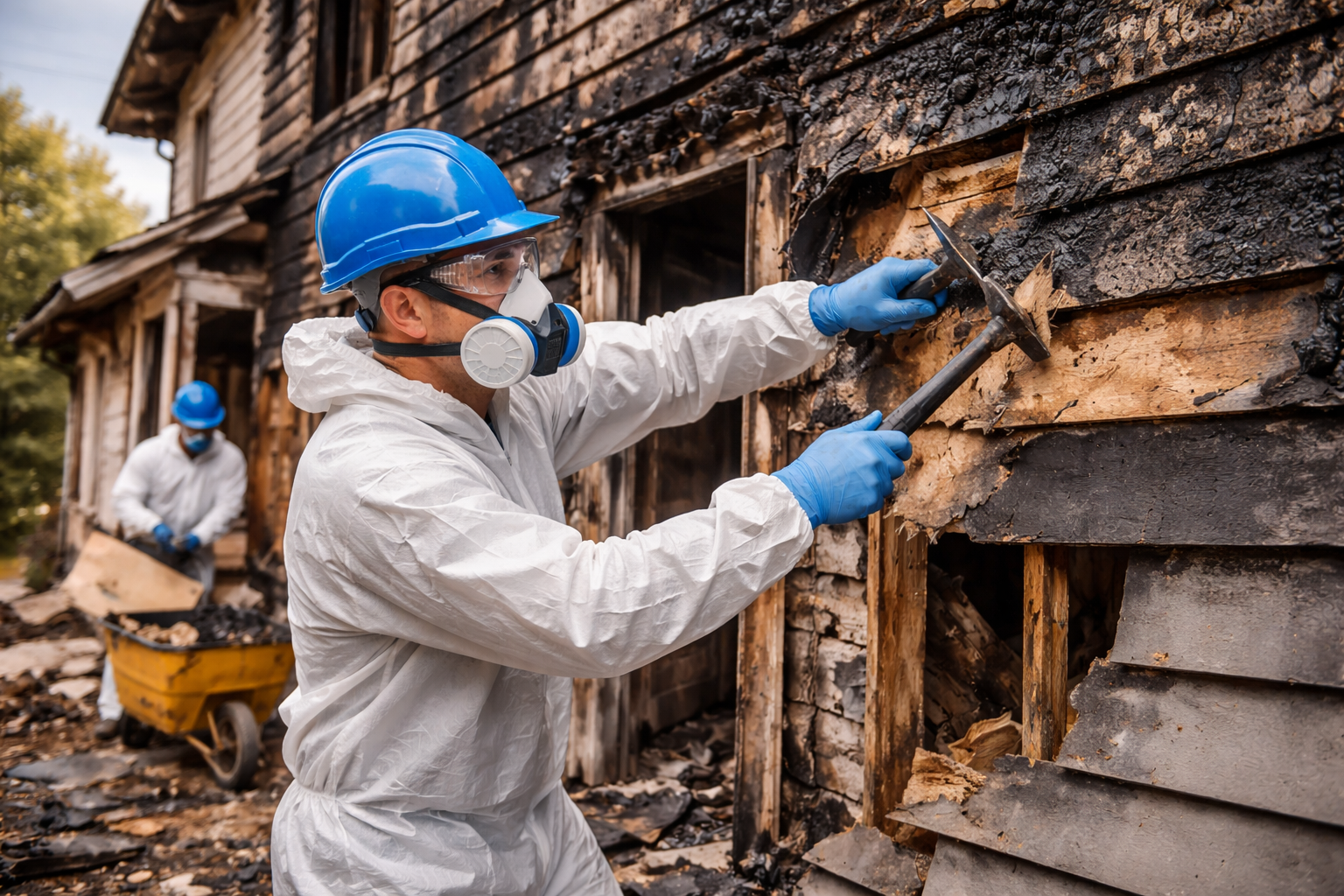
Trying to clean soot yourself can spread it and make damage worse. A trained restoration team knows how to safely clean and restore your property.
Preferred Restoration helps homeowners recover after house burns and wildfire damage. Fast action reduces long-term problems.
Watch for Water Damage
Many people forget that water is often used to put out fires.
How Water Causes Problems
When firefighters use hoses, large amounts of water soak floors, walls, and furniture. If water sits too long, it can cause:
- Mold growth
- Wood rot
- Weak drywall
- Bad smells
Professional drying equipment removes hidden moisture. Quick drying helps prevent future water damage issues.
Do Not Throw Everything Away
After a fire, it may feel like everything is ruined. But some items can be restored.
Wait for Insurance Approval
Before throwing away damaged items, talk to your insurance company. The insurer may need to see the damage first.
Separate Damaged and Undamaged Items
Create a safe space to sort belongings. Keep items that can be cleaned. Smoke and soot can often be removed from clothing, furniture, and electronics with professional cleaning.
Create a Damage Inventory Checklist
An organized checklist helps with your insurance claim.
Document Everything
Take photos and videos of all fire damage. Include:
- Walls and ceilings
- Furniture
- Appliances
- Clothing
- Personal items
Write down a full inventory of damaged items. Include estimated values if possible.
This checklist will help your insurance company process your claim faster.
Contact the American Red Cross for Support
If your home is not safe to stay in, the American Red Cross can help.
They may provide:
- Temporary shelter
- Food
- Clothing
- Emotional support
Recovering from a fire is not only about fixing a house. It is also about caring for your family’s well-being.
Notify Your Mortgage Lender
If you have a mortgage, contact your lender.
Your mortgage company may need to be informed about major property damage. Sometimes, insurance claim checks are written to both you and the lender. Staying in communication prevents delays.
Protect Yourself from Smoke and Soot
Smoke and soot can be harmful to your health.
Health Risks
Breathing in smoke particles may cause:
- Coughing
- Headaches
- Eye irritation
- Breathing trouble
Soot is acidic and can damage surfaces quickly. It can stain walls, ceilings, and floors if not cleaned properly.
Professional fire damage restoration teams use protective gear and safe cleaning methods to remove soot and smoke.
Understand the Emotional Impact
After a fire, it is normal to feel:
- Shock
- Sadness
- Anger
- Fear
A home is more than a building. It holds memories. Seeking support from friends, family, or counselors can help you cope during this hard time.
Fire Safety Steps for the Future
Once your home is restored, focus on fire safety.
Install Smoke Alarms
Place smoke alarms in every bedroom and hallway. Test them monthly.
Create an Emergency Plan
Have a family fire safety plan. Practice escape routes so everyone knows what to do.
Review Your Insurance Policy Yearly
Make sure your insurance policy provides enough coverage. Update your inventory list every year.
Special Steps After a Wildfire
Wildfire damage can be different from a kitchen or electrical fire.
Check for Hidden Damage
Even if flames did not reach your home, smoke and ash from wildfire can cause damage. Ash can mix with water and create harmful residue.
Inspect the Roof and Exterior
Wildfires often damage roofing materials, gutters, and siding. A professional inspection ensures no hidden fire damage remains.
What Not To Do After a House Fire
It is important to avoid common mistakes.
- Do not turn utilities back on until inspected.
- Do not wash walls with regular cleaners.
- Do not use electrical appliances until cleared.
- Do not delay calling your insurance company.
Quick action protects your health and property.
How the Fire Damage Restoration Process Works
The restoration process begins with a full inspection. Professionals assess fire damage, smoke damage, and water damage. Next, they secure the property with board-up and tarp services. Water is removed and the home is dried using special equipment. Soot and smoke are cleaned from all surfaces. Damaged materials are removed safely. Finally, repairs and rebuilding begin. This full restoration process helps return your home to a safe and healthy condition.
Why Acting Fast Matters
Fire damage gets worse over time.
- Soot can stain surfaces permanently.
- Water can cause mold in 24–48 hours.
- Smoke odors can settle deep into walls.
The faster you respond, the better the results.
Preferred Restoration understands how stressful it is when a house burns. Fast and professional help can make recovery smoother.
Frequently Asked Questions
What should I do first after a house fire?
First, make sure everyone is safe and call 911 if needed. Do not re-enter the home until firefighters say it is safe. Then contact your insurance company.
Does home insurance cover fire damage?
Most home insurance policies cover fire damage, smoke damage, and water damage caused by firefighting efforts. Always review your insurance policy for details.
Can water used to put out a fire cause damage?
Yes. Water from hoses can soak walls and floors. If not dried quickly, it can lead to mold and structural damage.
Should I clean soot myself?
It is not recommended. Soot is acidic and can spread easily. Professional fire damage restoration services use proper tools and safety gear.
How long does fire damage restoration take?
The timeline depends on how serious the fire damage is. Small fires may take days, while larger house burns or wildfire damage may take weeks or months. Call 911 in case of an emergency.