Moisture plus hidden building materials can turn a quiet attic, crawl space, basement, or wall into a serious home-health problem. When mold on insulation appears, it often signals more than a cleaning issue: it points to water intrusion, poor ventilation, condensation, or a building envelope problem that needs attention fast.
This guide explains how to identify mold on insulation, when moldy insulation should be removed, what health symptoms to watch for, and how to prevent mold from returning. You will also learn how different materials perform, including fiberglass insulation, spray foam insulation, foam insulation, and mold resistant insulation options.
Why Mold on Insulation Is a Big Deal
Mold growth can begin within 24 to 48 hours on saturated insulation. That means a roof leak, plumbing drip, foundation seepage, or condensation event can create a problem quickly, especially when the area stays damp and dark.
Mold can grow on insulation, but it does not usually feed on the insulation material itself. Instead, it uses dust, dirt, paper facings, wood framing, and organic debris that collect on insulation surfaces over time.
Because insulation is often hidden in wall cavities, behind exterior walls, under floor joists, or above ceiling drywall, mold growth may spread for weeks before anyone notices obvious damage.
What Causes Mold Growth in Insulation?
Mold requires three essential conditions to grow: moisture, a food source, and the right temperature. Of these, moisture is the critical trigger, and most insulation mold problems begin with uncontrolled water or vapor.
Roof Leaks
Roof leaks are one of the most common causes of mold on insulation in attics. Water may drip onto attic insulation, soak roof sheathing, stain rafters, and create a damp path that supports attic mold.
Even small roof leaks can cause repeated wetting after storms. When insulation stays damp, mold growth becomes more likely, especially near valleys, chimneys, vents, skylights, and damaged flashing.
Plumbing Leaks
Plumbing leaks above ceilings, inside wall cavities, or near basement insulation can saturate loose-fill or batt materials. If you spot water stains, shut off the source and repair plumbing leaks immediately before attempting cleanup.
Hidden plumbing leaks can also make nearby wall studs, drywall paper, and wood framing damp enough to feed mold and make insulation removal more complicated.
Poor Ventilation
Poor ventilation traps humid air in attics, crawl spaces, and enclosed cavities. Poor ventilation also allows dampness to linger after seasonal changes, bathroom exhaust, or laundry moisture enters the building envelope.
In an attic or crawl space, poor ventilation can drive moisture buildup against attic insulation and roof sheathing, increasing the risk of mold growth on insulation surfaces.
Condensation
Condensation occurs when warm, moist air meets cold insulation surfaces. In winter, moisture condenses near cold roof sheathing, rim joists, or exterior walls, creating the damp film mold needs.
Humid air leaking from living spaces into the attic can wet attic insulation from below. Humid air in basements and crawl spaces can also raise relative humidity and encourage mold growth.
High Humidity
High humidity levels, particularly above 60%, create ideal conditions for mold spore germination on insulation surfaces. Consistent high humidity is especially risky in basements, sealed crawl space areas, and poorly vented attics.
For mold prevention, keep indoor relative humidity between 30% and 50% when possible. Dehumidifiers can help reduce moisture buildup in a crawl space, basement, or other damp area.
10 Signs You May Have Mold on Insulation
Because insulation problems are often hidden, you may notice indirect clues before seeing visible contamination. Here are the most common signs of mold on insulation.
1. A Musty Odor
A persistent musty odor near an attic hatch, basement, closet, or crawl space entrance can be an early warning. A musty odor often becomes stronger after rain, snowmelt, or humid weather.
2. Discolored Insulation
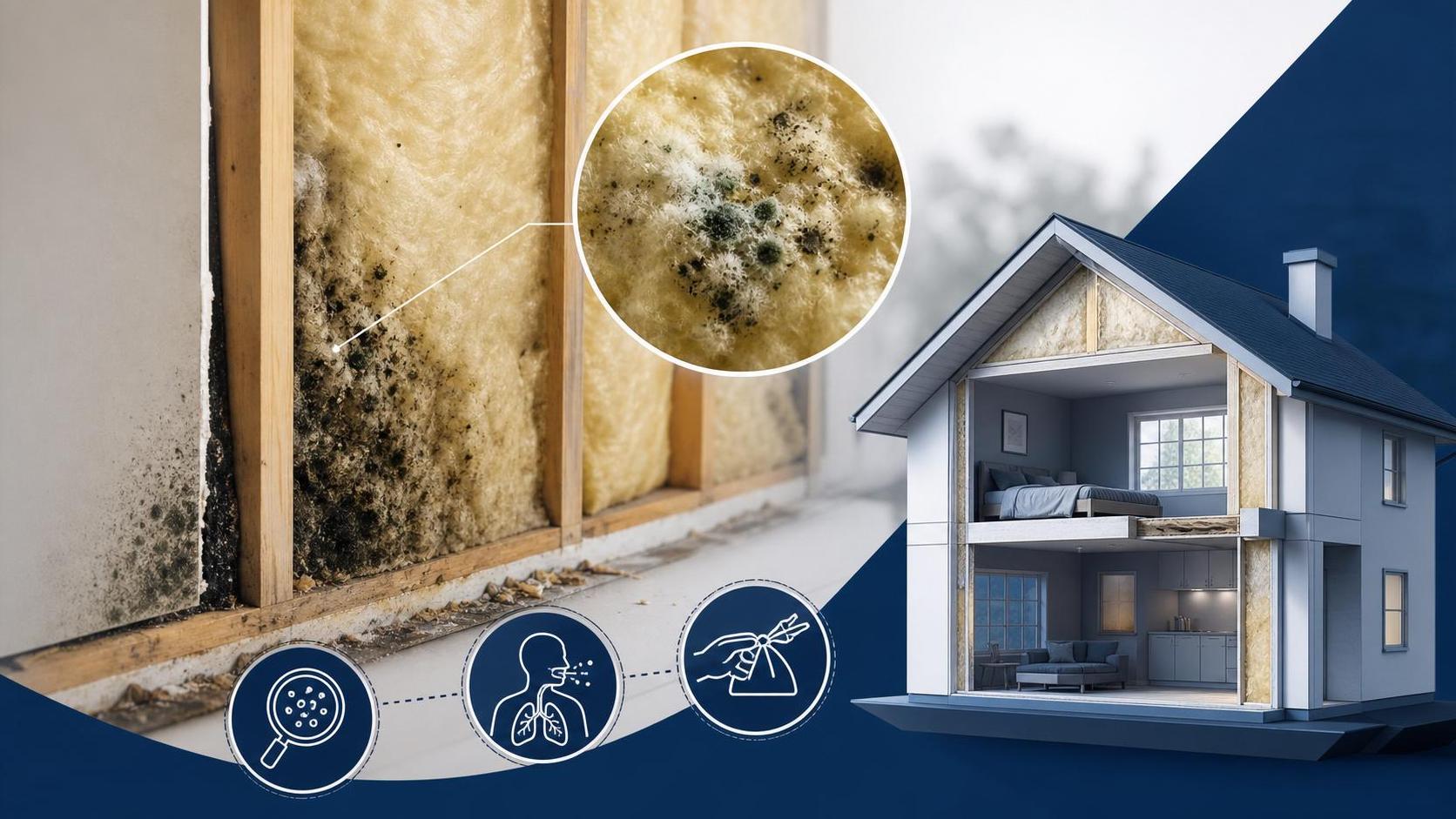
Mold on fiberglass insulation may appear black, gray, green, brown, or patchy. Fiberglass insulation mold can look like dark dust at first, then become more widespread as dampness continues.
3. Wet or Compressed Batts
Fiberglass insulation loses performance when wet. Damp batts may sag, clump, flatten, or pull away from framing, creating cold spots and more condensation risk.
4. Stained Roof Sheathing
Dark staining on roof sheathing near attic insulation can indicate roof leaks, condensation, or attic mold. If roof sheathing feels damp, investigate the moisture source before replacing materials.
5. Black Spots
Black mold on insulation is concerning because some dark molds may include toxigenic mold species. Early stage black mold may appear as small specks, but it can expand if the area remains wet.
6. Worsening Allergy Symptoms Indoors
Mold spores can travel through air leaks, recessed lights, duct gaps, and returns. If symptoms improve outdoors and worsen inside, mold on insulation or nearby materials may be involved.
7. Water Stains on Ceilings or Walls
Stains below attic insulation often point to roof leaks, ice dams, or condensation. Stains near exterior walls can suggest moisture problems in wall cavities.
8. Visible Mold Near Vents or Fans
Bathroom fans, dryer ducts, and kitchen vents should discharge outdoors. If they terminate near attic insulation, moist air can cause mold growth on nearby surfaces.
9. Pest or Debris Contamination
Rodent nesting, dust, and organic debris can provide food for mold. This contamination can make moldy insulation unsafe to disturb without proper protection.
10. Persistent Dampness
If insulation feels damp, smells earthy, or sits above wet framing, mold growth may already be underway. Saturated affected insulation should be evaluated quickly.
Is Moldy Insulation Dangerous?
Many homeowners ask, is insulation dangerous once mold appears? The answer depends on the amount of contamination, the type of mold, who lives in the home, and whether mold spores are entering occupied areas.
Mold can cause allergic reactions, respiratory issues, and infections, particularly affecting high-risk groups such as infants and people with compromised immune systems.
Mold spores released into the air can cause allergic reactions and respiratory problems, including coughing, congestion, and worsening asthma symptoms, particularly in children, the elderly, and individuals with compromised immune systems.
Individuals with chronic respiratory diseases, such as asthma and chronic obstructive pulmonary disease, may experience increased difficulty breathing when exposed to mold in attic insulation or other contaminated areas.
Black Mold on Insulation: What You Should Know
Black mold is a broad visual description, not a confirmed lab diagnosis. However, black mold on insulation deserves caution because Stachybotrys chartarum and other dark molds can grow on wet organic materials nearby.
Exposure to black mold, particularly Stachybotrys chartarum, can lead to serious health issues, including respiratory problems and neurological symptoms such as headaches and fatigue, especially in vulnerable populations.
Black mold on insulation may be found where roof leaks wet attic insulation, where foundation dampness affects basement materials, or where condensation forms behind exterior walls.
If you suspect black mold on insulation, avoid aggressive sweeping or vacuuming. Disturbing contaminated material can increase mold spores released into the air.
What Are the 10 Warning Signs of Mold Toxicity?
The phrase “mold toxicity” is often used broadly, and symptoms can overlap with allergies, asthma, infections, or other medical conditions. Still, possible warning signs after mold exposure include:
- Coughing or wheezing that worsens indoors
- Nasal congestion, sneezing, or sinus pressure
- Itchy, red, or watery eyes
- Skin irritation or rashes
- Headaches or unusual fatigue
- Shortness of breath or chest tightness
- Worsening asthma or COPD symptoms
- Brain fog, dizziness, or trouble concentrating
- Frequent throat irritation
- Recurring respiratory infections in vulnerable people
If symptoms are severe, persistent, or affect infants, older adults, pregnant individuals, or immunocompromised people, consult a medical professional and arrange a home moisture inspection.
Where Mold Hides in Insulated Areas
Mold on insulation can occur wherever moisture is trapped. Some spaces are especially prone to hidden mold growth because they are rarely inspected.
Attics
Mold in attic insulation often begins with roof leaks, blocked soffit vents, bathroom exhaust, or inadequate attic ventilation. Attic insulation near eaves, chimneys, and roof penetrations should be inspected after storms.
To improve attic ventilation, verify intake and exhaust paths are open, baffles are installed where needed, and exhaust fans vent outside rather than into the attic.
Crawl Spaces
A crawl space with exposed soil can release moisture into framing and insulation. Vapor barriers are often recommended to block ground moisture and help protect floor joists.
In a crawl space, mold prevention depends on drainage, sealed vents when appropriate for the climate strategy, dehumidification, and keeping insulation dry.
Basements
Basement insulation can become damp from foundation seepage, condensation, or humid air. Foam insulation or closed cell foam can be useful in some basement assemblies because they are less moisture-absorbent than standard fiberglass batts.
Walls
Wall cavities can hide slow leaks from windows, siding, plumbing, or roof transitions. When mold on insulation is inside wall cavities, removal may require opening drywall and checking exterior walls for water pathways.
Can Fiberglass Insulation Grow Mold?
Fiberglass insulation is made from glass fibers, so the glass itself is not a food source. However, fiberglass insulation can hold water, collect dust, and trap mold spores, creating conditions for mold growth.
Fiberglass insulation is particularly susceptible to mold growth when it becomes wet because it can hold moisture and does not dry out easily. This is why mold on fiberglass insulation often requires replacement rather than surface cleaning.
Mold on fiberglass insulation may look like dark patches, dusty clusters, or staining on the paper facing. If the paper facing is wet, it can develop mold because paper contains organic material.
When fiberglass insulation has been saturated, it may not regain its original R-value. Moldy insulation that stays compressed or contaminated usually needs to be removed.
Is Spray Foam Better for Mold Resistance?
Spray foam can help reduce air leaks, and air leakage is a major way moisture enters building cavities. Spray foam also limits convective heat loss when properly installed.
Closed cell spray foam is considered one of the most mold resistant insulation choices because of its airtight structure, low moisture absorption, and lack of organic content.
Closed cell spray foam can act as an air seal and, in some assemblies, a moisture barrier. However, spray foam is not magic; leaks, trapped water, or bad installation can still create moisture problems around it.
Open-cell spray foam can absorb more moisture than closed cell spray foam, so the design must match the climate and assembly. Always follow local code, manufacturer specifications, and building-science guidance.
Spray foam insulation can be useful in attics, rim joists, and some rooflines, but spray foam should never be installed over active mold growth without remediation.
Other Mold Resistant Insulation Options
Mold resistant insulation is designed to reduce conditions that allow mold grow, but no product is completely immune if water is unmanaged.
Rigid foam board is often used against basement walls or exterior sheathing because it resists bulk water better than many fibrous products. Foam insulation can also reduce condensation when detailed correctly.
Mineral wool is another mold resistant option because it is inorganic and drains more readily than some materials. Still, dust and debris on insulation surfaces can support mold growth if moisture remains.
Mold proof insulation is a common marketing phrase, but truly mold proof materials do not exist in a wet, dirty building. A better goal is mold resistant design plus strict moisture control.
If you want mold proof insulation performance, choose the right material, control water, seal air leaks, and maintain ventilation. Mold proof results come from the whole assembly, not one product.
Should Moldy Insulation Be Removed?
Yes, moldy insulation should usually be removed when it is visibly contaminated, saturated, smelly, compressed, or located near ongoing water damage. Trying to clean porous insulation is often unreliable.
To remove mold from attic insulation, it is often necessary to completely remove and replace contaminated fiberglass insulation because its fibers can trap moisture and mold spores.
Small surface spots on adjacent wood may be treatable, but moldy insulation itself is usually disposable. If there is significant mold growth, hire a qualified mold removal professional.
What to Do If You Find Mold on Insulation
If you find mold on insulation, do not panic and do not start tearing it out immediately. First, limit access to the area, especially for children, older adults, and anyone with asthma or immune concerns.
- Identify the moisture source, such as roof leaks, condensation, plumbing leaks, drainage failure, or poor ventilation.
- Stop the water and dry the surrounding structure.
- Use proper personal protective equipment before touching contaminated material.
- Decide whether the area is small enough for DIY work or large enough for professional mold removal.
- Remove moldy insulation safely and dispose of it according to local rules.
- Clean nearby hard surfaces with an appropriate mold killing solution.
- Replace materials only after the area is dry and the cause is fixed.
When removing moldy insulation, it is crucial to first identify and fix the moisture source to prevent future mold growth.
DIY Removal for Small Areas
For small areas of moldy insulation under 10 square feet, some homeowners can follow a careful DIY removal process. Larger areas, HVAC contamination, sewage water, or heavy mold growth calls for professional help.
Individuals should wear personal protective equipment, including NIOSH-approved respirators, goggles, gloves, disposable coveralls, and shoe covers when handling moldy insulation.
Seal off the area with plastic sheeting, turn off forced-air systems if appropriate, and lightly mist contaminated material to reduce airborne dust. Do not soak the area further.
To safely remove moldy insulation, the affected material must be bagged at the source and disposed of properly. Double-bag it, seal the bags, and carry them out without dragging them through living spaces.
After removal, clean surrounding framing and hard surfaces. A mold killing solution may be appropriate for nonporous materials, but always follow label directions and never mix chemicals.
Can You Remove Mold Without Removing Insulation?
Sometimes you can remove mold from nearby wood, masonry, or metal while leaving clean, dry insulation in place. But porous, contaminated insulation mold is different.
If mold on insulation is visible, if the material smells, or if it has been wet for more than a short period, replacement is usually the safer and more reliable option.
Professionals may remove mold from roof sheathing while replacing attic insulation below it. The sequence matters: fix water, contain debris, remove contamination, clean, dry, then reinstall.
Will Dawn Dish Soap Kill Mildew?
Dawn dish soap can help remove dirt, grease, and some surface mildew residue from washable nonporous surfaces, but it is not a registered mold treatment or disinfectant.
Soap may loosen visible growth, but it does not reliably kill roots in porous materials, and it will not solve mold on insulation. For insulation, replacement and moisture correction are usually required.
How to Prevent Mold from Returning
Preventing mold growth starts with water management. Fix roof leaks, direct water away from foundations, maintain gutters, and inspect after storms or plumbing events.
Proper ventilation is crucial for mold prevention. Maintain adequate attic ventilation, keep vents unblocked, and ensure bathroom, laundry, and kitchen exhaust fans vent directly to the exterior.
Use vapor barriers correctly. In cold climates, the vapor retarder generally belongs on the warm side of the insulation; in hot-humid climates, it may belong toward the exterior, depending on the wall design.
Install vapor barriers in crawl spaces and behind moisture-prone walls when recommended. The wrong vapor barrier in the wrong climate can trap moisture, so get local guidance.
Control indoor humidity. Keep relative humidity between 30% and 50%, use dehumidifiers in basements and crawl spaces, and avoid storing damp materials against insulation.
Air sealing is also essential. When insulation installed over leaky ceiling penetrations allows warm air to escape into cold spaces, condensation and mold growth can follow.
When to Call a Professional
Call a professional if mold on insulation covers more than 10 square feet, returns after cleanup, involves black mold concerns, affects HVAC systems, or is caused by contaminated water.
You should also get help if roof sheathing is soft, framing appears damaged, or structural integrity may be compromised. Professionals can test moisture levels, contain the area, and choose a safe removal plan.
A remediation expert can also determine whether mold in attic insulation is isolated or connected to broader attic mold on wood, ducts, storage items, or sheathing.
Replacement Tips After Removal
Do not install new attic insulation until framing, drywall, and roof sheathing have dried to acceptable levels. Covering damp materials can restart mold growth.
Choose replacement materials based on the location. Fiberglass insulation remains common and cost-effective, but it must stay dry. Mold resistant insulation, closed cell spray foam, or other foam insulation may be better for damp-prone assemblies.
Ask your contractor how the new system will prevent mold, manage vapor, and allow drying. The best insulation mold solution combines material choice with drainage, ventilation, and moisture control.
Quick Inspection Checklist
- Check attic insulation after major roof leaks or storms.
- Look for stains on roof sheathing and around vents.
- Smell for a musty odor near access points.
- Inspect crawl space vapor barriers and floor joists.
- Check basement walls for dampness before adding basement insulation.
- Look for mold on insulation near exterior walls and plumbing lines.
- Monitor relative humidity with a digital hygrometer.
- Confirm soffit vents and exhaust ducts are unobstructed.
Frequently Asked Questions
What does mold on insulation look like?
It may appear as black, gray, green, brown, or white patchy staining. Mold on insulation can also look like dark dust, especially on fiberglass insulation or paper-faced batts.
Can insulation mold spread to other areas?
Yes. Insulation mold can release mold spores when disturbed, and air leaks can move particles into nearby rooms. The bigger risk is that the same moisture source may also wet wood, drywall, and stored belongings.
Can mold grow on spray foam?
Mold does not usually feed on spray foam itself, especially closed cell spray foam, but it can grow on dust, dirt, or adjacent damp materials. Spray foam must be installed on clean, dry surfaces.
Is mold resistant insulation worth it?
Mold resistant insulation can be worth it in moisture-prone areas, but it is not a substitute for fixing leaks, ventilation problems, or condensation. Mold resistant products work best as part of a complete moisture strategy.
Can I just spray bleach on moldy insulation?
No. Bleach is not a reliable fix for porous insulation, and adding liquid can make moisture problems worse. It is usually better to remove moldy insulation, clean surrounding hard surfaces, and correct the water source.
How fast can mold grow after a leak?
Mold growth can begin within 24 to 48 hours on saturated insulation. Fast drying, leak repair, and humidity control reduce the chance that mold spores will colonize the area.
Does fiberglass insulation need to be replaced after getting wet?
Often, yes. If fiberglass insulation was saturated, compressed, contaminated, or slow to dry, replacement is usually recommended because trapped moisture and debris can support ongoing mold growth.
How do I prevent mold in attic insulation?
To prevent mold in attic insulation, repair roof leaks, seal ceiling air leaks, maintain attic ventilation, keep exhaust fans vented outdoors, and inspect regularly after water events.
What is the best mold resistant insulation?
Closed cell spray foam is often considered highly mold resistant because it is airtight, low in moisture absorption, and inorganic. Rigid foam, mineral wool, and properly protected fiberglass can also work when installed correctly.
Final Takeaway
Mold on insulation is a warning sign that moisture is entering or staying where it should not. Whether the problem is in attic insulation, a crawl space, basement insulation, or wall cavities, the solution is always the same: find the water, stop it, remove contaminated porous materials, dry the structure, and rebuild with smarter moisture control.
With regular inspections, proper ventilation, correct vapor control, and the right mold resistant insulation strategy, you can prevent mold, protect indoor air quality, and keep your home healthier for the long term.