What to Do After Mold Remediation
If your home has recently gone through mold remediation, you may wonder what happens next. The cleanup is finished, but your job is not completely over. Knowing what to do after mold remediation can help protect your home, improve indoor air quality, and stop mold from returning. If you need professional mold remediation services, visit our Orange County mold remediation experts to learn how Preferred Restoration Services helps homeowners remove mold safely and prevent future growth.
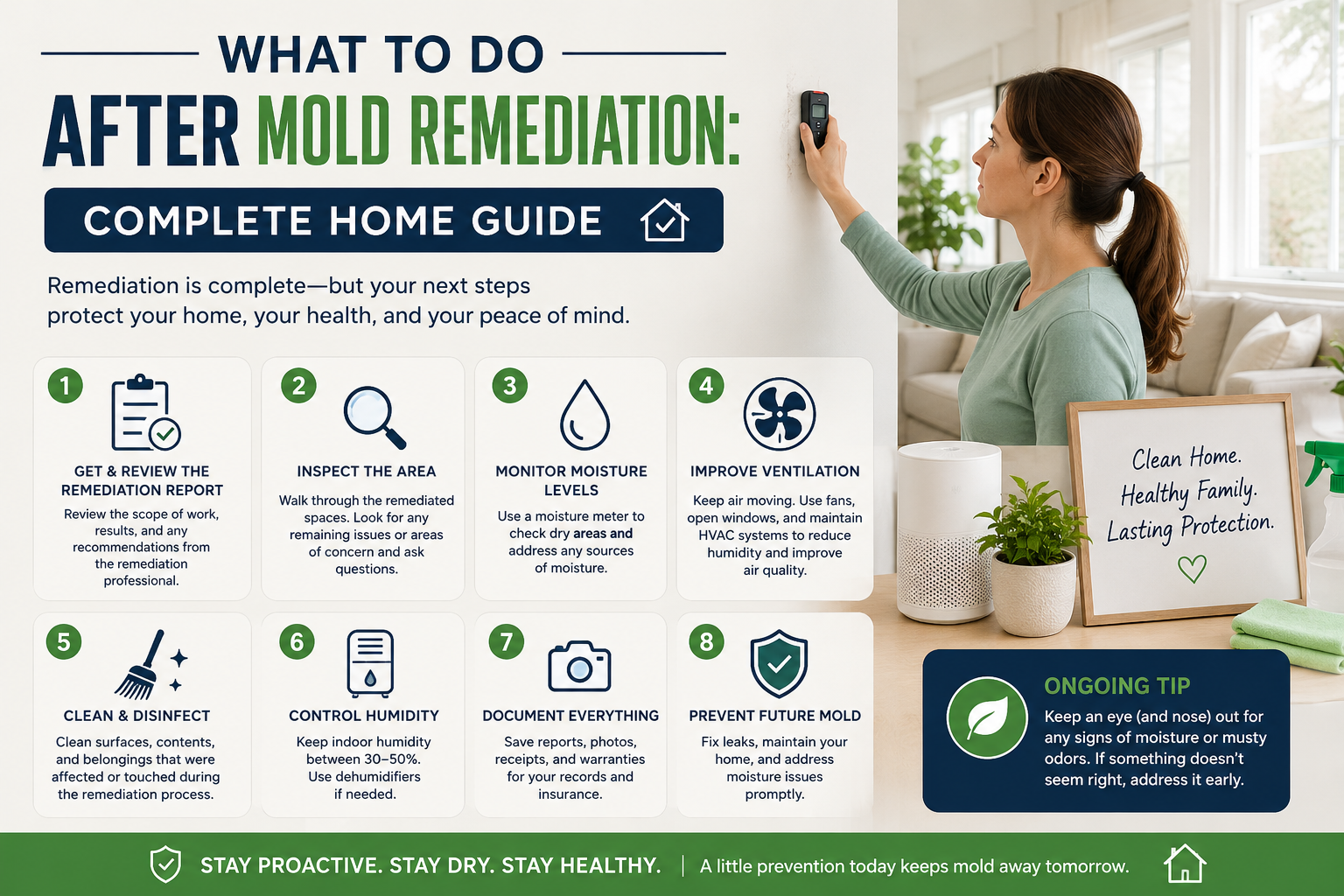
A few simple steps after remediation can keep your home dry, clean, and healthy for years to come.
Why Is It Important to Follow Up After Mold Remediation?
Mold remediation removes mold colonies and fixes the conditions that allowed mold to grow. However, mold spores naturally exist almost everywhere. If moisture returns, mold can grow again.
After remediation, homeowners should:
- Monitor humidity levels
- Watch for water leaks
- Improve ventilation
- Keep the home clean
- Schedule inspections if needed
These steps help protect your investment and reduce the chance of another mold problem.
Understand What Was Done During Mold Remediation
Before moving forward, understand what the restoration team completed.
Most professional mold remediation projects include:
Mold Inspection
Professionals inspect the affected areas using moisture meters, thermal imaging cameras, and visual inspections.
Containment
Plastic barriers and negative air machines help prevent mold spores from spreading to other rooms.
Mold Removal
Damaged materials may be removed while other surfaces are cleaned using specialized equipment.
Air Filtration
HEPA air scrubbers capture airborne mold spores during cleanup.
Moisture Repairs
The source of moisture, such as a plumbing leak or roof leak, is repaired to prevent future mold growth.
Knowing these steps helps you understand how your home was restored.
Wait Until the Area Is Fully Cleared
Do not move furniture or personal belongings back into the cleaned area until your restoration company says it is safe.
Professionals may perform:
Post-Remediation Verification (PRV)
Some projects include post-remediation verification, which confirms the mold has been successfully removed. This may include visual inspections and air quality testing performed by an independent inspector.
Waiting for final clearance helps ensure the cleanup was successful.
Keep Humidity Levels Low
One of the biggest causes of mold is excess moisture.
The Environmental Protection Agency (EPA) recommends keeping indoor humidity below 60%, with 30% to 50% being ideal.
You can lower humidity by:
Using a Dehumidifier
A quality dehumidifier removes excess moisture from the air.
Running Air Conditioning
Air conditioners naturally remove humidity while cooling your home.
Improving Airflow
Open windows when weather allows and use ceiling fans to improve air circulation.
Controlling moisture is one of the best ways to stop mold from returning.
Watch for Water Leaks
Even a small leak can restart mold growth.
Inspect your home regularly for:
Plumbing Leaks
Check:
- Under sinks
- Around toilets
- Water heaters
- Washing machine hoses
- Dishwasher connections
Roof Leaks
Inspect ceilings for:
- Water stains
- Soft drywall
- Peeling paint
Window Leaks
Look around window frames after heavy rain.
Foundation Moisture
Basements and crawl spaces should stay dry throughout the year.
Fixing leaks quickly prevents mold from finding new places to grow.
Replace Air Filters
Your HVAC system moves air throughout your home.
After mold remediation, replacing HVAC filters helps remove any remaining airborne particles.
Choose high-quality filters that fit your system properly.
Change filters every one to three months depending on:
- Pets
- Allergies
- Dust levels
- Manufacturer recommendations
Clean filters help improve indoor air quality.
Clean Your Home Regularly
Keeping your home clean removes dust that mold spores can settle on.
Focus on:
Vacuuming
Use a vacuum with a HEPA filter whenever possible.
Dusting
Dust furniture, shelves, and vents regularly.
Bathroom Cleaning
Bathrooms often have higher humidity.
Use exhaust fans after showers and wipe down wet surfaces.
Kitchen Cleaning
Dry countertops, sinks, and areas around dishwashers to reduce moisture.
Routine cleaning helps reduce mold-friendly conditions.
Do Not Ignore Musty Odors
A musty smell may be an early warning sign that moisture has returned.
If you notice unusual odors:
- Inspect the area immediately.
- Look for visible mold.
- Check nearby plumbing.
- Look for hidden moisture.
The sooner you find the problem, the easier it is to fix.
Monitor Indoor Air Quality
Healthy indoor air is an important goal after mold remediation.
Watch for signs such as:
Increased Allergy Symptoms
Sneezing
Runny nose
Itchy eyes
Congestion
Respiratory Problems
Some people with asthma or other breathing conditions may notice symptoms if mold returns.
Lingering Odors
Persistent odors could indicate hidden moisture.
If symptoms continue, consider another inspection.
Inspect High-Risk Areas Often
Some parts of the home are more likely to develop mold.
Pay extra attention to:
Bathrooms
Steam creates moisture every day.
Kitchens
Leaks around sinks and appliances are common.
Laundry Rooms
Washers and dryers can create humidity.
Basements
Basements often stay cooler and damper than other rooms.
Crawl Spaces
Poor ventilation can increase moisture.
Checking these areas regularly helps catch problems early.
Protect Your HVAC System
Your heating and cooling system can affect indoor moisture levels.
Keep it working properly by:
Scheduling Maintenance
Professional inspections help your HVAC system run efficiently.
Cleaning Air Vents
Dust buildup reduces airflow.
Inspecting Ductwork
Leaks inside ductwork may allow moisture to build up.
A healthy HVAC system supports better indoor air quality.
Know the Warning Signs of Mold Returning
Even after successful remediation, mold can return if moisture comes back.
Watch for:
Visible Mold
Black, green, white, or gray spots on walls or ceilings.
Water Stains
Discolored drywall often signals hidden moisture.
Peeling Paint
Paint may bubble when moisture is trapped underneath.
Condensation
Windows or pipes that stay wet can encourage mold growth.
Musty Smells
One of the earliest warning signs.
Finding these issues early makes repairs easier and less expensive.
Store Items Properly
Avoid storing belongings directly on basement floors or in damp areas.
Instead:
- Use plastic storage bins.
- Keep boxes off the floor.
- Allow airflow around stored items.
Proper storage reduces mold risk.
Keep Gutters and Drainage Working
Outdoor water management protects your home’s foundation.
Regularly:
Clean Gutters
Leaves and debris block water flow.
Check Downspouts
Water should drain several feet away from your home.
Inspect Landscaping
The ground should slope away from your house.
Good drainage helps prevent foundation moisture.
Should You Get Another Mold Inspection?
Not every home needs another inspection, but it can be helpful if:
- You notice new leaks.
- Mold odors return.
- Family members develop allergy symptoms.
- You plan to sell your home.
- You want peace of mind.
A professional inspection can identify hidden moisture before mold becomes a larger problem.
When Should You Call Preferred Restoration Services?
Sometimes homeowners notice warning signs after remediation.
Call Preferred Restoration Services if you experience:
New Water Damage
Flooding, burst pipes, or roof leaks should be addressed quickly.
Visible Mold Growth
Even small patches can spread if moisture remains.
Strong Musty Odors
Hidden mold may be growing behind walls or under flooring.
High Indoor Humidity
Professionals can identify moisture sources that homeowners cannot easily find.
Fast action helps reduce damage and protect your property.
How Can You Prevent Mold from Coming Back?
Preventing mold is much easier than removing it again.
Simple habits include:
Keep Humidity Between 30% and 50%
Use a hygrometer to monitor indoor humidity.
Repair Leaks Quickly
Even small leaks should never be ignored.
Improve Ventilation
Run exhaust fans in bathrooms and kitchens.
Clean Regularly
Dust and vacuum often using HEPA filtration when possible.
Schedule Routine Home Inspections
Regular inspections can find moisture problems before mold develops.
These simple steps greatly reduce the chance of future mold growth.
Final Thoughts on What to Do After Mold Remediation
Knowing what to do after mold remediation helps keep your home safe, dry, and healthy. Mold removal is only one part of protecting your property. Controlling moisture, maintaining your HVAC system, watching for leaks, and cleaning regularly all play important roles in preventing mold from returning.
If you ever notice signs of moisture or mold again, acting quickly can save time, money, and stress. Preferred Restoration Services is ready to help homeowners with professional mold remediation, moisture control, and restoration solutions that protect homes for the long term.
Frequently Asked Questions
How long should I wait before moving back after mold remediation?
Wait until the remediation company confirms the area is safe. Some projects include post-remediation verification before homeowners return.
Can mold come back after remediation?
Yes. Mold can return if moisture problems are not fixed. Keeping humidity low and repairing leaks quickly helps prevent future growth.
Should I replace my HVAC filter after mold remediation?
Yes. Replacing your HVAC filter helps improve indoor air quality and removes any remaining airborne particles.
How do I know if mold is growing again?
Watch for musty odors, visible mold, water stains, peeling paint, or increased allergy symptoms. These may indicate moisture has returned.
How can I prevent mold after remediation?
Control humidity, repair leaks quickly, improve ventilation, clean regularly, maintain your HVAC system, and inspect moisture-prone areas often.