
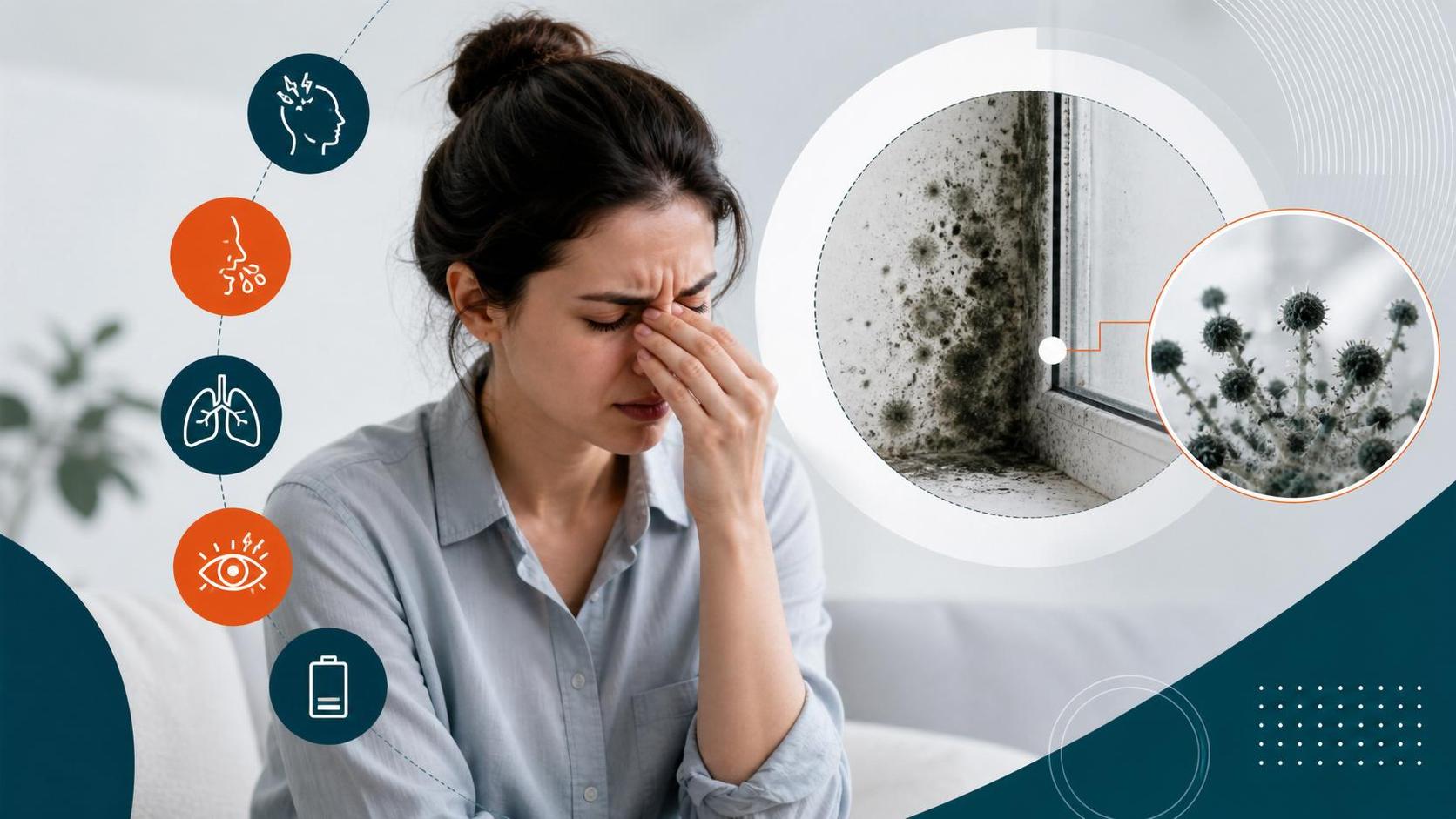
Why Toxic Mold Can Be So Hard to Recognize
Mold exposure can look like a cold, seasonal allergies, stress, digestive upset, or even burnout. That is why many people miss the connection between a damp home and symptoms that keep coming back.
When mold spores become airborne, they can be inhaled, swallowed, or land on the skin. In susceptible people, this can trigger irritation, an allergic reaction, or a broader inflammatory response.
Black mold often gets the most attention, but several types of mold can cause health problems. The real concern is not just color; it is the amount of mold growth, the length of exposure to mold, individual sensitivity, and whether mold toxins are present.
How Do You Tell If You Have Mold Poisoning?
You may suspect mold exposure if symptoms improve when you leave a building and return when you go back. This pattern is common in homes, offices, schools, or rentals with water leaks, poor ventilation, or a hidden moisture problem.
Mold toxicity can affect more than the sinuses. Some people experience respiratory, skin, digestive, emotional, and neurological symptoms at the same time, especially after ongoing mold exposure.
A healthcare professional can help rule out infections, autoimmune conditions, medication effects, and other causes. In some cases, environmental medicine clinicians may also consider exposure history, symptom patterns, blood tests, and targeted evaluations.
10 Warning Signs of Mold Toxicity
The following common symptoms do not prove mold toxicity by themselves, but together they can provide important clues, especially when they appear after exposure to mold.
- Persistent sneezing, coughing, wheezing, or throat irritation.
- Runny nose, stuffy nose, itchy eyes, or eye irritation that feels like seasonal allergies but lasts longer.
- Worsening asthma symptoms or more frequent asthma attacks.
- Headaches, brain fog, memory problems, or cognitive difficulties.
- Chronic fatigue, weakness, and poor recovery after rest.
- Skin rash, hives, dermatitis, or itchy skin after contact with contaminated materials.
- Nausea, diarrhea, vomiting, or abdominal pain.
- Mood swings, anxiety, depression, or mood disorders.
- Sinus infections, bronchitis, or recurring respiratory infections.
- Symptoms that flare in a moldy environment and improve elsewhere.
Respiratory Signs: Coughing, Wheezing, and Sinus Trouble
Inhalation of mold spores can irritate the respiratory tract. This may cause coughing, chest tightness, difficulty breathing, throat irritation, and eye irritation.
For people with a mold allergy, breathing in black mold spores can cause an immediate allergic reaction. Wheezing and coughing may begin quickly because the immune system treats the particles as a threat.
Prolonged mold exposure may contribute to sinusitis, bronchitis, and respiratory infections, especially in people with weakened immune systems or chronic lung disease. Those with a compromised immune system should take persistent symptoms seriously.
Allergy Symptoms That Do Not Go Away
A mold allergy can mimic pollen sensitivity, but the timing is different. Allergy symptoms related to indoor mold exposure often continue through multiple seasons or worsen in specific rooms.
Exposure to mold spores can trigger allergic reactions in susceptible individuals, leading to sneezing, coughing, wheezing, itchy eyes, and a runny or congested nose. Allergic reactions can occur immediately after exposure, particularly when a mold allergy already exists.
Common types of mold that trigger allergy symptoms may grow behind drywall, under carpets, around windows, inside an air conditioner, or above ceiling tiles. The allergy foundation and many public health sources recommend moisture control as the first step.
Black Mold: What Makes It Concerning?
Black mold is a common phrase people use for dark, moisture-loving mold, especially Stachybotrys chartarum. Not every dark patch is black mold, and not every black mold colony produces the same risk.
The concern with black mold is that it may produce mycotoxins under certain conditions. Mycotoxin exposure is one proposed reason some people report severe inflammation, neurological symptoms, and chronic illness after long-term mold exposure.
A 2023 study indicated that mice inhaling spores from Stachybotrys chartarum experienced cognitive issues linked to brain inflammation. Animal research does not prove the same outcome in humans, but it raises important questions about black mold and long-term nervous system effects.
Brain Fog, Memory Problems, and the Nervous System
Mold toxicity may involve the nervous system in sensitive people. Reported neurological symptoms include headaches, dizziness, tingling, tremors, movement difficulties, light sensitivity, and sudden changes in mood.
Many people describe brain fog as feeling mentally slow, scattered, or unable to focus. Mold exposure can also be associated with memory problems and difficulty concentrating, possibly due to inflammatory signals and mycotoxins affecting communication pathways in the nervous system.
In severe cases, seizures have been reported when infections or toxin-related disruptions affect brain function. Anyone with seizures, confusion, fainting, or rapidly worsening neurological symptoms should seek urgent medical care.
Fatigue, Weakness, and Whole-Body Inflammation
Mold toxicity can lead to persistent fatigue, headaches, brain fog, and other chronic symptoms. These symptoms may be driven by an inflammatory reaction to mold spores, fragments, and byproducts.
Chronic fatigue related to mold exposure is often described as deep exhaustion that does not improve with sleep. People exposed to mold over extended periods may also report muscle aches, weakness, and reduced exercise tolerance.
Mast cells may play a role in some sensitivity reactions. When activated, they can release inflammatory chemicals that affect breathing, skin, digestion, circulation, and the immune response.
Digestive and Skin Symptoms of Mold
Symptoms of mold can include digestive problems because certain byproducts may irritate the gut or contribute to systemic inflammation. Nausea, diarrhea, vomiting, appetite changes, and abdominal pain can occur.
Skin reactions are also possible. Direct contact with mold growth or mold-infested belongings may cause dermatitis, rashes, hives, or worsening of existing skin conditions.
These symptoms of mold are easy to misattribute to food intolerance, stress, or soap sensitivity. The clue is whether they coincide with exposure to mold in a damp building.
Emotional Symptoms and Mood Changes
Mold exposure can be emotionally draining, especially when symptoms are dismissed or difficult to diagnose. Some people report anxiety, depression, irritability, sleep disruption, and mood swings.
A 2021 study found that people working or living in mold-infested environments reported depression and anxiety, suggesting a possible link between mold exposure and emotional well-being.
Inflammation can affect the brain, hormones, and stress pathways. That does not mean every emotional symptom is caused by black mold, but it does mean the environment should be part of a careful review.
How Long Until Mold Affects You?
Some people react within minutes or hours. If you have a mold allergy, an allergic reaction may happen shortly after entering a damp room, basement, bathroom, or building with strong odors.
For others, mold toxicity develops gradually after weeks, months, or years of mold exposure. Ongoing exposure to mold can create persistent allergy symptoms, recurrent respiratory problems, and broad symptoms that are hard to trace.
People with weakened immune systems, infants, older adults, or those with asthma may be affected sooner. The dose, duration, species, ventilation, humidity levels, and personal health history all matter.
Where Mold Hides in Homes and Buildings
Visible mold is only part of the story. Mold growth can hide behind walls, under flooring, inside HVAC systems, in insulation, around windows, and above ceiling tiles.
Excessive moisture is the engine behind mold growth. Moisture can come from roof leaks, plumbing water leaks, condensation, flooding, wet basements, or poor ventilation.
Building related illness may be considered when multiple people in the same space develop symptoms. Mold related illness is more likely when there is a clear history of dampness, musty odors, and recurring health issues.
Testing: When to Consider Mold Testing
Mold testing can be useful when there are unexplained symptoms, hidden dampness, legal concerns, or a need to document indoor air quality. However, testing should not delay fixing water leaks or removing unsafe materials.
Air sampling, surface sampling, moisture mapping, and professional inspections may identify types of mold and problem areas. A good inspection focuses on why mold growth is happening, not just what species are present.
What To Do If You Are Exposed to Mold
If you are exposed to mold, reduce contact as quickly as practical. Leave heavily contaminated areas, increase fresh air when safe, and avoid disturbing colonies that can release mold spores.
Do not dry-scrub large colonies. Disturbance can spread particles through the home and trap mold spores in carpets, fabrics, and ductwork.
For small areas on hard surfaces, some mold killing products may help when used according to label directions. Wear rubber gloves, eye protection, and avoid mixing chemicals.
How to Detox Your Body of Mold
The most important “detox” step is stopping mold exposure. No supplement can overcome ongoing exposure to mold in a damp bedroom, workplace, or HVAC system.
Work with a healthcare professional before using binders, antifungals, sauna protocols, or aggressive detox plans. This is especially important for pregnancy, kidney disease, liver disease, medications, or a compromised immune system.
Supportive basics include sleep, hydration, nutrient-dense food, gentle movement, and treatment for infections or allergies. For mold allergy, clinicians may recommend antihistamines, nasal rinses, inhalers, or immunotherapy in selected cases.
Cleaning and Remediation Safety
Small areas of mold growth may be cleaned if the source of moisture is corrected. Large areas, sewage contamination, or black mold in porous materials often require professional remediation.
Porous materials such as wet drywall, carpet padding, insulation, and upholstered furniture may need removal. Contaminated materials should be sealed and discarded properly when they cannot be cleaned.
The Centers for Disease Control and other disease control resources emphasize fixing moisture first. Without moisture control, black mold and other types of mold can return quickly.
How to Prevent Mold Growth
To prevent mold growth, keep indoor humidity between roughly 30% and 50% when possible. Monitor indoor humidity with a hygrometer, especially in basements, bathrooms, laundry rooms, and kitchens.
Use exhaust fans during showers and cooking, repair water leaks promptly, and improve proper ventilation. Air purifiers with high efficiency particulate air filtration can reduce airborne particles, though they do not remove the source.
To prevent mold growth long term, address drainage, insulation, vapor barriers, and airflow. Mold inhibitors in appropriate paints or building materials may help in moisture-prone areas, but they are not a substitute for keeping surfaces dry.
Indoor Air Strategies That Help
Improving indoor air quality can reduce irritation while the underlying problem is being solved. Air purifiers may help lower airborne mold spores in occupied spaces.
Replace HVAC filters regularly, keep the air conditioner maintained, and avoid humidifiers unless humidity levels are being measured. Too much humidity can accelerate black mold growth.
Opening windows for fresh air may help when outdoor conditions are dry and clean. In humid climates, dehumidification may be more effective than open windows.
Who Is Most at Risk?
People exposed to damp buildings do not all react the same way. Genetics, immune system function, asthma, allergies, prior infections, and toxin burden can influence reactions.
Higher-risk groups include people with mold allergy, asthma, infants, older adults, people with weakened immune systems, and those with chronic respiratory conditions. These groups should avoid cleaning large black mold areas themselves.
Anyone with severe shortness of breath, chest pain, confusion, fainting, high fever, or rapidly worsening symptoms should seek emergency care.
When to See a Doctor
See a healthcare professional if symptoms persist, return in certain buildings, or involve the lungs, brain, skin, or digestion. Bring a timeline of symptoms, locations, water damage, and photos of suspected mold issues.
Medical evaluation may include allergy testing, lung function testing, imaging, blood tests, or referrals. Hypersensitivity pneumonitis, allergic rhinitis, asthma, infection, autoimmune disease, and other symptoms must be considered.
Environmental medicine practitioners may also ask about home history, occupational exposures, and remediation. The goal is to connect health problems with credible evidence, not guess based on fear.
Frequently Asked Questions
Can black mold make you sick immediately?
Yes, black mold can cause immediate symptoms in sensitive people, especially those with mold allergy or asthma. Coughing, wheezing, sneezing, itchy eyes, and throat irritation may occur soon after mold exposure.
What are the most common symptoms of mold exposure?
The most common symptoms include sneezing, coughing, congestion, eye irritation, headaches, fatigue, brain fog, skin irritation, and worsening asthma. Persistent allergy symptoms that improve away from home are a major clue.
Is black mold always toxic?
No. Black mold is a broad description, and not every dark colony produces dangerous compounds. However, any indoor mold growth caused by water damage should be addressed because it can still affect indoor air quality and health.
Can mold toxicity cause neurological symptoms?
Yes, mold toxicity has been associated with neurological symptoms such as headaches, memory problems, cognitive difficulties, mood changes, and dizziness. Research is still developing, but inflammation and mycotoxins may play a role.
How do doctors test for mold-related health problems?
Doctors may use symptom history, physical exams, allergy testing, lung function tests, imaging, and blood tests. Environmental inspection is also important because medical results are more useful when paired with clear evidence of mold exposure.
Can air purifiers solve a black mold problem?
Air purifiers can reduce airborne particles and may improve comfort, but they do not remove the source. Black mold must be addressed by fixing moisture, removing damaged materials, and cleaning safely.
What should I do first if I find mold at home?
Find and stop the moisture source first. Then determine the size and location of the mold growth. Small areas on hard surfaces may be cleaned carefully, while large areas or black mold in porous materials may require professionals.
Can mold exposure become a long-term health issue?
Yes, prolonged mold exposure can contribute to persistent health problems, including sinusitis, bronchitis, fatigue, headaches, and neurological complaints in severe cases. Early removal from exposure and proper remediation improve the chances of recovery.
Final Takeaway
Mold exposure is not always obvious, and symptoms can involve the lungs, skin, gut, immune system, and nervous system. If symptoms repeatedly flare in a damp building, take the pattern seriously.
Black mold deserves caution, but the bigger priority is correcting moisture, removing unsafe mold growth, improving indoor air quality, and getting medical guidance when symptoms persist. With the right plan, many people can reduce exposure, recover function, and protect their home from future mold issues.