Water Heater Leak Damage: How Far Water Spreads (and Why It Matters)
If you’re dealing with water heater leak water damage, you’re not alone—and you need to act fast. A water heater leak can soak floors, walls, and even the ceiling below in just a short time. In the first minutes, the goal is to stop the water supply, reduce damage, and prevent mold.
Water Heater Leak Water Damage: Why It Happens
A water heater is a hard-working part of your home. It heats water every day, handles pressure, and stores hot water in a tank (or heats it on demand). Over time, parts can wear out. When they fail, leaking starts—and then water damage spreads.
Common reasons a water heater starts leaking
- Corrosion inside the storage tank
- Loose or cracked pipe connections
- A faulty valve or relief valve
- Too much water pressure or high water pressure
- Old parts and normal wear
- Sediment buildup at the bottom of the tank
- A broken thermostat causing overheating and stress
- A broken water heater tank or seam failure
Signs You May Have a Water Heater Leak
Sometimes the leak is obvious. Other times, it’s slow and hidden. Catching it early can reduce repairs and keep your home safer.
Clear signs to watch for
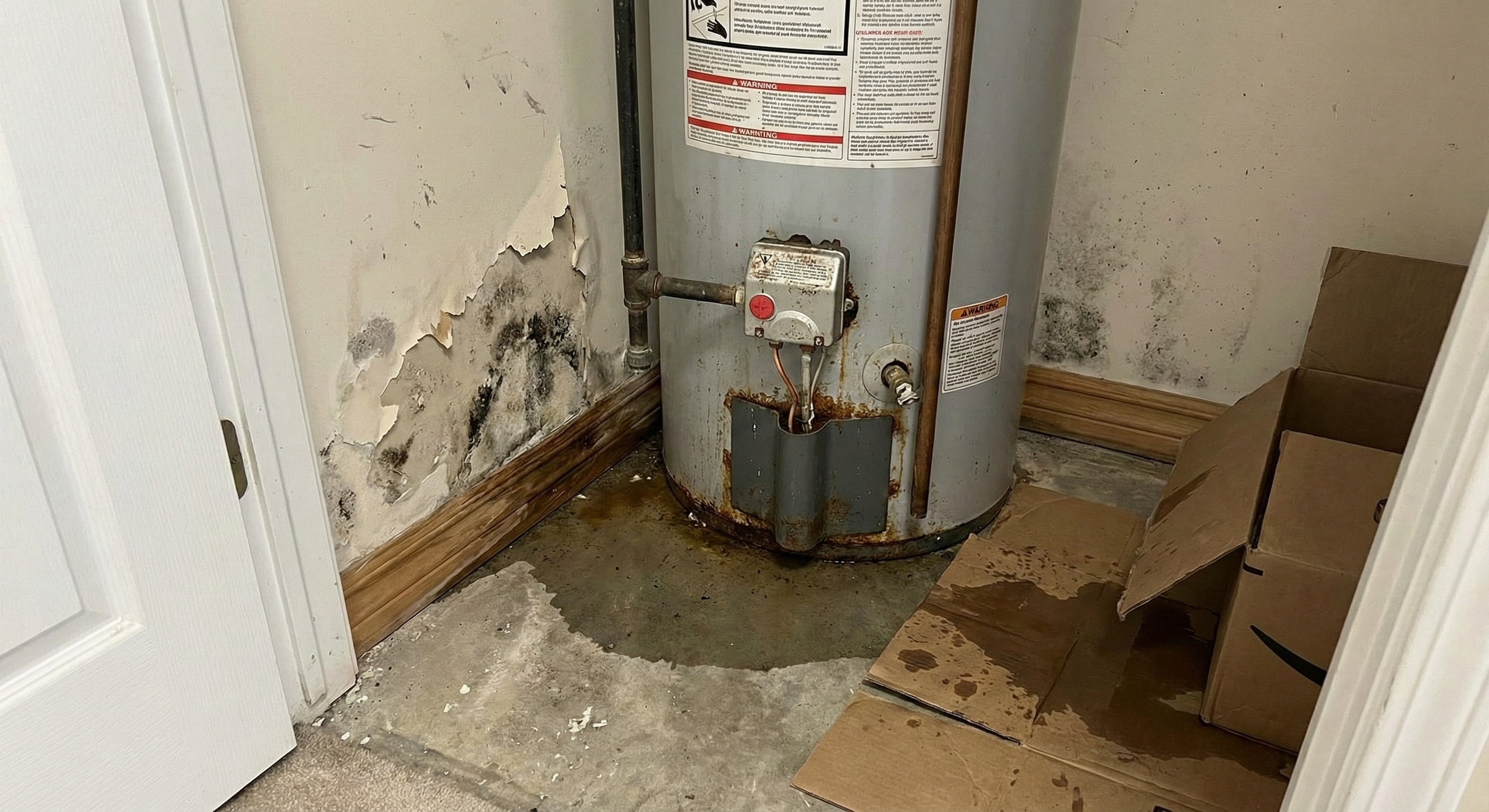
- Puddles around the water heater tank
- Rusty water or metal flakes (possible corrosion)
- Damp drywall near the heater
- Musty smells that can signal mold
- Water stains on the wall or ceiling
- A drop in hot water supply
- Strange popping sounds (often from sediment)
What To Do Immediately When You Find a Leak
When you see water near the heater, speed matters. These steps can help limit water damage and lower the chance of a flood spreading.
Step 1: Shut off the water supply
Find the cold water supply line going into the heater and turn the valve to stop incoming water. This is usually a handle near the top of the heater.
Step 2: Turn off power or gas safely
- For electric units, turn off the breaker.
- For gas water heaters, turn the gas control to “OFF” (or “Pilot” depending on the situation).
This helps prevent overheating and lowers risk.
Step 3: Drain water if it’s safe
If the leak is steady and you can do it safely, connect a hose to the drain valve and run it to a safe place for drainage (like a floor drain). This helps reduce how much water can escape into your home.
Step 4: Protect nearby areas
Move items away from wet floors. If water is spreading, use towels or a wet/dry vacuum if you have one. The goal is to prevent more damage and slow the mess.
Step 5: Call for help if water damage is growing
If water has reached walls, flooring, baseboards, or traveled to another room—or if you see ceiling stains—professional drying and cleanup can prevent hidden moisture and mold. Preferred Restoration can help with water removal, drying, and repairs.
How a Water Heater Leak Causes Water Damage in Your Home
Water doesn’t stay in one spot. It moves quickly and soaks into materials you can’t always see.
Floors and subfloors
Water can sink under tile, laminate, or carpet. If a leak continues, wood can swell, warp, and rot.
Walls and drywall
Drywall acts like a sponge. A slow leak can spread moisture up the wall and behind it, which is a big risk for mold.
Ceilings below the heater
If your heater is on an upper level, water can travel down and show up as a stain on the ceiling. That can mean trapped moisture above the drywall.
Electrical and safety concerns
Water near outlets, wiring, or appliances can be dangerous. If the leak is near electrical areas, avoid touching wet surfaces and turn off power if you can.
The Most Common Causes of Leaks (Explained Simply)
Corrosion inside the tank
Most water heaters have a metal tank. Over years, minerals and oxygen can cause corrosion. Once rust eats through the tank wall, the heater can start leaking and may need replacement.
Sediment buildup
Over time, minerals collect as sediment at the bottom of the tank. This can cause popping sounds, reduce heating, and damage the tank lining. Sediment can also make the heater work harder and fail sooner.
High water pressure
Too much water pressure can strain the tank and fittings. High water pressure can also stress the relief valve, pipes, and connection points.
Faulty relief valve or valve fittings
The temperature and pressure relief valve is a safety device. If it’s faulty, it may drip, spray, or fail to release pressure correctly. A bad valve can cause ongoing leaks and damage nearby drywall.
Loose plumbing connections
Water heaters connect to your home’s plumbing with pipes and fittings. Over time, movement, heat expansion, and wear can loosen parts and cause leaks.
Water Heater Repair vs. Replacement: How to Decide
A key question homeowners ask is: “Do I need water heater repair, or is my heater done?”
When water heater repair might be enough
- Leak is from a connection, small valve, or fitting
- The tank itself is not cracked
- The unit is newer and in good shape
- A part like the thermostat or relief valve is the issue
When replacement may be the safer choice
- The storage tank is rusted through (major corrosion)
- The water heater tank seam is split
- The unit is very old and shows heavy wear
- You have a broken water heater with repeated failures
- Water damage is happening fast and won’t stop
A licensed plumbing professional can inspect the unit and help you choose the safest option.
Preventing Mold After Water Heater Leak Water Damage
After a water heater leak, mold can start quickly if moisture stays trapped. Even if the surface looks dry, water can remain inside walls, under floors, and in insulation.
Steps that help prevent mold
- Start drying right away (fans can help, but may not reach hidden moisture)
- Remove wet items like rugs or cardboard boxes
- Don’t cover wet areas with furniture or plastic
- Schedule professional drying and moisture checks if water spread into building materials
- Watch for musty smells and discoloration
If you suspect mold or damp drywall, don’t “wait and see.” Hidden moisture can continue and grow problems.
Why Water Damage Inspection Matters
A proper inspection is more than a quick look. Water often spreads under flooring and behind walls. If you only dry what you can see, moisture can remain and cause long-term issues.
What a good inspection checks
- Moisture inside drywall and baseboards
- Wet insulation
- Water under flooring
- Areas near the ceiling below the leak (if applicable)
- Signs of ongoing leaking from a pipe or valve
This is also where professional restoration helps—because drying the “hidden” moisture is what prevents future damage.
Long-Term Maintenance Tips for Water Heaters
Good maintenance can lower the chance of leaks and help your heater last longer.
Simple maintenance steps
- Flush the tank to reduce sediment (ask a plumber if you’re unsure)
- Check around the heater monthly for drips or rust
- Have an annual inspection
- Test or replace a faulty relief valve when needed
- Watch for signs of corrosion and aging
- Make sure your home’s water pressure is in a safe range
If you notice dripping, rust, or changes in hot water, don’t ignore it—small problems can continue and become expensive.
How Preferred Restoration Helps After a Water Heater Leak
When water heater leak water damage happens, you need a team that can stop the spread, dry the right way, and help prevent future issues.
What our restoration process can include
- Water extraction and controlled drainage
- Drying floors, walls, and affected areas
- Moisture checks to confirm hidden wet spots are gone
- Steps to reduce mold risk
- Repairs for damaged materials (like drywall and flooring)
- Guidance on what to document if you’re using insurance
If the leak caused a major flood or spread to multiple rooms, fast action can reduce the total damage.

FAQs
What is the first thing I should do if my water heater is leaking?
Shut off the water supply using the valve on the cold water line. Then turn off power (breaker) or gas for gas water heaters. This helps stop the leak and reduces damage.
Can a small water heater leak cause serious water damage?
Yes. Even slow leaking can soak drywall, floors, and framing over time. If it continues, it can lead to bigger water damage and even mold.
What causes water heaters to leak from the bottom?
Common causes include tank corrosion, heavy sediment, or a failing storage tank. If the tank itself is leaking, it often means the heater is near the end of its life.
How do I know if I need water heater repair or a new unit?
If the leak is from a connection, pipe, valve, or the relief valve, water heater repair may help. If the water heater tank is rusted through or cracked, replacement is usually needed.
How long should I continue drying after water damage from a water heater leak?
Drying time depends on how far water spread. You may need several days, especially if moisture got into walls or under floors. A professional inspection and moisture testing can confirm when it’s truly dry and safe.