Is Professional Mold Removal Worth It?
If you found mold in your home, you might feel stuck. You may wonder: Should I clean it myself, or pay a pro? The short answer is: professional mold removal is often worth it when mold is big, hidden, or tied to water damage.
Mold is not just a “dirty spot.” Mold can spread fast when there is moisture from a leak, flood, or high humidity. Mold can also damage walls, floors, and furniture. Some people also feel sick around mold, especially kids, older adults, and anyone with asthma or allergies.
This guide will help you understand when pro mold removal makes sense, what you get for the cost, and how mold connects to water damage restoration.
What “Professional Mold Removal” Really Means
Many people say “mold removal,” but pros usually call it mold remediation. That’s because mold spores are everywhere in the air. The goal is to:
- Stop the moisture problem
- Remove or clean mold-damaged materials
- Lower mold spore levels inside the home
- Prevent mold from coming back
Mold Removal vs. Mold Remediation
“Mold removal” sounds like you can remove 100% of mold forever. Real life doesn’t work that way. Mold remediation means cleaning, containing, and fixing conditions so mold can’t grow.
Why Mold Often Starts After Water Damage
Mold loves moisture. If your home had water damage, mold can start quickly—sometimes in 24 to 48 hours if materials stay wet.
Common water damage causes include:
- Burst pipes or slow plumbing leaks
- Roof leaks
- Flooding or storm water
- Wet basements or crawl spaces
- High indoor humidity
- AC drain line clogs
- Wet carpet and padding that never dried fully
Hidden Mold Is a Big Problem
Mold often grows where you can’t see it, like:
- Behind drywall
- Under flooring
- Inside cabinets
- In attic insulation
- In crawl spaces
- Around HVAC vents and ductwork
If you only clean the visible spot, you may miss the real source.
When DIY Mold Cleaning Might Be Enough
Sometimes, professional mold removal is not needed. DIY may be okay when:
- The moldy area is small (about the size of a dinner plate or smaller)
- It’s on a hard surface (tile, metal, glass)
- There is no strong musty smell
- You already fixed the moisture problem
- No one in the home is high-risk (asthma, immune issues, severe allergies)
Safer DIY Tips (If It’s Truly Small)
If you choose DIY for a small area:
- Wear gloves, eye protection, and a well-fitting mask
- Open windows for airflow (if outdoor humidity is low)
- Do not dry-brush mold (that spreads spores)
- Wipe and bag dirty rags right away
- Watch the area for regrowth over the next 2–3 weeks
If mold comes back, that’s a big sign the moisture source is still there.
When Professional Mold Removal Is Worth It
Professional help is usually worth it when mold is larger, deeper, or risky.
You Should Call a Pro If:
- The mold covers a large area
- You smell mold but can’t find it
- Mold is in drywall, insulation, carpet, or wood
- You had a flood, sewage backup, or major leak
- The area was wet for more than 24–48 hours
- You see mold near an HVAC system or air ducts
- Someone in the home is getting headaches, coughing, wheezing, or allergy flares
- You’re buying or selling a home and need proper documentation
Why Size Matters
Bigger mold problems often need:
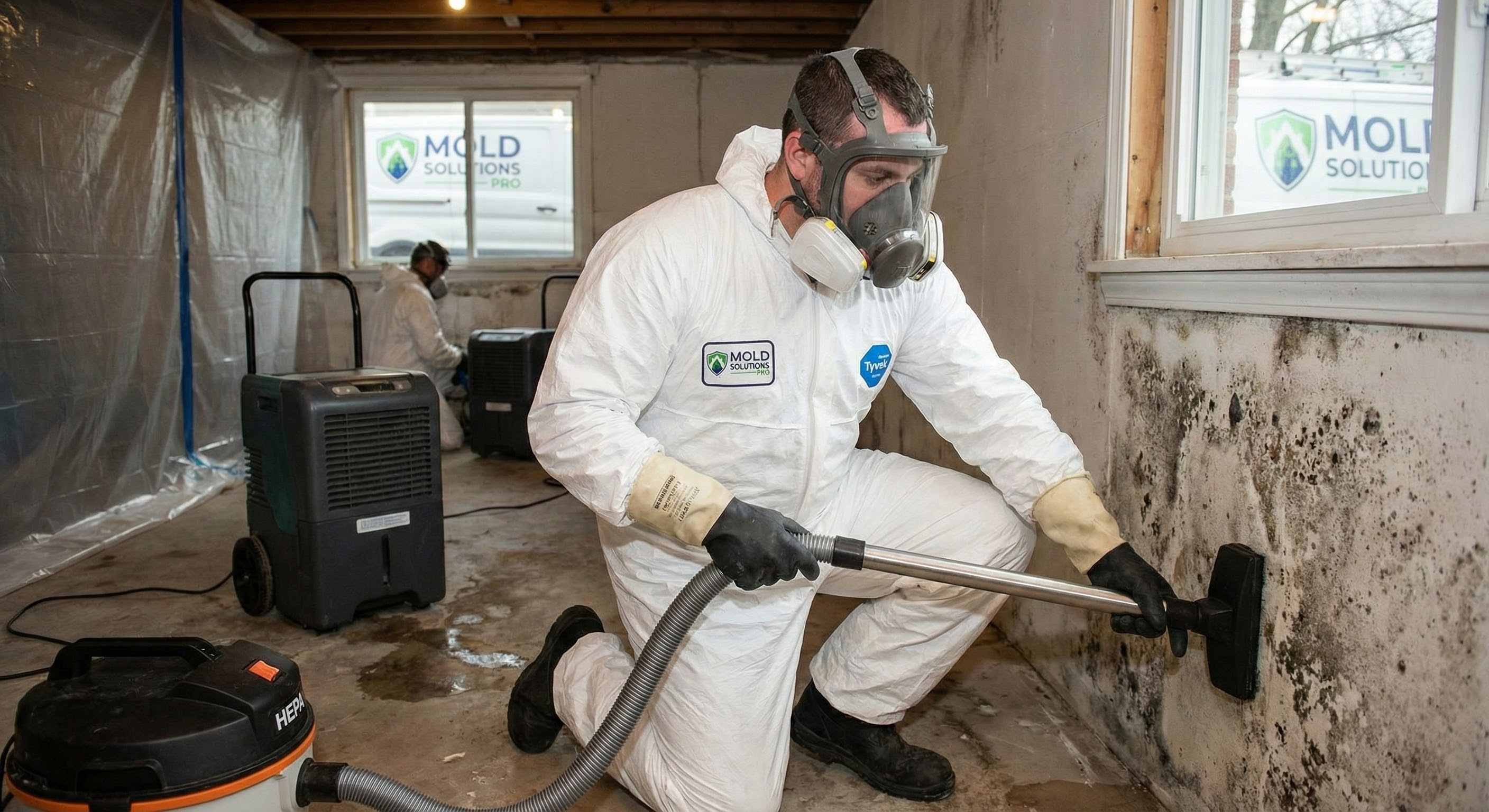
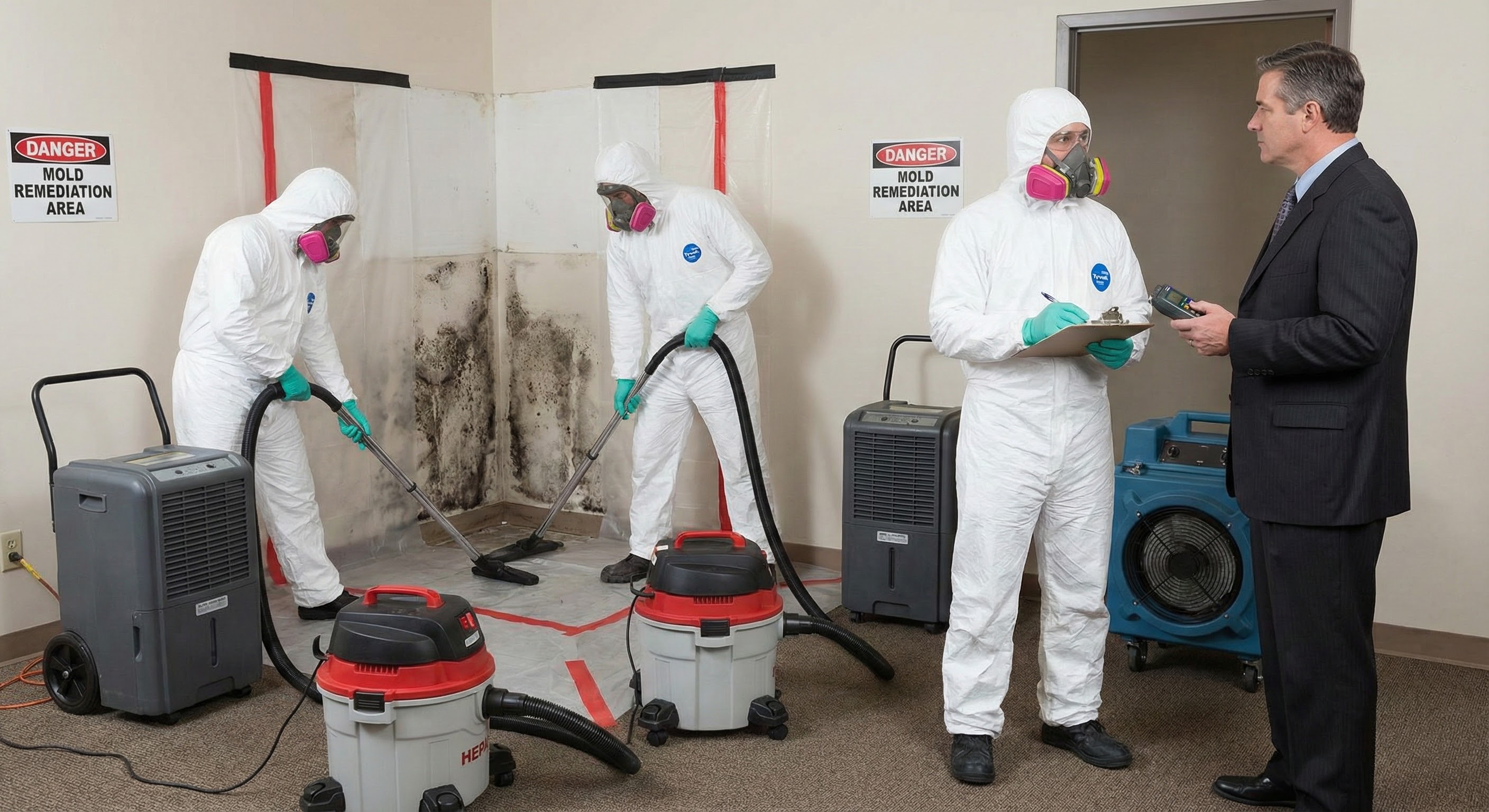
- Containment (plastic barriers)
- Negative air pressure
- HEPA air scrubbers
- Safe removal of damaged materials
These steps stop mold spores from spreading through the home.
What You Get With Professional Mold Removal
When you pay for professional mold remediation, you’re paying for safety, training, and the right equipment.
Containment to Stop Spreading
Pros often seal off the work area. This helps keep mold spores from drifting into clean rooms.
HEPA Filtration and Air Scrubbing
HEPA filters can trap tiny particles. Air scrubbers help clean the air during the job.
Moisture Control and Drying
This is huge. A professional team will often use:
- Commercial dehumidifiers
- Air movers
- Moisture meters to check hidden dampness
If moisture stays, mold returns. That’s why mold remediation and water damage restoration often go together.
Safe Tear-Out When Needed
Sometimes, materials must be removed, like:
- Drywall
- Baseboards
- Carpet and pad
- Insulation
- Swollen cabinetry
Pros know how to remove and bag materials without contaminating the whole home.
Better Chances of Long-Term Results
Professional work is usually worth it because it focuses on the root cause:
- Finding leaks
- Drying wet materials fully
- Sealing or repairing damaged building materials
- Preventing repeat growth
Risks of Skipping Professional Help
Trying to save money can sometimes cost more later.
Mold Can Spread Faster Than You Think
If you clean mold the wrong way, you can:
- Spread spores into the air
- Push mold deeper into porous materials
- Miss hidden moisture behind walls
The Problem Might Not Be “Just Mold”
Sometimes what looks like mold is:
- Soot staining from smoke
- Dirt and dust buildup
- Water stains
- Mildew (still a moisture warning)
A professional inspection can help confirm what’s going on and what to do next.
Bigger Repairs Later
If mold eats into drywall or wood framing, you may face:
- Wall replacement
- Flooring replacement
- Cabinet rebuilds
- Odor removal
- Paint and texture matching
Fixing it early is often cheaper than waiting.
How Much Does Professional Mold Removal Cost?
Costs vary a lot. Price depends on:
- Size of the mold area
- Where it is (attic, crawl space, behind walls)
- How much material must be removed
- How wet the structure is
- Whether containment and air scrubbers are needed
A Simple Way to Think About Cost
- Small, surface-level mold may cost less
- Hidden mold plus water damage may cost more
- Big projects often include demolition, drying, and rebuild steps
The “worth it” question is really about value: Are you paying to stop repeat mold, protect your home, and avoid bigger repairs later? In many cases, yes.
Will Insurance Cover Professional Mold Removal?
Sometimes insurance helps, and sometimes it doesn’t. It often depends on what caused the water damage.
Insurance may be more likely to help if:
- Mold came from a sudden event (like a burst pipe)
- The water problem was reported and handled quickly
Insurance may be less likely to help if:
- The leak was slow and ignored for a long time
- The mold is from ongoing humidity or poor ventilation
Tip: Document Everything
If you plan to file a claim:
- Take photos of the water source and damage
- Save receipts for emergency drying
- Write down dates and what happened
A water damage restoration company can often help you track moisture and damage properly.
What to Look for in a Mold Removal Company
Not all companies do the job the same way. A good team should be able to explain their steps clearly.
Signs of a Trustworthy Pro
- They look for the moisture source, not just the mold spot
- They explain containment and air filtration
- They measure moisture in materials (not guessing)
- They give a clear plan for cleanup and drying
- They answer questions in simple terms
Red Flags
- “We’ll just spray it and it’s gone forever”
- No plan to fix moisture
- No containment on bigger jobs
- Super low price with vague details
How Professional Mold Removal Supports Water Damage Restoration
Mold and water damage are closely connected. Water damage restoration focuses on:
- Stopping the water
- Drying the structure
- Preventing mold
- Repairing damaged materials
When you handle water damage correctly and quickly, you lower the chance of mold. If mold already started, mold remediation may be the next step to fully protect your home.
The Best Strategy: Dry First, Then Remediate
In many cases:
- Stop the leak or water source
- Dry everything thoroughly
- Remove mold-damaged materials safely
- Clean and HEPA-filter the air
- Rebuild and prevent future moisture
How to Prevent Mold After Cleanup
After mold remediation, prevention keeps the problem from returning.
Simple Mold Prevention Checklist
- Fix leaks fast (even tiny drips)
- Keep indoor humidity lower (many homes aim for around 30–50%)
- Use bathroom and kitchen exhaust fans
- Dry wet carpet and padding quickly
- Check under sinks and behind toilets
- Keep gutters and downspouts moving water away from the house
- Make sure the AC drain line is clear
- Watch basements and crawl spaces after rain
Conclusion: So, Is Professional Mold Removal Worth It?
Yes—professional mold removal is worth it when mold is large, hidden, caused by water damage, or keeps coming back. Pros bring the tools and training to contain mold, clean the air, remove damaged materials, and fix moisture issues so your home stays safe and stable.
If the mold is small and on a hard surface, DIY may work. But if there’s water damage, a strong musty smell, or mold inside walls, professional remediation can help you avoid repeat growth and costly repairs.
FAQs
Is mold remediation the same as mold removal?
They are similar, but not exactly the same. “Mold removal” sounds like mold can be erased forever. “Mold remediation” means fixing the moisture problem and cleaning the affected area so mold can’t easily grow again.
Can professional mold removal stop mold from coming back?
It can greatly lower the chance, but only if the moisture source is fixed. If a leak or humidity problem stays, mold can return even after a professional cleanup.
How do I know if mold is hidden behind walls?
Common signs are a musty smell, peeling paint, soft drywall, warped baseboards, or a history of leaks. A professional can check moisture levels and inspect likely hidden areas.
Is professional mold removal worth it for a small spot?
Sometimes no. If it’s truly small, on a hard surface, and the area is dry, careful DIY cleaning may be enough. If it spreads or returns, that’s a sign you need a pro.
Should I call water damage restoration or a mold company first?
If there is active water, wet materials, or recent flooding, start with water damage restoration to stop the water and dry the structure. If mold is present or likely, mold remediation may be the next step.