How Fast Does Water Damage Start?
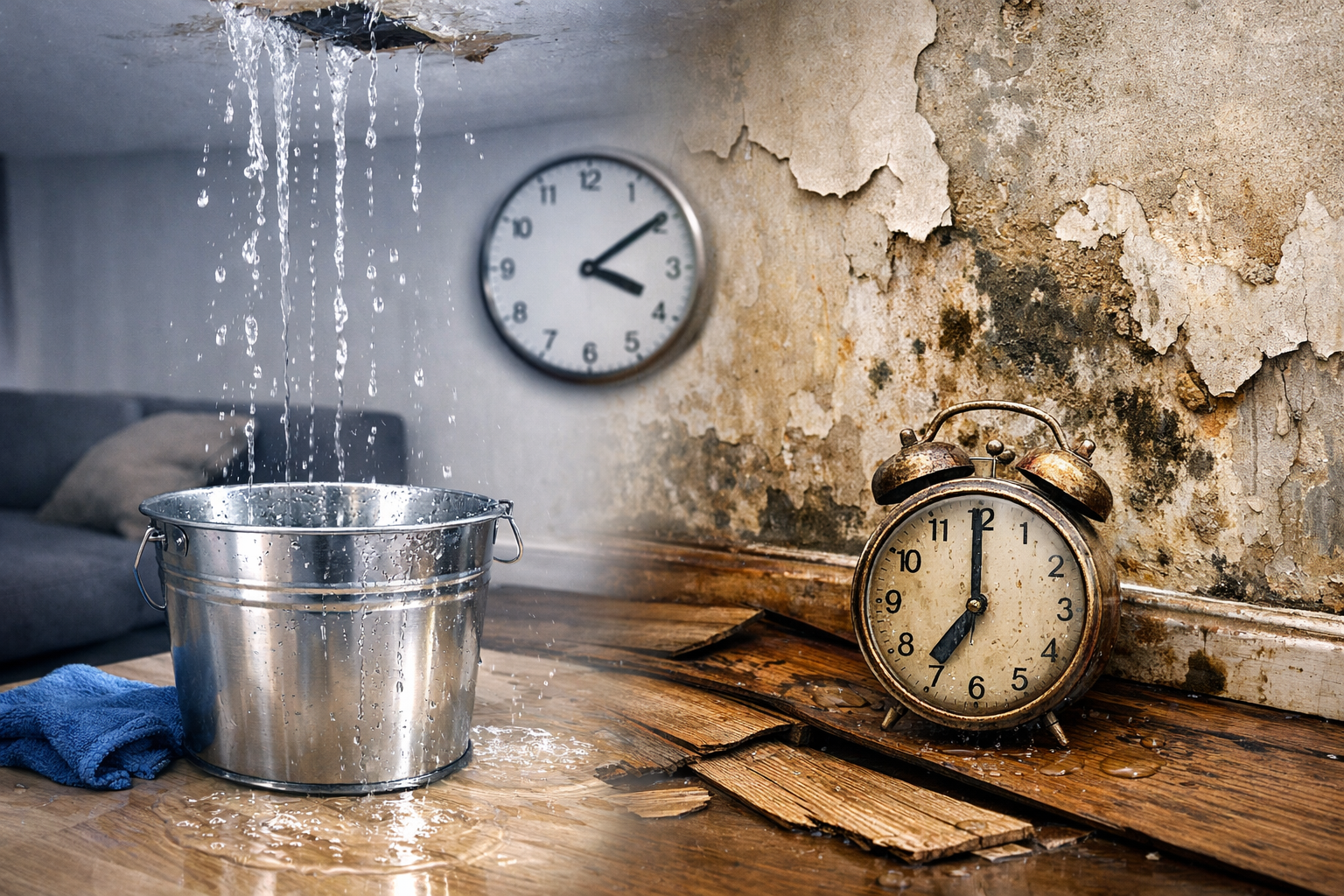
How fast does water damage start? The answer may surprise you. Water damage can begin in just minutes. If you have a leak, flood, or plumbing issue, water can quickly soak into your floor, wall, ceiling, and even your foundation. Within hours, moisture can cause serious damage to wood, carpet, and drywall. That is why fast action and professional water damage restoration are so important. If you are dealing with water issues, learn more about our full water damage restoration process to protect your home and property.
Water damage does not wait. It spreads fast, increases risk, and can even affect your indoor air quality. Let’s break down how quickly this happens and what you should do.
What Is Water Damage?
Water damage happens when unwanted water enters your home. This can come from:
- A burst plumbing pipe
- Roof leaks
- A flooded basement
- A natural disaster like heavy rain
- Sewage backup
- Fire damage after firefighters use water
Water can soak into building materials like wood, carpet, insulation, and drywall. When moisture sits too long, it causes structural damage, mold growth, and contamination.
Water damage restoration is the process of removing water, drying the space, cleaning, and repairing damage.
How Fast Does Water Damage Start After a Leak?
Water damage can start right away. Here is a simple timeline:
Within Minutes
- Water spreads across floors.
- Carpet and wood begin absorbing moisture.
- Walls and ceilings start to get wet.
Even a small leak can begin causing damage fast.
Within 1–2 Hours
- Water seeps into drywall and insulation.
- Wood begins to swell and warp.
- Metal may start to rust.
- Humidity rises inside the home.
At this stage, quick water extraction is very important.
Within 24 Hours
- Mold can begin to grow.
- Musty smells may appear.
- Paint can bubble on the wall.
- Floors may buckle.
This is when the risk becomes much higher.
After 48–72 Hours
- Mold growth spreads.
- Structural damage becomes worse.
- Sewage contamination becomes dangerous.
- Property damage may be severe.
The longer water sits, the more costly fixing water damage becomes.
Why Does Water Cause Damage So Fast?
Water moves quickly. It flows through cracks, under floors, and behind walls. It also raises humidity in your home.
High humidity makes drying harder. Moisture trapped in walls, ceilings, and the basement can stay hidden. Without proper ventilation and professional drying equipment, water can stay for days or weeks.
Wood absorbs water and swells. Drywall becomes soft and weak. Carpet padding holds moisture like a sponge. This is why emergency services are needed right away.
How Fast Does Mold Grow After Water Damage?
Mold growth can begin in as little as 24 hours. Mold needs three things:
- Moisture
- Warm air
- Organic material (like wood or drywall)
When mold grow begins, it spreads fast. Mold can cause allergy symptoms and lower indoor air quality. Some fungus types can create serious health problems.
If your basement floods or your roof leaks, mold risk is high. Quick inspection and cleaning can stop mold before it spreads.
What Areas of the Home Are at Highest Risk?
Some parts of your home are more at risk for water damage.
Basement
A basement is low and often floods during heavy rain. Plumbing lines and foundation cracks can also leak water into this space.
Roof and Ceiling
A damaged roof can allow water to drip into the ceiling. Over time, this weakens drywall and wood supports.
Bathroom and Kitchen
Plumbing leaks often happen under sinks or behind walls. Small leaks can go unnoticed and cause hidden structural damage.
Carpet and Floor
Water can soak into carpet and padding. Hardwood floor boards may warp or crack.
Signs of Water Damage
Look for these common water damage signs:
- Stains on the wall or ceiling
- Peeling paint
- Musty smells
- Soft spots in wood
- Buckling floors
- Visible mold growth
- Sudden increase in humidity
Early inspection helps prevent bigger problems.
What Happens If You Wait Too Long?
Waiting increases damage and cost.
Water damage can lead to:
- Structural damage to beams and foundation
- Mold growth and contamination
- Poor indoor air quality
- Damage to personal property
- Higher insurance claims
In severe cases, water damage can mix with sewage. This creates a health emergency.
Quick water damage cleanup reduces the risk.
How Water Damage Relates to Fire Damage
After a fire, water from hoses can soak the property. Fire damage restoration often includes water extraction and drying.
If water is not removed fast, mold and structural damage can add to fire damage problems. That is why professional restoration services handle both fire damage and water damage restoration together.
The Importance of Fast Water Extraction and Drying
Water extraction removes standing water. Industrial pumps and vacuums pull water from floors and carpet.
Drying uses special air movers and dehumidifiers. Proper ventilation lowers humidity and removes moisture from walls and ceilings.
Fast emergency service can:
- Stop mold growth
- Reduce structural damage
- Lower repair costs
- Protect your home insurance claim
Water damage cleanup should start within hours, not days.
How Insurance Helps With Water Damage
Many home insurance policies cover sudden leaks and burst plumbing pipes. Insurance may also help after a natural disaster.
However, insurance may not cover damage caused by long-term neglect. That is why quick inspection and repair are important.
Keep records and take photos of all damage. Professional restoration services can work with insurance to document the loss.
How Professionals Handle Water Damage Restoration
At Preferred Restoration, trained technicians follow a proven process.
Step 1: Emergency Services
Fast response reduces damage. Emergency services stop the source of water and protect the property.
Step 2: Inspection
Moisture meters check walls, floor, and ceiling. Hidden water is located behind surfaces.
Step 3: Water Extraction
Standing water is removed using pumps and vacuums.
Step 4: Drying and Dehumidifying
Special equipment lowers humidity and removes moisture.
Step 5: Cleaning and Sanitizing
Contamination from sewage or flood water is cleaned. Surfaces are treated to prevent mold growth.
Step 6: Damage Restoration
Repairs fix structural damage, replace drywall, restore wood, and return your home to normal.
How to Reduce the Risk of Water Damage
You can lower risk by:
- Checking your roof for leaks
- Inspecting plumbing regularly
- Cleaning gutters
- Watching for water damage signs
- Installing proper ventilation in bathrooms
- Fixing small leaks fast
Regular inspection protects your foundation and property.
How Fast Should You Call for Help?
You should call for help immediately. Even if the water seems small, hidden moisture can cause damage.
Emergency service is needed if:
- Water covers your floor
- Sewage backs up
- A pipe bursts
- Your basement floods
- Fire damage leaves water behind
The faster you act, the less damage happens.
Why Fast Action Protects Your Property
Water damage spreads fast. It can weaken wood, damage walls, and harm your home’s structure.
It can also lower indoor air quality and cause allergy problems from mold growth.
Fast water damage restoration protects:
- Your home
- Your health
- Your insurance claim
- Your peace of mind
Do not wait. Water damage starts in minutes and gets worse by the hour.
FAQs About How Fast Water Damage Starts
How long does it take for water damage to show?
Water damage signs can appear within hours. Stains, smells, and swelling may start the same day.
Can mold grow in 24 hours after a leak?
Yes. Mold growth can begin within 24 hours if moisture is present.
Is water damage covered by home insurance?
Many home insurance policies cover sudden leaks or burst plumbing pipes. Long-term leaks may not be covered.
What should I do first after a flood?
Stop the water source if safe. Then call emergency services for water extraction and drying.
Can small leaks cause structural damage?
Yes. Even small leaks can weaken wood, walls, and your foundation over time.
Conclusion: Water Damage Happens Fast
So, how fast does water damage start? It starts almost immediately. Within minutes, water begins soaking into your floor, wall, ceiling, and basement. Within 24 hours, mold can grow. Within days, structural damage can be severe.
Fast inspection, water extraction, and drying are key. Professional water damage restoration protects your property and reduces risk.
If you notice water damage signs, act quickly. Fast response makes all the difference.